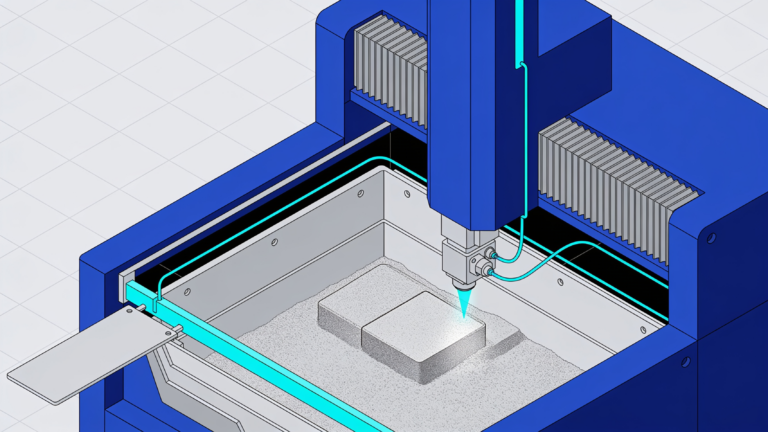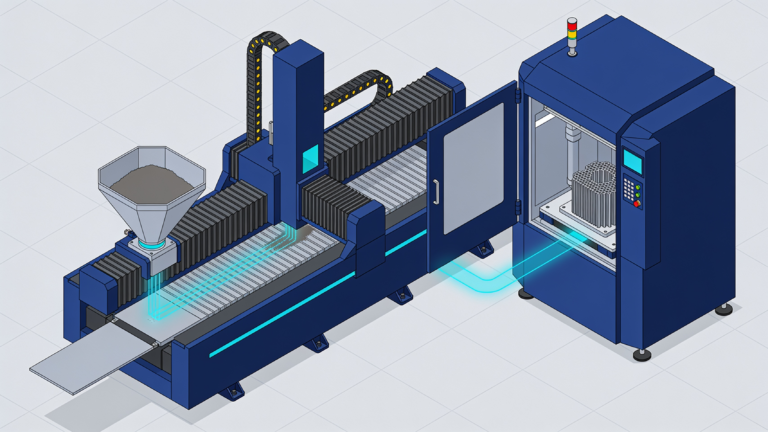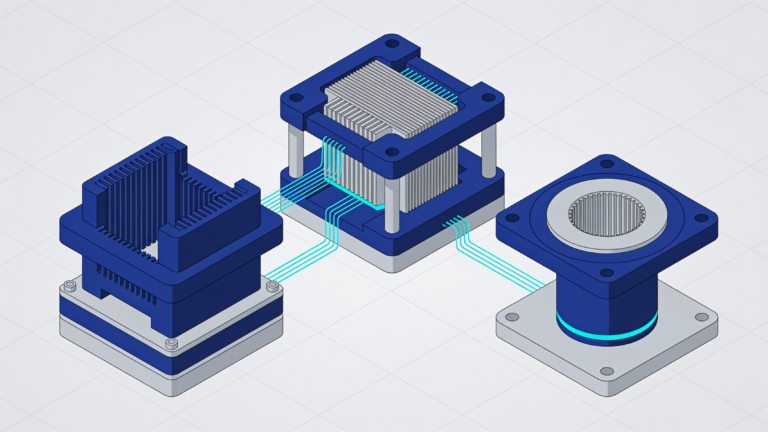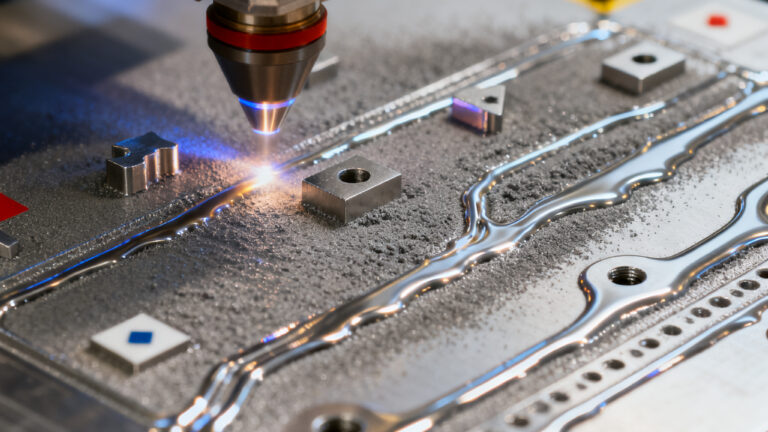
Tecnologia: DMLS/SLM

How to print 1000°C of competitive advantage?

How to print 1000°C of competitive advantage?

Additive manufacturing offers competitive advantages in automotive and motorsport, reducing development times and optimizing components. Technologies like SLS, binder jetting, and PBF allow on-demand production, weight reduction, and greater strength. Practical cases demonstrate the effective integration of 3D printing without disrupting existing production lines.

Scrap steel becomes a structure? Here's how

Scrap steel becomes a structure? Here's how

The German project AddMamBa transforms scrap steel into structural components for construction via 3D printing, reducing emissions and waste. Through the atomization of metal scraps into powder suitable for laser melting, brackets and connectors are obtained with performance similar to traditional components, but with lower environmental impact. The approach includes chemical control, optimization

Does the US Navy 3D print spare parts? Here's how

Does the US Navy 3D print spare parts? Here's how

The US Navy introduces a “material maturity” framework to certify 3D printed materials, reducing logistics lead times by 70% and integrating additive parts into the supply chain without compromising safety or reliability.

AI in Process Control: How Not to Mess Up the Implementation

AI in Process Control: How Not to Mess Up the Implementation

The implementation of AI in production process control requires a systemic approach that goes beyond the optimization of individual machines. To achieve significant results in additive manufacturing, it is necessary to integrate data, automation, and open standards throughout the entire production cycle. Only then can AI become the “digital nervous system” of the factory, ensuring quality,

Why are additive manufacturing giants focusing on vertical niches?

Why are additive manufacturing giants focusing on vertical niches?

The additive manufacturing sector is consolidating on vertical niches such as aerospace, medical, and foundry, abandoning the logic of horizontal coverage. The companies that survive focus on specialization, integration into client workflows, and reliable solutions, not just innovation. Success now depends on the ability to generate concrete economies and ensure uptime and repeatability.

Why is the 3D market split into two?

Why is the 3D market split into two?

The 3D market is splitting: on one side entry-level systems under $2,500 are growing over 30%, on the other high-end industrial platforms are struggling. Three sectors are driving demand: aerospace, defense and healthcare. China records strong increases in metal PBF. Business models are differentiating: providers are targeting specific segments to stay competitive. Future growth

THE EYE THAT DOES NOT MISTAKE? PROCESS CONTROL IN THE AEROSPACE AM

THE EYE THAT DOES NOT MISTAKE? PROCESS CONTROL IN THE AEROSPACE AM

In aerospace additive manufacturing, in-process inspection with calibrated measurements overcomes the limits of passive monitoring. Technologies such as structured light metrology enable objective, traceable, and comparable controls between machines, reducing qualification costs and times.

Why do 8 out of 10 additive startups fail?

Why do 8 out of 10 additive startups fail?

Many additive startups fail because they focus on technology without building a sustainable business. A solid economic model, paying customers, and strategic patience are needed.

AM in production? Only if you know what to stop

AM in production? Only if you know what to stop

Additive Manufacturing (AM) succeeds in production only when applied to specific cases with high functional requirements, not to replace traditional methods, but to solve needs that these cannot satisfy. Success depends on consolidated designs, controlled materials, fixed parameters, and disciplined post-processing. Sectors such as aerospace, medical, and tooling exploit the

Why is powder flow revolutionizing AM?

Why is powder flow revolutionizing AM?

3D printing improves with two patented innovations: controlled vibrations and smart sensors for precise powder distribution. These systems reduce defects, waste, and post-production rework, increasing quality and repeatability without changing materials or machinery.

32 laser, 500W each: where does it break?

32 laser, 500W each: where does it break?

Multi-laser systems with 32 units of 500W each represent the state of the art in metal 3D printing, offering build volumes of up to 3862 liters. While increasing productivity and automation, these plants present thermal limits, powder management issues, and geometric constraints that affect actual production feasibility. Integration with MES and automated systems enables scalability

Can AM revolutionize the transport of nuclear fuel?

Can AM revolutionize the transport of nuclear fuel?

Additive manufacturing could revolutionize the transport of spent nuclear fuel, reducing costs and production times for critical components such as impact limiters. Technologies like FFF and PBF allow for complex geometries and savings of up to $1.7 million per cask. Studies by Orano and UNC Charlotte confirm technical feasibility, but specific regulatory standards are still lacking.

/