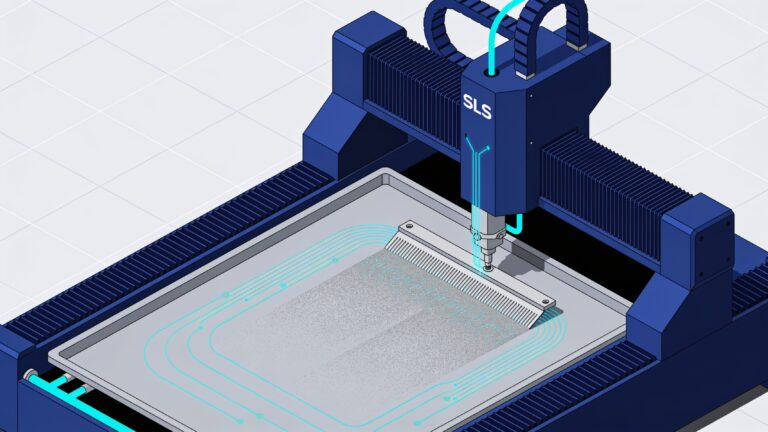
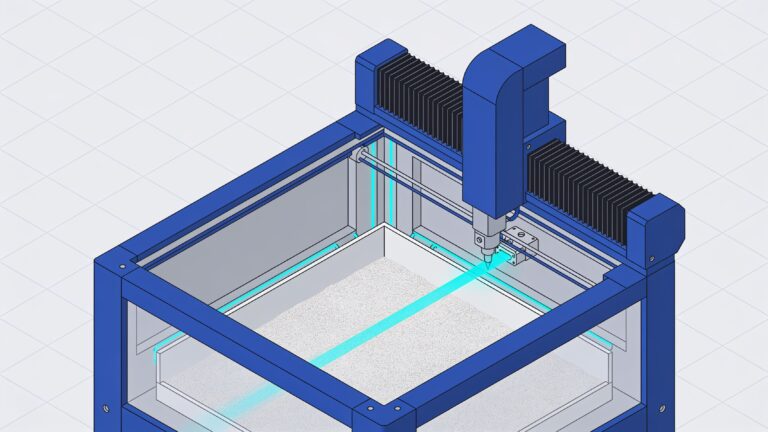
Tecnologia: SLS

Sensors that sense without electronics?

Sensors that sense without electronics?

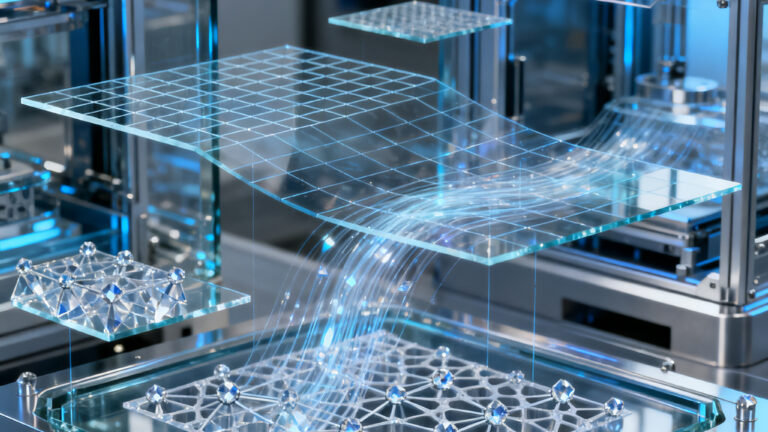
Bio-inspired soft sensors represent an engineering revolution: the material structure itself becomes the true sensor, generating electrical signals without electronic components. Thanks to porous and anisotropic microarchitectures, these smart materials convert mechanical stimuli into electrical responses by leveraging natural physical phenomena, such as streaming potential. Studies inspired by the spines

Why do 8 out of 10 additive startups fail?

Why do 8 out of 10 additive startups fail?

Many additive startups fail because they focus on technology without building a sustainable business. A solid economic model, paying customers, and strategic patience are needed.

AM in production? Only if you know what to stop

AM in production? Only if you know what to stop

Additive Manufacturing (AM) succeeds in production only when applied to specific cases with high functional requirements, not to replace traditional methods, but to solve needs that these cannot satisfy. Success depends on consolidated designs, controlled materials, fixed parameters, and disciplined post-processing. Sectors such as aerospace, medical, and tooling exploit the

Metrology in 3D Scanning: How Integrated Processing Works and Its Industrial Applications

Metrology in 3D Scanning: How Integrated Processing Works and Its Industrial Applications

Integrated metrology in 3D scanners enables real-time quality control, reducing time and costs. Thanks to advanced sensors, geometric algorithms, and connectivity, these systems process dimensional data directly during scanning, integrating with metrology platforms and production processes. Despite some technological limitations, they represent a breakthrough for high-

3D Micropile for Immunotherapy? Here's How It Works

3D Micropile for Immunotherapy? Here's How It Works

3D microneedles based on polysaccharides represent a new frontier for cancer immunotherapy. These biodegradable structures penetrate the skin to release drugs directly into the tumor microenvironment, reducing side effects and increasing therapeutic efficacy. Thanks to 3D printing, it is possible to customize their shape and composition for targeted and controlled release. I

High-temperature ceramics: which AM process to choose?

High-temperature ceramics: which AM process to choose?

Additive manufacturing of high-temperature resistant ceramics requires careful selection of the process: melt-infiltration, CVI, or PIP, each with advantages and limitations in terms of cost, speed, and complexity. Cellular structures reduce weight and material but can compromise structural integrity. Advanced materials such as SiC and multi-oxide composites offer high performance but at

From Maker Lab to Real Production: How Desktop 3D Printers Are Scaling in the Consumer and Industrial Markets

From Maker Lab to Real Production: How Desktop 3D Printers Are Scaling in the Consumer and Industrial Markets

3D desktop printers are becoming concrete production tools, no longer just for makers. In 2025, China exported over 5 million units, with a 331% growth. Technological improvements make them more reliable, easier to use, and suitable for professional sectors like cinema and racing drones. Adoption is growing among professionals, schools, and small businesses, with concrete cases of pr

Comparison of 3D Printing Technologies for Polymers: FDM, SLA, SLS, and MJF Compared

Comparison of 3D Printing Technologies for Polymers: FDM, SLA, SLS, and MJF Compared

Comparison between 3D printing technologies for polymers: FDM, SLA, SLS, and MJF. Each technology offers specific advantages in terms of precision, mechanical strength, surface finish, and industrial applications. The evolution of materials is expanding operational boundaries in advanced sectors such as aerospace, automotive, and medical.

How the New CAD Cloud-Native Is Revolutionizing Design for 3D Printing

How the New CAD Cloud-Native Is Revolutionizing Design for 3D Printing

The new cloud-native CAD revolutionizes design for 3D printing, overcoming the limits of traditional systems. Thanks to hybrid modeling, simulation integration, and automation, it enables rapid and precise modifications, reducing times and errors. Ideal for scalable and innovative additive productions.

Integration of 3D Printing in Hospitals: An Operational Guide for Safe and Efficient Clinical Implementation

Integration of 3D Printing in Hospitals: An Operational Guide for Safe and Efficient Clinical Implementation

3D printing in hospitals is becoming an essential resource for personalized medicine, with applications ranging from anatomical models to custom implants. Integration requires adequate technologies, biocompatible materials, standardized workflows, and trained staff. Benefits include shorter waiting times, greater clinical precision, and cost reduction. Leading hospitals

Industrial 3D Printing: Contract Clauses at Risk and How to Avoid Them

Industrial 3D Printing: Contract Clauses at Risk and How to Avoid Them

Industrial 3D printing presents often underestimated contractual risks, with clauses that unilaterally shift liability and costs onto clients. Key points include: GPS tracking, geographic limits, training obligations, vague definitions of “failure”, and choice of jurisdiction. It is essential to negotiate fair contracts to avoid legal constraints and ensure safe operations.

New Frontiers of the Workforce in Additive Manufacturing: Operational Skills at the Center of Industrial Transformation

New Frontiers of the Workforce in Additive Manufacturing: Operational Skills at the Center of Industrial Transformation

The additive manufacturing industry is evolving towards greater maturity, with a focus on specific skills, production, and customer interaction. An increasing number of professionals is changing the job market, making hiring more selective and promoting internal skill development.

/