ASTM launches “Manufacturing Unlimited”: the new video series on professional additive manufacturing
The ASTM Additive Manufacturing Center of Excellence has launched “Manufacturing Unlimited”, a video series that documents real applications of 3D printing in production contexts. The series, hosted by Peter Zelinski and published on YouTube, already has four episodes dedicated to visits to companies that use additive technologies.
A format that brings cameras into the factory
The series adopts a documentary approach, with direct visits to production plants and interviews with operations managers.
Each episode follows Zelinski as he visits a specific site. The host interviews the protagonists about operational challenges, adopted solutions, and daily management of additive production.
The format favors concreteness over theory. These are not commercial presentations but documentation of real cases.
- Orizon Aerostructures: digital integration of machining, automation, and quality with Flexxbotics Inc.
- Habitat for Humanity ReStore (Austin): ReCreateIt project that transforms waste plastic into household objects through large-format 3D printing
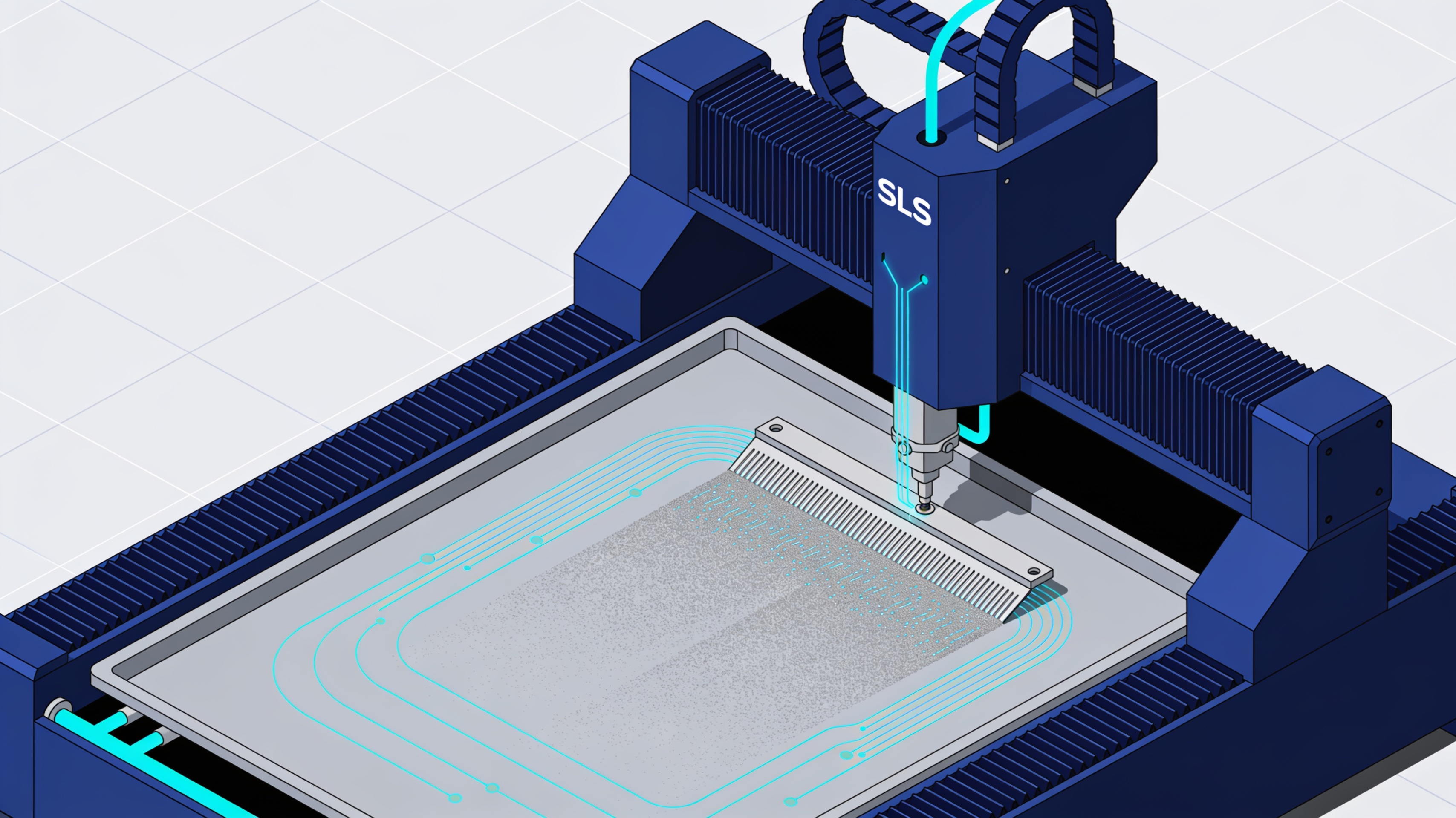
- CADmore Metal (Columbia, South Carolina): production of metal parts with Cold Metal Fusion on SLS machines traditionally used for polymers
- ADDMAN (Statesville, North Carolina): use of statistics from 3D printer fleets to improve quality and consistency
Diversified use cases
The episodes cover applications ranging from aerospace to social recycling, showing the versatility of additive manufacturing.
The episode at CADmore Metal is particularly interesting from a technological standpoint. The company uses Cold Metal Fusion to produce metal components on SLS machines normally associated with polymer printing.
This application demonstrates how established technologies can be adapted to new materials. The boundary between polymer and metal printing becomes more blurred.
The ADDMAN case instead focuses on the management aspect. The company collects statistical data from a large fleet of 3D printers to optimize process quality and repeatability.
Target: professionals looking for concrete solutions
The series is aimed at industry operators who can draw inspiration from already established realities in additive manufacturing.
According to the source, many laboratories today use 3D printing but are still in the adoption phase of advanced approaches. The consolidated operations documented in the series possess significant expertise.
The videos are short and easily consumable. The limited duration facilitates viewing even by professionals with little time available.
Watching these episodes, a laboratory could discover ideas and concepts previously not considered, according to what the source reported.
Future perspectives
ASTM plans to release further episodes over time, expanding coverage of use cases and technologies.
The series is published on the YouTube channel of the ASTM Additive Manufacturing Center of Excellence. New episodes are planned that will document other production realities.
The initiative fits into the broader mandate of the ASTM Center of Excellence to promote best practices and standardization in additive manufacturing. The video documentation represents a practical complement to the technical standards traditionally developed by the organization.
The choice of diversified cases – from aerospace to social, from metallic to polymeric – suggests an inclusive approach that recognizes the cross-cutting nature of additive technology across different industrial sectors.
article written with the help of artificial intelligence systems
Q&A
What is the Manufacturing Unlimited video series about?
It is a series launched by the ASTM Additive Manufacturing Center of Excellence documenting real-world 3D printing applications in production settings. Hosted by Peter Zelinski, it features factory visits and interviews on operational challenges and adopted solutions.
Which companies were visited in the first four episodes?
The early episodes cover Orizon Aerostructures, Habitat for Humanity ReStore in Austin, CADmore Metal in South Carolina, and ADDMAN in North Carolina. Each case illustrates a different aspect of industrial additive manufacturing use.
What technology does CADmore Metal use to produce components?
CADmore Metal employs Cold Metal Fusion technology to produce metal parts. This technique is applied on SLS machines traditionally used for polymer printing, demonstrating the adaptability of existing technologies.
How is ADDMAN using data from its 3D printers?
ADDMAN collects statistics from a large fleet of 3D printers to improve process quality and consistency. The goal is to optimize repeatability through advanced managerial analysis of operational data.
Who is the ASTM video series primarily aimed at?
The series targets industry professionals seeking concrete solutions and inspiration from established realities. It is useful for operators looking to move from initial adoption to more advanced and structured operations.