Settore Industriale: Electronics

From Maker Lab to Real Production: How Desktop 3D Printers Are Scaling in the Consumer and Industrial Markets

From Maker Lab to Real Production: How Desktop 3D Printers Are Scaling in the Consumer and Industrial Markets

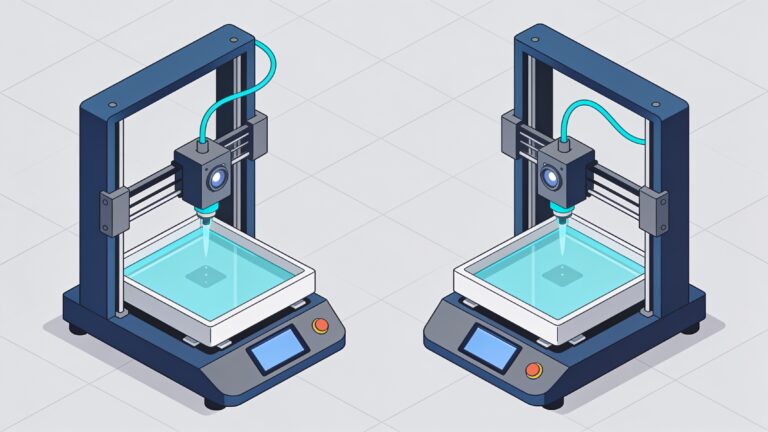
3D desktop printers are becoming concrete production tools, no longer just for makers. In 2025, China exported over 5 million units, with a 331% growth. Technological improvements make them more reliable, easier to use, and suitable for professional sectors like cinema and racing drones. Adoption is growing among professionals, schools, and small businesses, with concrete cases of pr

Managing Software and Firmware Updates for Printers: A Technical Operational Guide

Managing Software and Firmware Updates for Printers: A Technical Operational Guide

Updating printer firmware and software is essential to prevent errors, optimize materials, and improve efficiency. Neglecting them can cause waste, interruptions, and a drop in quality. Following an accurate procedure, with testing and backups, allows you to fully leverage technological advantages and extend the life of the machines.

How to Design a High-Volume 3D Printing University Makerspace

How to Design a High-Volume 3D Printing University Makerspace

The University of Wisconsin–Madison Makerspace is a model of a high-volume 3D printing university laboratory, based on standardized workflows, FDM/FFF technologies, and a hybrid team of students and technicians. Thanks to this approach, the center manages thousands of annual prints with high efficiency, supporting teaching, research, and innovation in a scalable and sustainable ecosystem.

How Conductive Elastomer Pellets Work for Reliable 3D Printing

How Conductive Elastomer Pellets Work for Reliable 3D Printing

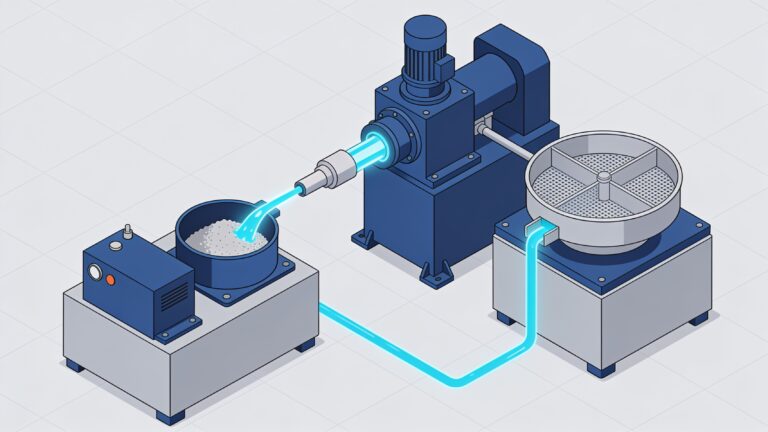
Mechnano's new conductive elastomeric pellets offer reliable electrical and mechanical performance thanks to D'Func technology, which guarantees uniform dispersion of carbon nanotubes, overcoming the limits of traditional ESD materials. Ideal for sectors such as electronics, automation and medical, these materials enable the scalable production of flexible components with yields

Designing “Lights-Out” Factories: The Software Architecture That Makes the Difference

Designing “Lights-Out” Factories: The Software Architecture That Makes the Difference

Designing lights-out factories requires an advanced software architecture that integrates machines, data, and processes in real time. Software-defined automation makes it possible to overcome the limitations of proprietary solutions, ensuring interoperability, security, and scalability. Only in this way can artificial intelligence be fully leveraged to optimize production and maintain control of the p

Industrial Binder Jetting with Ceramic Slurries: Mechanisms, Criticalities, and Advantages Compared to Powder Systems

Industrial Binder Jetting with Ceramic Slurries: Mechanisms, Criticalities, and Advantages Compared to Powder Systems

Binder jetting with ceramic slurries offers industrial advantages such as higher green density and controlled shrinkage, but requires precise management of rheology and material stability. Compared to dry powder systems, this technology allows for greater uniformity and production scalability, provided that advanced control systems and stable formulations are integrated to ensure quality and repeatability

How the Plug-and-Play Optical Interface Made with 3D Printing Works

How the Plug-and-Play Optical Interface Made with 3D Printing Works

New plug-and-play optical interface developed with 3D printing enables high-efficiency connections between optical fibers and integrated photonic circuits, with losses of only 0.78 dB. Thanks to polymer structures created via two-photon polymerization, the system offers passive alignment, compatibility with standard MTP cables, and stable performance over broad bandwidth, paving the way for photonic systems

Accessible LPBF: How Startups Can Produce Metal Without Costs from Industry

Accessible LPBF: How Startups Can Produce Metal Without Costs from Industry

New entry-level LPBF systems, such as Metal-Base, make metal 3D printing accessible to startups and labs with costs under €10,000, thanks to innovative technologies, compact design, and open-source software.

HP MJF Technology in Industrial Services: How to Implement It for Resilient and Responsive Production

HP MJF Technology in Industrial Services: How to Implement It for Resilient and Responsive Production

HP MJF Technology revolutionizes industrial production, enabling flexibility, lead time reduction, and digital warehousing. Ideal for sectors such as aerospace, defense, medical, and data centers, it allows for on-demand production of custom components, improving supply chain resilience and reducing costs. Integration with traditional processes and the use of advanced materials make

How to Transform Lunar Regolith into Printable Electronic Components

How to Transform Lunar Regolith into Printable Electronic Components

An ESA project studies how to transform lunar regolith into conductive materials to print electronic components in space, reducing dependence on Earth supplies.

Smart heat exchangers: thermal efficiency comes from patents

Smart heat exchangers: thermal efficiency comes from patents

New smart heat exchangers, made with 3D printing technologies and patented, offer greater thermal efficiency without pumps or fans. Thanks to innovative geometries such as partial fins and preloaded integration in engines, weight, costs and consumption are reduced, improving reliability and facilitating assembly. Applications in data centers and aerospace confirm adva

Additive Manufacturing in Semiconductor Packaging: The Operational Plan of XTPL and Manz Asia

Additive Manufacturing in Semiconductor Packaging: The Operational Plan of XTPL and Manz Asia

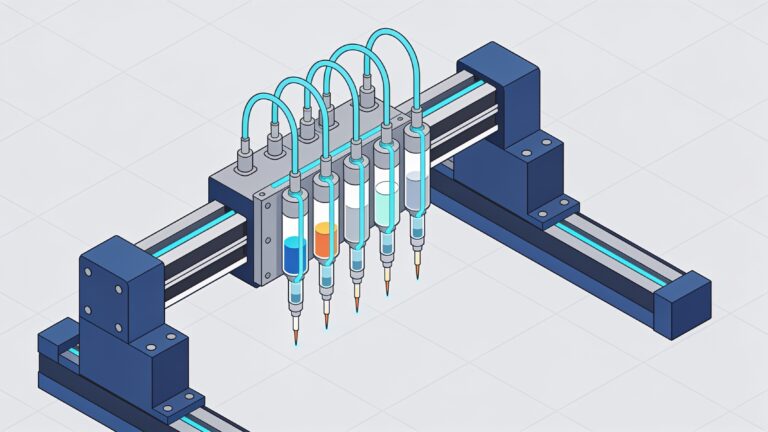
XTPL and Manz Asia collaborate to integrate Ultra-Precise Dispensing (UPD) technology into semiconductor advanced packaging processes. Thanks to this partnership, XTPL can scale the adoption of its solution without infrastructure investments, entering the Taiwanese market through a technological demonstrator. UPD technology enables sub-micron depositions of materials c

/