Settore Industriale: Electronics

Cooling by half a millimeter?

Cooling by half a millimeter?

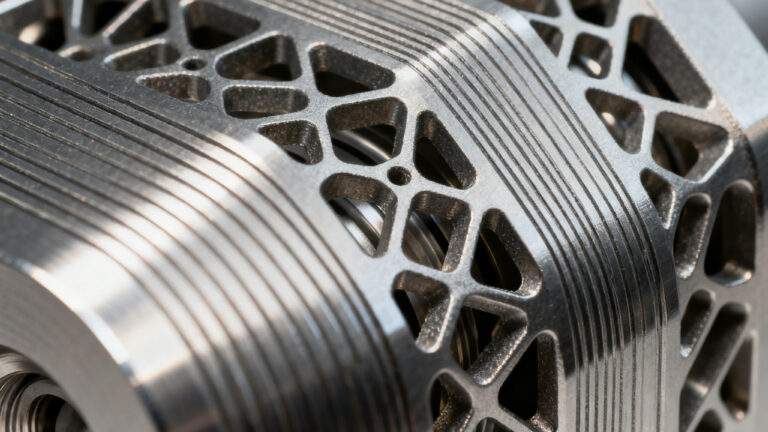
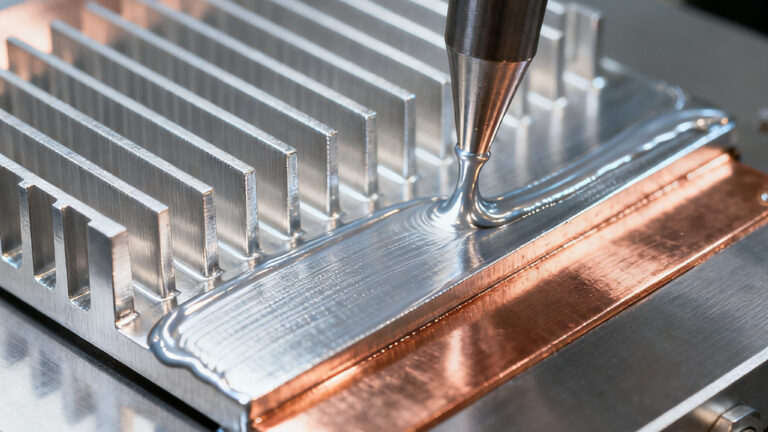
A photopolymerizable ceramic slurry formulation enables 3D printing of components with cooling channels down to 0.2 mm. DLP technology overcomes the limits of traditional bonding, opening new perspectives for wafers, micro-coolers, and laser mirrors. Scalability and material stability remain to be verified.

Threaded inserts, allies for additive manufacturing

Threaded inserts, allies for additive manufacturing

Metal threaded inserts make industrial 3D printing ideal for assembleable and durable parts. Integrating them into digital quotes reduces times, errors, and costs, eliminating the weak points of plastic threads.

3D RF Components: Less Weight, More Power?

3D RF Components: Less Weight, More Power?

3D printing is revolutionizing the production of RF components, enabling lighter antennas and integrated EMI shielding in electronic packages. Additive technologies improve efficiency, customization, and reduce weight, while posing challenges regarding materials and repeatability.

Who is in charge when costs dictate the law?

Who is in charge when costs dictate the law?

The cost reduction of key components such as lasers and light engines is democratizing additive manufacturing, allowing access to metal 3D printers under $10,000. This change is redefining market dynamics, shifting the focus from hardware to services and adaptability to specific use cases. Modularity and standardization allow new realities to com

Why does this resin cost 5x but print twice as much?

Why does this resin cost 5x but print twice as much?

Next-generation photopolymer resins cost more because they are formulated to emulate the properties of engineering plastics like PP or TPU, with chemical precision and control of mechanical characteristics. They are not simple liquids: each resin is designed for specific applications, ensuring quality, durability, and performance similar to injection molding. The difference in pr

Can you really 3D print the CORE One?

Can you really 3D print the CORE One?

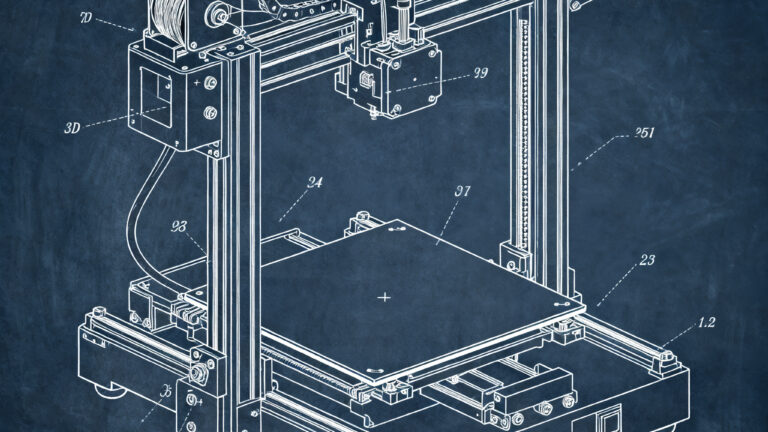
Prusa releases the CORE One CAD files under the new open-source OCL license, which allows modifications, sharing, and internal use, but prohibits direct sale without an agreement. Discover what you can concretely do with STEP and Fusion 360 files.

Touch keys in 3D printing? Here's how to do it

Touch keys in 3D printing? Here's how to do it

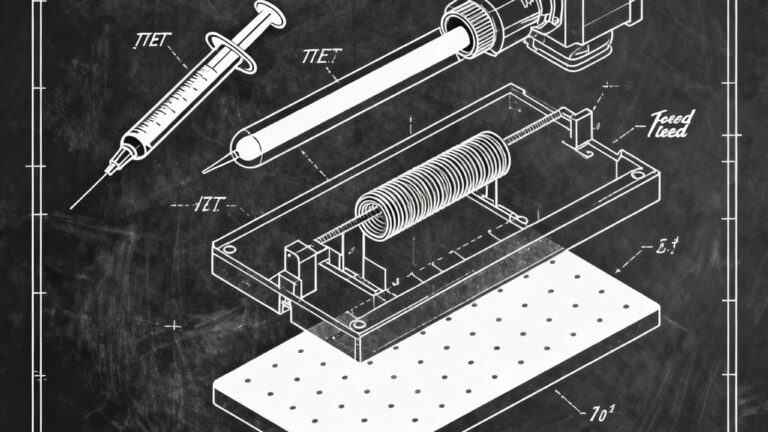
Here's how to integrate touch keys into your 3D printed objects using self-adhesive copper tape and scheduled pauses during printing. Working capacitive sensors are created with simple measures: three-layer depth positioning, holes for electrical connections, and post-print soldering. An economical and accessible solution for integrated touch interfaces.

Low-cost precision? Here are the real trade-offs

Low-cost precision? Here are the real trade-offs

Desktop 3D printing today offers industrial-grade precision at contained costs, but with limits on scale and speed. Solutions like the microArch S150 and its Ultra upgrade balance precision and throughput for R&D and pilot production. Entry-level post-processors like the M4 Basic improve finish, albeit with dimensional limits. The right choice depends on the specific use case.

Aerosol Jet Printing: Really Revolutionary?

Aerosol Jet Printing: Really Revolutionary?

Transistors produced with Aerosol Jet Printing are overcoming the limits of printed electronics, opening new paths for flexible and low-cost devices. Thanks to a resolution of 10-50 micrometers and the use of printable materials, this technology allows for the realization of circuits on 3D substrates with good electrical reliability, suitable for sensors, wearable electronics, and circuits lo

From Maker Lab to Real Production: How Desktop 3D Printers Are Scaling in the Consumer and Industrial Markets

From Maker Lab to Real Production: How Desktop 3D Printers Are Scaling in the Consumer and Industrial Markets

3D desktop printers are becoming concrete production tools, no longer just for makers. In 2025, China exported over 5 million units, with a 331% growth. Technological improvements make them more reliable, easier to use, and suitable for professional sectors like cinema and racing drones. Adoption is growing among professionals, schools, and small businesses, with concrete cases of pr

Managing Software and Firmware Updates for Printers: A Technical Operational Guide

Managing Software and Firmware Updates for Printers: A Technical Operational Guide

Updating printer firmware and software is essential to prevent errors, optimize materials, and improve efficiency. Neglecting them can cause waste, interruptions, and a drop in quality. Following an accurate procedure, with testing and backups, allows you to fully leverage technological advantages and extend the life of the machines.

How to Design a High-Volume 3D Printing University Makerspace

How to Design a High-Volume 3D Printing University Makerspace

The University of Wisconsin–Madison Makerspace is a model of a high-volume 3D printing university laboratory, based on standardized workflows, FDM/FFF technologies, and a hybrid team of students and technicians. Thanks to this approach, the center manages thousands of annual prints with high efficiency, supporting teaching, research, and innovation in a scalable and sustainable ecosystem.

/