Case Study: Education

Can AM revolutionize the transport of nuclear fuel?

Can AM revolutionize the transport of nuclear fuel?

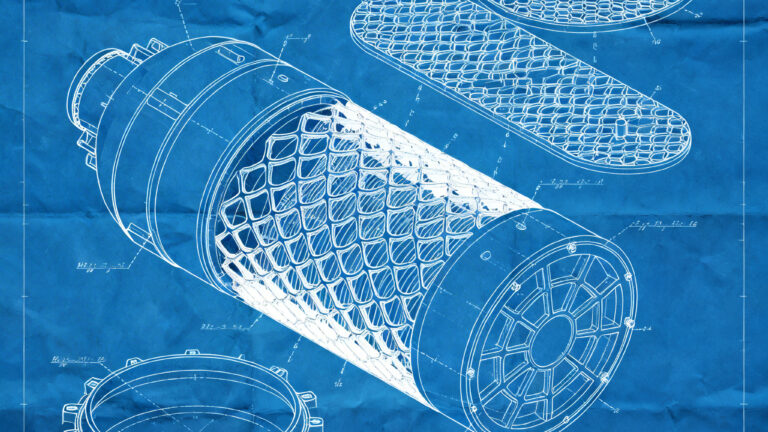
Additive manufacturing could revolutionize the transport of spent nuclear fuel, reducing costs and production times for critical components such as impact limiters. Technologies like FFF and PBF allow for complex geometries and savings of up to $1.7 million per cask. Studies by Orano and UNC Charlotte confirm technical feasibility, but specific regulatory standards are still lacking.

HP extends Multi Jet Fusion service: here is how the 3D printing industry is changing

HP extends Multi Jet Fusion service: here is how the 3D printing industry is changing

HP expands Multi Jet Fusion service with the new IF 600HT printer and the Maintenance & Monitoring Service, targeting the industry with greater reliability, scalability, and flexibility on materials.

Advanced Training for Industrial 3D Printing: How Companies Build Scalable Competencies

Advanced Training for Industrial 3D Printing: How Companies Build Scalable Competencies

Advanced training in industrial 3D printing is now strategic for bridging the skills gap and ensuring the growth of the sector. Structured programs, academic partnerships, and hybrid learning models are preparing professionals capable of integrating technology and productive practice.

How to Design a High-Volume 3D Printing University Makerspace

How to Design a High-Volume 3D Printing University Makerspace

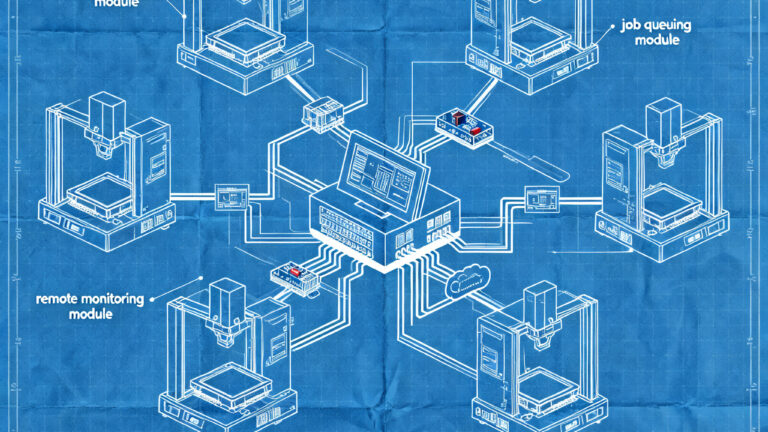
The University of Wisconsin–Madison Makerspace is a model of a high-volume 3D printing university laboratory, based on standardized workflows, FDM/FFF technologies, and a hybrid team of students and technicians. Thanks to this approach, the center manages thousands of annual prints with high efficiency, supporting teaching, research, and innovation in a scalable and sustainable ecosystem.

Desktop 3D printer: industrial or prosumer? How to choose

Desktop 3D printer: industrial or prosumer? How to choose

Entry-level desktop 3D printing offers low costs but presents limitations in quality, materials, and reliability compared to industrial systems. Compromises on advanced materials, post-sales support, and longevity make a careful evaluation of actual production needs necessary before purchase.

How to Integrate Consumer and Educational 3D Resources into Your Projects

How to Integrate Consumer and Educational 3D Resources into Your Projects

Integrate free or premium 3D resources into your educational or consumer projects to accelerate development and innovation. Choose suitable platforms, verify quality and licenses, and optimize the workflow for professional results.

Practical Guide to Using Consumer-Grade LiDAR: Tools, Workflow, and Maker vs Industrial Use Case

Practical Guide to Using Consumer-Grade LiDAR: Tools, Workflow, and Maker vs Industrial Use Case

The guide illustrates the use of consumer-grade LiDAR for 3D scanning, comparing tools such as smartphones with integrated LiDAR, portable scanners like 3DMakerpro Lynx and Toucan, and practical workflows for makers and small productions. The advantages of each technology are analyzed in terms of precision, portability, and costs, with application examples in design, teaching, and prototyping

Accessible LPBF: How Startups Can Produce Metal Without Costs from Industry

Accessible LPBF: How Startups Can Produce Metal Without Costs from Industry

New entry-level LPBF systems, such as Metal-Base, make metal 3D printing accessible to startups and labs with costs under €10,000, thanks to innovative technologies, compact design, and open-source software.

How 3D Modeling Tools Work for Youth Education

How 3D Modeling Tools Work for Youth Education

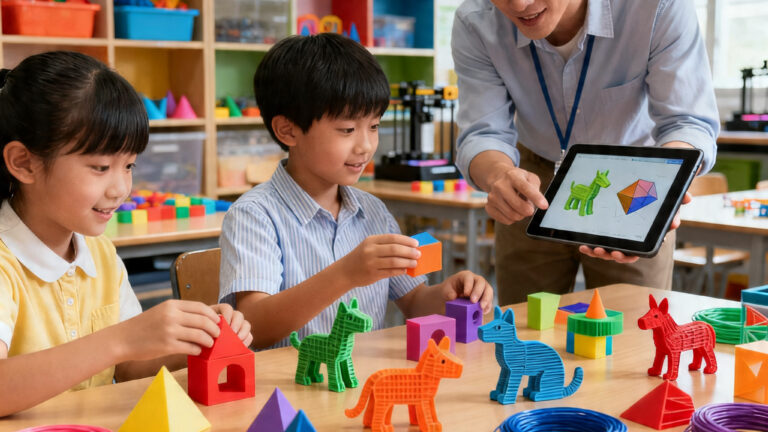
3D modeling tools are revolutionizing youth education, making STEAM learning more visual, interactive, and engaging. Through intuitive interfaces and complete design cycles, students transform ideas into physical objects, developing technical and creative skills from primary school. Software like BlocksCAD and SelfCAD combine geometry, coding and s

Educational Robotics and Maker Approach: Practical Guide for Schools and Teachers

Educational Robotics and Maker Approach: Practical Guide for Schools and Teachers

Educational robotics and the maker approach, if integrated with a structured teaching plan, can transform learning into a practical experience. Success depends on teacher training, the appropriate choice of technologies and materials, and coherent curricular integration.

Cutting-Edge University Labs: How 3D Printing Transforms Research and Education

Cutting-Edge University Labs: How 3D Printing Transforms Research and Education

3D printing is revolutionizing university laboratories, integrating into teaching and research processes. A key tool for rapid prototyping, it allows students to translate theory into practice, accelerating learning. Case studies such as drones and aerospace components demonstrate the real-world application of the technology, supported by advanced motion capture systems and workflow

How 3D Anatomical Models Work in Surgical Planning for Medical Education

How 3D Anatomical Models Work in Surgical Planning for Medical Education

Surgical planning with 3D anatomical models is revolutionizing medical education, offering realistic and personalized simulations for surgeon training. Thanks to multi-layer printing technology and radiological data, it is possible to faithfully recreate human tissues, allowing for simulated interventions without risk to patients. Models, used in university and cli

/