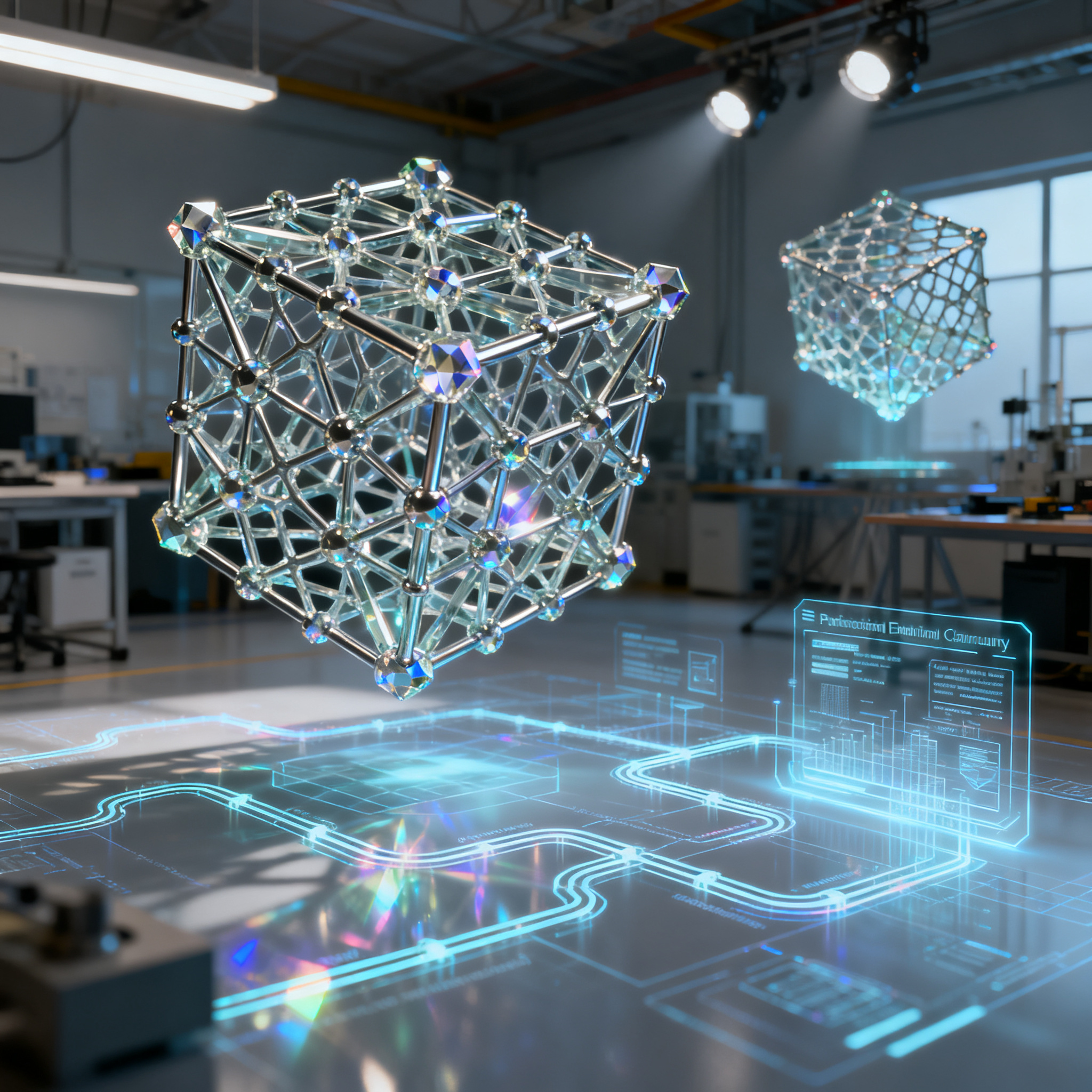
3 key skills for AM programs that work
L’education in’ additive manufacturing requires a structured approach that goes beyond l’exposure superficial to machines and trains students capable of thinking in terms of integrated engineering solutions. Effective programs start from the skills required by the market, train prepared teachers, and connect different disciplines to create a systemic vision of the production process.
- Orientation to professional outcomes, not to technological availability
- Teacher training on materials, processes and engineering trade-offs
- Integration of design, engineering and production in a coherent ecosystem
Professional outcomes before machines
Educational programs must start from the skills required by the market, not from the technology available in the classroom.
AM programs are often built around equipment rather than outcomes. Schools invest in advanced printers and dedicate lab spaces, assuming that access alone translates into innovation.
Manufacturers seek problem solvers who understand design intent, material behavior, and process trade-offs. Instead, they find trainees who approach AM as a standalone tool rather than an integrated discipline.
Without a structured educational framework, students learn to operate a machine but not to apply AM as an engineering solution. Students seek evidence that their skills are transferable beyond the classroom. Programs that do not integrate AM into core learning struggle to keep up.
Training teachers on materials and processes
Effective teaching requires instructors prepared to explain not only how a printer works, but why one material is chosen over another.
Effective AM education starts with teachers. Without guidance, teachers may limit its use to a single course, application, or material, despite AM involving design, healthcare, chemistry, aerospace, and advanced manufacturing workflows.
To unlock the potential of AM, educators need context, confidence, and curriculum beyond hardware. Certification programs help teachers decide when AM adds value, when traditional methods are more suitable, and which materials align with specific performance requirements.
Georgia Tech organizes workshops for STEM teachers, providing skills on the organic integration of 3D design into lessons. This includes the joint development of teaching modules that connect existing curriculum to hands-on exercises: designing optimized structural supports, simulating mechanical behaviors, or modeling scientific phenomena.
The technology is not presented as an isolated activity, but as a cross-cutting tool to strengthen understanding and motivation. Students must evaluate problems, choose the right tools, and apply AM with intention.
Connecting design, engineering and production
AM is not just printing: a true program integrates different disciplines to create a systemic vision of the production process.
Additive manufacturing involves design, engineering and production in an interconnected way. Effective programs reflect this reality through projects that require multiple skills.
At the University of Central Peru, research groups use the AM infrastructure for studies on materials, component optimization and device customization. Teaching intertwines with research and territory-oriented innovation, creating an ecosystem in which students see the entire production cycle.
Integrated approach
- Design: Students define functional requirements and process constraints.
- Material selection: They evaluate mechanical properties, costs and technological compatibility.
- Validation: Testano prototipi e analizzano come l’AM si inserisce nell’ecosistema produttivo più ampio.
In southwestern Georgia, the program connects high schools, technical institutes and industrial partners. Companies contribute with testimonials, visits and internships that put students in contact with real production departments and technical offices.
The “Tri-District Race” competition requires teams to design and build devices using 3D printing, evaluating theoretical and practical skills. This facilitates the transition from lab to work, presenting AM as part of a package that includes technical literacy, teamwork and understanding of production processes.
Transforming users into conscious designers
A solid educational program in AM transforms students from occasional users to conscious designers. AM education is about both mindset and machines.
When students learn to evaluate problems, choose tools, and apply AM with intention, they gain confidence, adaptability, and the ability to turn ideas into concrete results. This prepares the next generation of engineers.
Start redefining your curriculum based on the professional outcomes you want to achieve, not on the technology you have available. Access to printers is not enough: you need educational models that train professionals capable of integrating AM into complete engineering solutions.
article written with the help of artificial intelligence systems
Q&A
Why shouldn't educational programs in additive manufacturing be built around available equipment?
Because access to machines alone does not translate into innovation. Manufacturers seek problem solvers who understand design intent, material behavior, and process trade-offs, not simply printer operators. Programs must start from the skills required by the market to train professionals capable of integrating AM into complete engineering solutions.
What is the crucial role of teacher training in teaching additive manufacturing?
Teachers must be able to explain not only how a printer works, but why one material is chosen over another and when AM adds value compared to traditional methods. Without this preparation, AM risks being relegated to limited use in a single course or application, losing its cross-cutting nature.
How does an effective AM program integrate different disciplines?
An effective program links design, engineering, and production into a coherent ecosystem, requiring students to define functional requirements, select materials based on mechanical properties and costs, and validate prototypes within the broader production cycle. This approach reflects the interconnected reality of additive manufacturing.
What concrete examples does the article cite to illustrate the integration of AM in education?
The article mentions Georgia Tech, which organizes workshops for STEM teachers on integrating 3D design, and the Central University of Peru, where teaching intertwines with research on materials and optimization. It also cites the program in southwest Georgia that connects schools, technical institutes, and industry through internships and the "Tri-District Race" competition.
What is the ultimate goal of a solid educational program in additive manufacturing?
To transform students from occasional users into informed designers, capable of evaluating problems, choosing the right tools, and applying AM with intention. This develops confidence, adaptability, and the ability to turn ideas into concrete results, preparing engineers ready for the workforce.