Applicazione: Prototyping

Two nozzles, a real advantage? Here's how the Bambu X2D works

Two nozzles, a real advantage? Here's how the Bambu X2D works

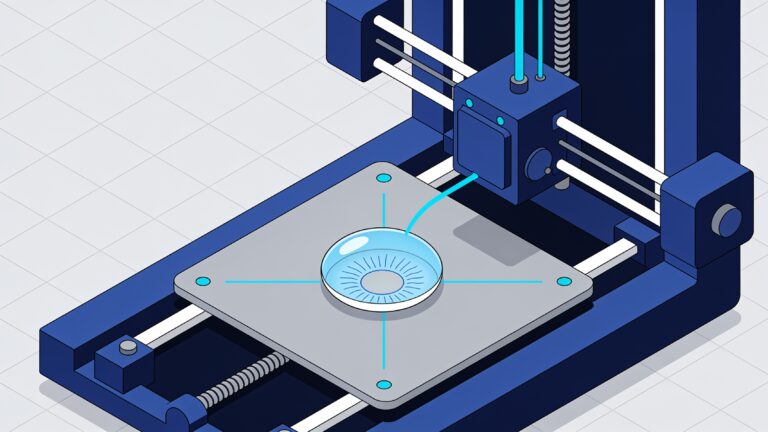
The Bambu Lab X2D introduces a dual nozzle system with mechanical switching to improve precision and support removal. One nozzle prints the model, the other handles supports with dedicated material, reducing post-processing and waste. The absence of additional motors on the head increases reliability and precision, with over a million change cycles tested. Main Extruder

Metrology in 3D Scanning: How Integrated Processing Works and Its Industrial Applications

Metrology in 3D Scanning: How Integrated Processing Works and Its Industrial Applications

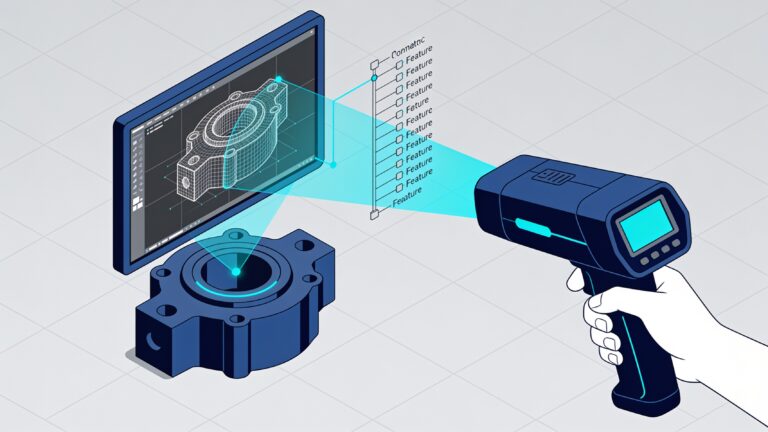
Integrated metrology in 3D scanners enables real-time quality control, reducing time and costs. Thanks to advanced sensors, geometric algorithms, and connectivity, these systems process dimensional data directly during scanning, integrating with metrology platforms and production processes. Despite some technological limitations, they represent a breakthrough for high-

Polyamide for 3D printing: why traditional PA is no longer enough (and what to use today)

Polyamide for 3D printing: why traditional PA is no longer enough (and what to use today)

Technical polyamides offer excellent performance, but their printing complexity often makes them impractical. SP4 CF15 from 3DBooster was created to solve this paradox: 8.5 GPa rigidity, thermal resistance up to 180°C, and open-air printability without advanced setups.

Transform Images into 3D Textures in 5 Minutes?

Transform Images into 3D Textures in 5 Minutes?

CNC Kitchen's BumpMesh transforms images into realistic 3D textures in minutes, directly from the browser. Without complex software, it allows you to apply displacement maps to create physical details on 3D models, ideal for 3D printing and rendering. Open-source, free, and easy-to-use tool.

Does 3DSearch beat native platforms?

Does 3DSearch beat native platforms?

3DSearch is a meta-engine that indexes millions of 3D models from various platforms, offering fast search and a modern interface. While scalable and comprehensive, it does not yet replace the integrated features and community of native platforms. Ideal for quick research, less suitable for professional workflows.

Can you really recycle your 3D filament at home?

Can you really recycle your 3D filament at home?

Creality develops a home recycling system for 3D filament, composed of a shredder and extruder, which turns print failures into new filament. The process includes shredding, drying, and re-extrusion, with acceptable tolerances for non-professional use. It supports various materials and allows for creative customizations, yet still requires manual intervention. A first step

Transparent and Special: How Do They Really Work?

Transparent and Special: How Do They Really Work?

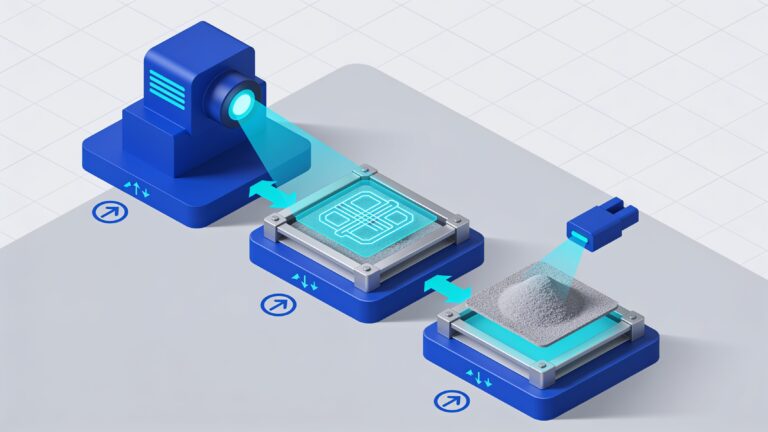
Transparent and special photopolymers are revolutionizing industrial 3D printing thanks to light transmittance greater than 90%, biocompatibility, and micrometric precision. Used in sectors such as medical, microfluidics, and jewelry, these materials offer advanced optical and mechanical properties but require specific knowledge for effective use.

Who wins in 2026 among FDM toolchangers?

Who wins in 2026 among FDM toolchangers?

In 2026, the FDM toolchanger market has consolidated: here is the solution that stands out for performance, reliability, and software integration. The best choice depends on the specific workload.

FullSpectrum and Toolchanger: How Advanced Color 3D Printing Really Works

FullSpectrum and Toolchanger: How Advanced Color 3D Printing Really Works

Advanced color 3D printing is evolving with FullSpectrum and intelligent toolchangers, combining optical mixing and rapid tool changing to achieve realistic gradients and shades, reducing waste and downtime. Technologies like Snapmaker Orca Full Spectrum and multi-nozzle toolchangers open new possibilities for aesthetic prototyping and multicolor design, maintaining high productivity.

Functional and Adaptive Filaments: Mechanisms of Failure and Thermomechanical Stability

Functional and Adaptive Filaments: Mechanisms of Failure and Thermomechanical Stability

Composite filaments for FDM 3D printing, enriched with carbon or glass fibers, exhibit brittleness and risk of breakage during printing due to poor integration between additives and the polymer matrix. Chamber heating does not improve the situation and may worsen the problem. Structural discontinuities generate localized stresses, especially in the filament path curves

Beyond Traditional Slicing: Advanced Architectures for Path Planning in Industrial 3D Printing

Beyond Traditional Slicing: Advanced Architectures for Path Planning in Industrial 3D Printing

The article explores how advanced software architectures, such as 64-bit systems and modern geometric libraries, are revolutionizing path planning in slicers for industrial 3D printing, improving precision, reliability, and efficiency.

Photopolymer Resin Safety in SLA Printers: Process Standardization and Informed Choices

Photopolymer Resin Safety in SLA Printers: Process Standardization and Informed Choices

SLA 3D printing with photopolymer resins requires attention to chemical risks. Material selection, operational safety, and disposal are fundamental for health and compliance.

/