Settore Industriale: Automotive

Polyamide for 3D printing: why traditional PA is no longer enough (and what to use today)

Polyamide for 3D printing: why traditional PA is no longer enough (and what to use today)

Technical polyamides offer excellent performance, but their printing complexity often makes them impractical. SP4 CF15 from 3DBooster was created to solve this paradox: 8.5 GPa rigidity, thermal resistance up to 180°C, and open-air printability without advanced setups.

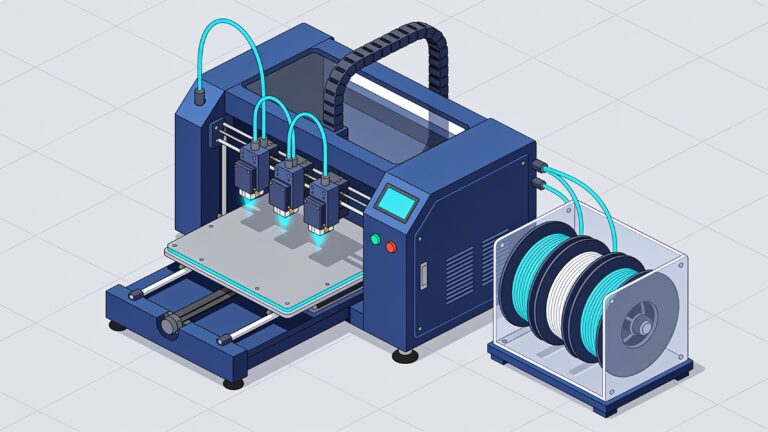
Who wins in 2026 among FDM toolchangers?

Who wins in 2026 among FDM toolchangers?

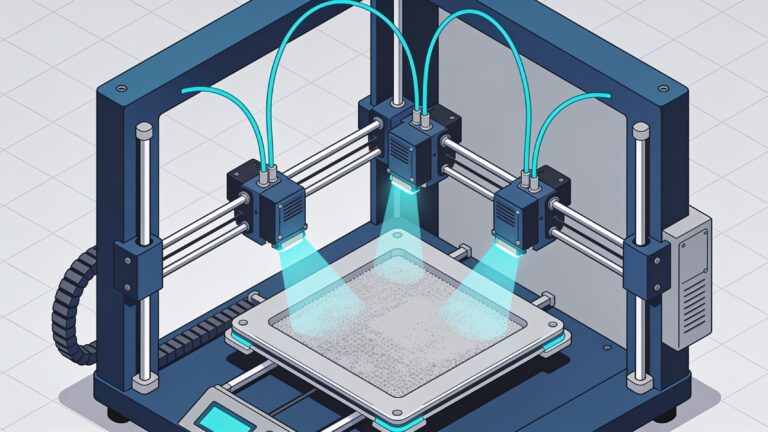
In 2026, the FDM toolchanger market has consolidated: here is the solution that stands out for performance, reliability, and software integration. The best choice depends on the specific workload.

How Lightweight Reticulated and Foamed Structures Work: A Technical Overview of Advanced Composite Materials

How Lightweight Reticulated and Foamed Structures Work: A Technical Overview of Advanced Composite Materials

New IFAM technique combines foam and 3D structures for lightweight, high-performance, low-cost composites, with energy absorption up to 10x higher.

Functional and Adaptive Filaments: Mechanisms of Failure and Thermomechanical Stability

Functional and Adaptive Filaments: Mechanisms of Failure and Thermomechanical Stability

Composite filaments for FDM 3D printing, enriched with carbon or glass fibers, exhibit brittleness and risk of breakage during printing due to poor integration between additives and the polymer matrix. Chamber heating does not improve the situation and may worsen the problem. Structural discontinuities generate localized stresses, especially in the filament path curves

Beyond Traditional Slicing: Advanced Architectures for Path Planning in Industrial 3D Printing

Beyond Traditional Slicing: Advanced Architectures for Path Planning in Industrial 3D Printing

The article explores how advanced software architectures, such as 64-bit systems and modern geometric libraries, are revolutionizing path planning in slicers for industrial 3D printing, improving precision, reliability, and efficiency.

Comparison of 3D Printing Technologies for Polymers: FDM, SLA, SLS, and MJF Compared

Comparison of 3D Printing Technologies for Polymers: FDM, SLA, SLS, and MJF Compared

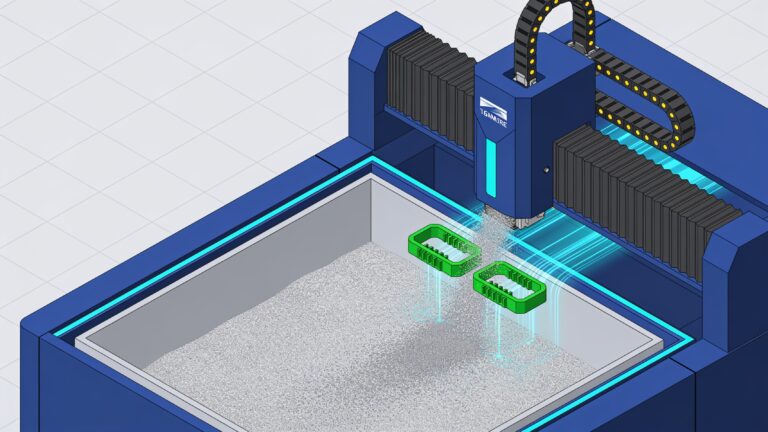
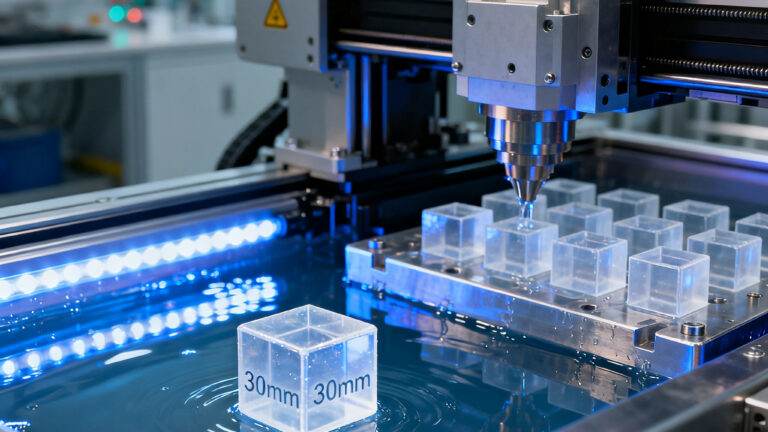
Comparison between 3D printing technologies for polymers: FDM, SLA, SLS, and MJF. Each technology offers specific advantages in terms of precision, mechanical strength, surface finish, and industrial applications. The evolution of materials is expanding operational boundaries in advanced sectors such as aerospace, automotive, and medical.

How the New CAD Cloud-Native Is Revolutionizing Design for 3D Printing

How the New CAD Cloud-Native Is Revolutionizing Design for 3D Printing

The new cloud-native CAD revolutionizes design for 3D printing, overcoming the limits of traditional systems. Thanks to hybrid modeling, simulation integration, and automation, it enables rapid and precise modifications, reducing times and errors. Ideal for scalable and innovative additive productions.

Industrial 3D Printing: Contract Clauses at Risk and How to Avoid Them

Industrial 3D Printing: Contract Clauses at Risk and How to Avoid Them

Industrial 3D printing presents often underestimated contractual risks, with clauses that unilaterally shift liability and costs onto clients. Key points include: GPS tracking, geographic limits, training obligations, vague definitions of “failure”, and choice of jurisdiction. It is essential to negotiate fair contracts to avoid legal constraints and ensure safe operations.

New Frontiers of the Workforce in Additive Manufacturing: Operational Skills at the Center of Industrial Transformation

New Frontiers of the Workforce in Additive Manufacturing: Operational Skills at the Center of Industrial Transformation

The additive manufacturing industry is evolving towards greater maturity, with a focus on specific skills, production, and customer interaction. An increasing number of professionals is changing the job market, making hiring more selective and promoting internal skill development.

Implementing Direct-to-Consumer in the industrial sector: an operational plan for regional expansion

Implementing Direct-to-Consumer in the Industrial Sector: An Operational Plan for Regional Expansion

Implementing a Direct-to-Consumer (DTC) model in the industrial sector requires a structured approach that goes beyond online sales, integrating design, production, and logistics into an end-to-end workflow. Success depends on the governance of distributed capacity, secure digital platforms, and transparency in processes. Cases like Polymaker and Juise Mobility show how DTC, if well pro

How Energy-Absorbing Metamaterials Are Revolutionizing Structural Safety

How Energy-Absorbing Metamaterials Are Revolutionizing Structural Safety

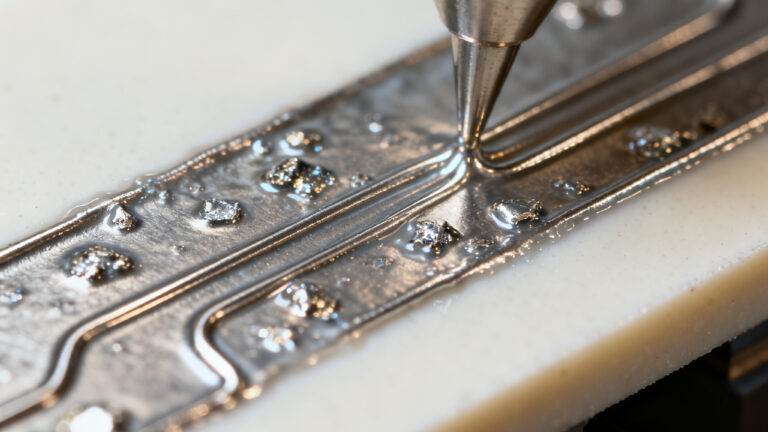
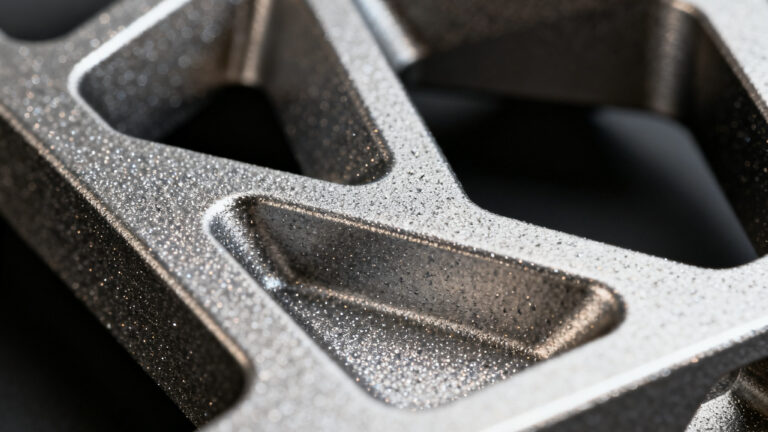
Titanium metamaterials, thanks to their nature-inspired geometric structure realized with SLM 3D printing, absorb energy more efficiently and predictably than traditional materials. Designed to distribute stresses homogeneously, they offer a stable stress plateau during deformation, ideal for structural safety applications in the aerospace field

Desktop 3D printer: industrial or prosumer? How to choose

Desktop 3D printer: industrial or prosumer? How to choose

Entry-level desktop 3D printing offers low costs but presents limitations in quality, materials, and reliability compared to industrial systems. Compromises on advanced materials, post-sales support, and longevity make a careful evaluation of actual production needs necessary before purchase.

/