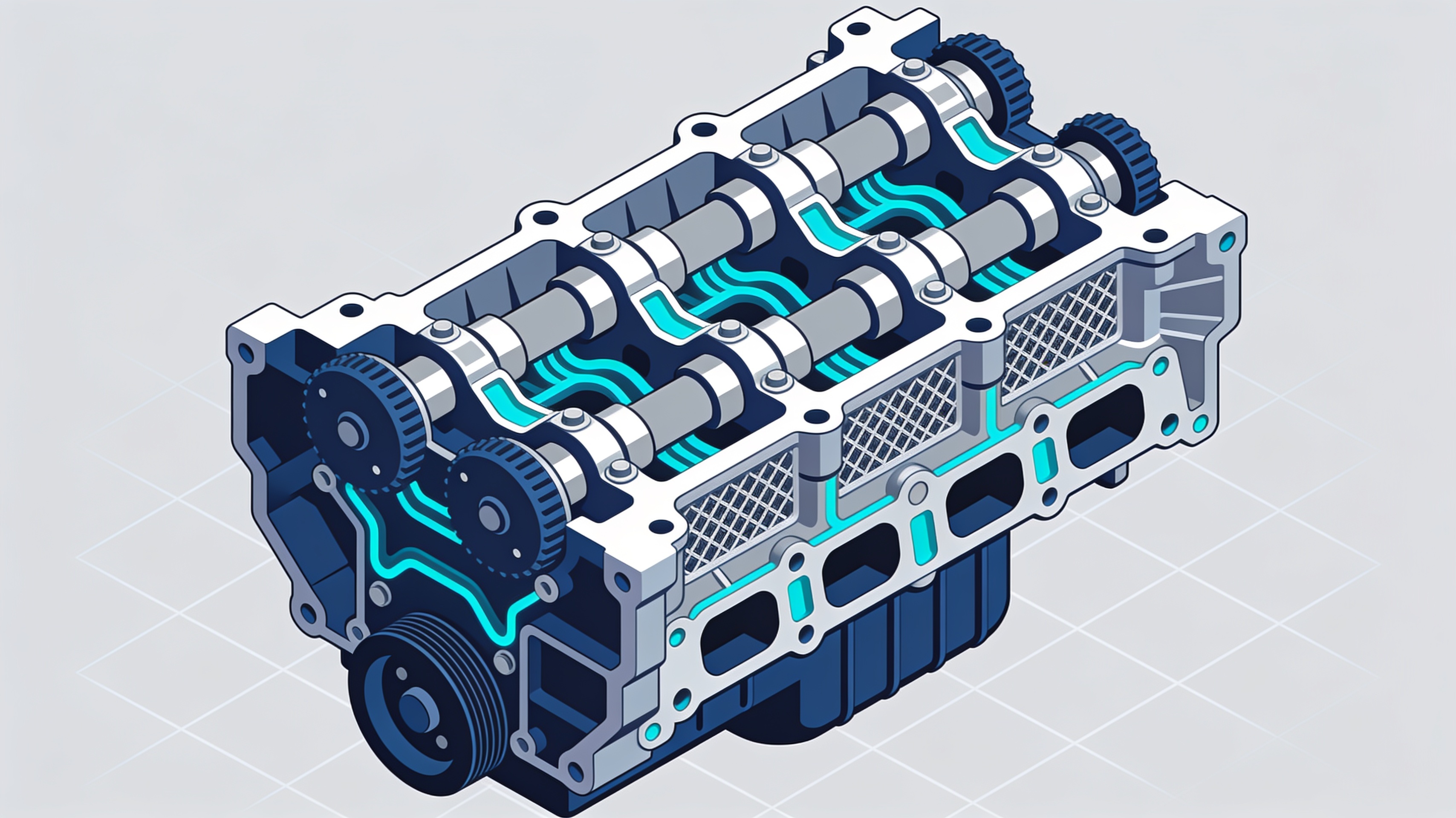
Bosch and Nikon SLM Solutions 3D print a complete V8 engine block
The Bosch Additive Solution Center in Nuremberg has produced a complete V8 engine block in a single piece using a Nikon SLM Solutions NXG XII 600 machine. The component, printed in AlSi10Mg alloy, represents according to Nikon SLM Solutions “a clear sign that additive manufacturing is moving beyond prototyping and development.”.
The technical demonstration aims to establish metal additive manufacturing as a competitive alternative to conventional manufacturing methods in the automotive sector. The partnership between the two groups aims to bring the technology from development centers to the tier 1 and tier 2 supply networks of the automotive industry.
A strategic collaboration for the automotive sector
The partnership goes beyond the simple supply of machinery and includes materials development, process parameters, design for additive manufacturing, and software integration.
Bosch, a tier 1 supplier in the automation sector, chose Nikon SLM Solutions not only for the hardware but for an integrated approach. The stated goal is to transform additive manufacturing “from capability to production reality.”.
The collaboration covers the entire value chain. It includes the development of optimized process parameters, specific design for AM, and integration with existing software systems.
- Elimination of molds and reduction of development times
- Integration of complex cooling channels
- Topologically optimized structures
- Consolidation of multi-component assemblies
- Weight reduction with targeted material placement
The advantages of additive manufacturing for automotive components
3D printing has made it possible to eliminate traditional tooling and accelerate design iterations, opening up new possibilities for structural optimization.
The elimination of molds represents a crucial advantage. The long lead times associated with conventional tooling are completely bypassed, allowing faster development cycles.
The geometric freedom of additive manufacturing has enabled the integration of cooling channels that are impossible to achieve with traditional methods. The structures have been topologically optimized, placing the material “precisely where structural analysis shows it is needed”.
Consolidating multiple parts into a single component reduces assemblies and potential failure points. The overall weight decreases without compromising structural performance.
From demonstration to series production
After the success of the V8 demonstrator, Nikon SLM Solutions believes that additive manufacturing is ready to produce critical automotive components.
The V8 engine block is not just a technical exercise. It represents a validation of technological maturity for high-value applications in the automotive sector.
The engine block was made from AlSi10Mg, a standard aluminum alloy for laser powder bed fusion. The NXG XII 600 machine produced the entire component as a single piece, eliminating joints and welds.
Nikon SLM Solutions states that the technology is now able to compete with conventional production methods for critical components. The partnership with Bosch provides the industrial validation needed to accelerate adoption in the automotive supply chain.
The project demonstrates how additive manufacturing is evolving from a prototyping tool to a production solution for complex final components. The integration of Nikon SLM's process expertise and Bosch's application capability creates a replicable model for other tier 1 and 2 suppliers.
article written with the help of artificial intelligence systems
Q&A
Which machine was used to print the V8 engine block?
The component was manufactured using a Nikon SLM Solutions NXG XII 600 machine at the Bosch Additive Solution Center in Nuremberg. This technology enabled the creation of the entire block as a single piece.
What material was used to print the engine?
The V8 engine block was printed in AlSi10Mg metal alloy. This material was chosen to ensure the structural performance required in the automotive sector.
What are the main technical advantages of this 3D-printed component?
Advantages include the elimination of molds, the integration of complex cooling channels, and weight reduction through topological optimization. Furthermore, multiple parts are consolidated into a single component.
What is the goal of the partnership between Bosch and Nikon SLM Solutions?
The collaboration aims to transform additive manufacturing from a mere prototyping capability into a competitive production reality. The objective is to bring this technology into the tier 1 and tier 2 supply networks of the automotive industry.
How does 3D printing affect development times in the automotive sector?
3D printing eliminates the need for traditional tooling and molds, bypassing the long lead times associated with them. This allows for a significant acceleration of design iterations and development cycles.