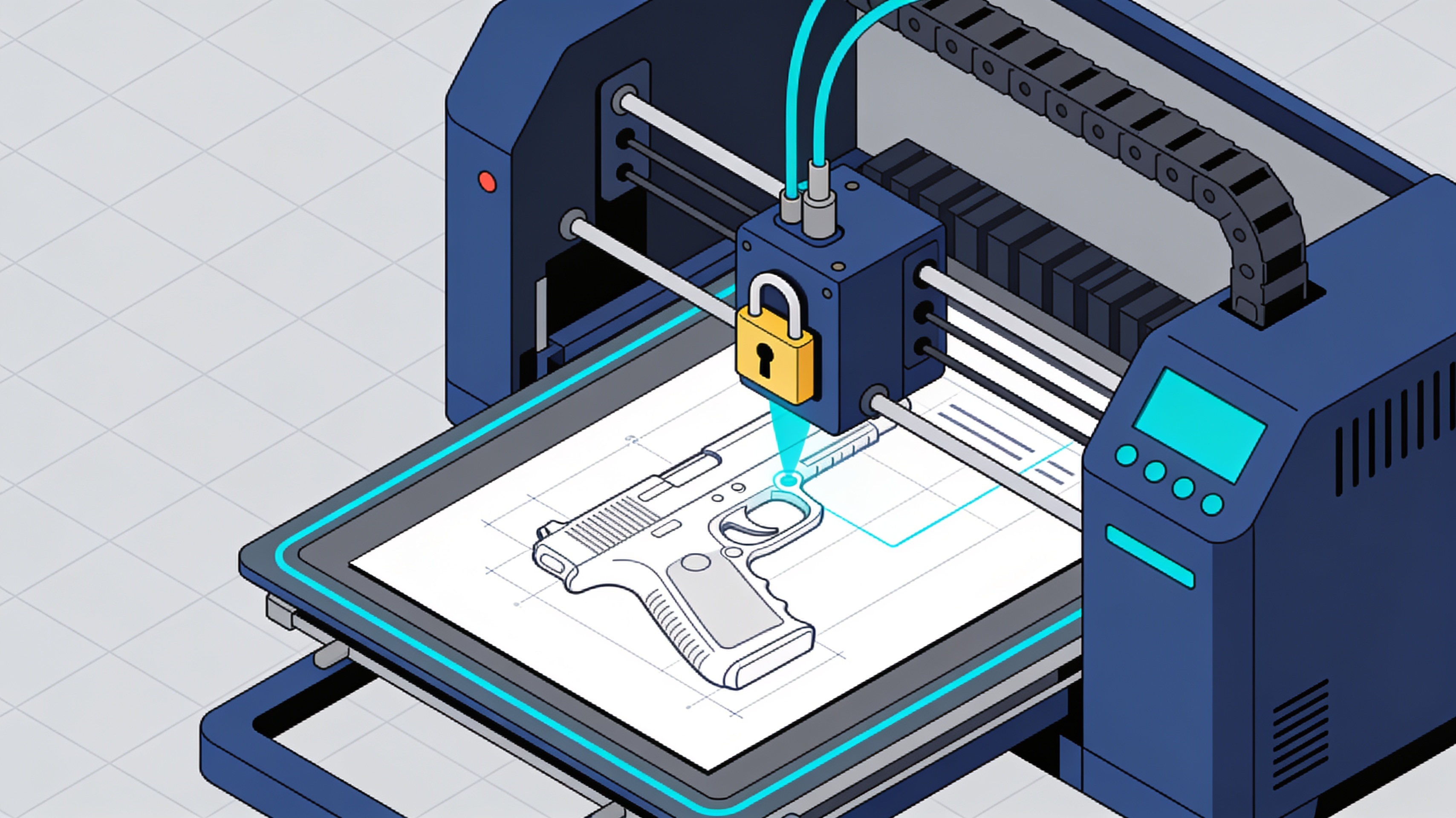
US states toward 3D-printed gun detection laws: Everytown's push
Several American states are developing regulations to regulate 3D printers and prevent the production of weapons. Some laws are already operational, such as in New York State, while others are under discussion in California. The peculiarity: many require technical blocks that are impossible to implement.
The origin of the regulatory push
A coordinated campaign is behind the wave of legislative proposals calling for automatic detection systems in 3D printers.
The sudden proliferation of these proposals has a precise source. Everytown, a non-profit organization committed against gun violence, published the report “Printing Violence” on July 17, 2025. The document represents the main engine behind the legislative initiatives.
Everytown claims to bring together over 11 million people including mayors, teachers, survivors, and ordinary citizens. The goal: to introduce solutions based on scientific evidence to stop gun violence in every community.
- Implementation of algorithms to detect and block firearm files.
- Regulation of 3D printing technology to prevent the production of weapons
- Controls at the level of slicer software, cloud management, and printer firmware
The unresolved technical problem
The laws propose technically impractical solutions according to industry experts.
The strictest regulations require printers to automatically inspect each job and block those identified as weapons. This approach has fundamental limitations.
Even if specific geometries could be detected, there are countless ways to bypass the controls. Those intending to produce weapons illegally would inevitably find alternative solutions.
The report “Printing Violence” identifies three levels where to implement blocks: slicing software, cloud print management platforms, and printer firmware. None of these levels offers a definitive solution.
The industry's response
Operators, companies, and experts are forced to invest resources to modify unrealistic legislative proposals.
The proposals generate intense activity in the 3D printing sector. Manufacturers and professionals must dedicate time and resources to lobbying government representatives. The goal: ensure that the laws are technically feasible.
The situation creates a paradox. States want to act against armed violence, a problem perceived as out of control in the USA. But the proposed solutions risk penalizing legitimate uses without stopping criminal activities.
New York State has already approved legislation on the matter. California and other states are evaluating similar proposals. Some laws simply ban the production of weapons, others impose technical blocks on printers.
Implications for the industry
The debate raises fundamental questions about the balance between public safety and technological freedom.
The issue goes beyond the technical aspect. Regulations could create precedents for the regulation of other digital manufacturing technologies. The risk: stifling innovation in the name of illusory security.
The concept of automatic blocks in 3D printers was already circulating before the Everytown report. But “Printing Violence” provided a structured basis and organizational push to legislative initiatives.
The additive manufacturing industry now finds itself having to balance understanding of security concerns with the need to preserve the accessibility and openness of the technology. A challenge that will require ongoing dialogue between legislators, technical experts, and industry stakeholders.
article written with the help of artificial intelligence systems
Q&A
What is the origin of the new 3D printer regulations in the USA?
The legislative proposals are driven by the 'Printing Violence' report published on July 17, 2025, by the non-profit organization Everytown. This document serves as the primary catalyst for initiatives aimed at stopping gun violence.
What does Everytown's campaign specifically require?
Everytown calls for the implementation of algorithms to detect and block firearm files at the slicer software, cloud management, and firmware levels. The goal is to regulate technology to physically prevent weapon production.
Why do experts consider these laws technically unfeasible?
The regulations require automatic blocks that are impossible to implement definitively, as there are countless ways to bypass geometry controls. No current technical level offers a solution capable of stopping those intent on illegally producing weapons.
Which US states are already implementing or discussing these laws?
New York State has already enacted some of these regulations, while other proposals are currently under discussion in California. Several other states are developing similar rules to regulate 3D printers.
How is the 3D printing industry reacting to these proposals?
Manufacturers and experts are dedicating resources to lobbying efforts to modify legislative proposals deemed unrealistic. The industry's goal is to ensure any resulting laws are technically feasible without penalizing legitimate uses.