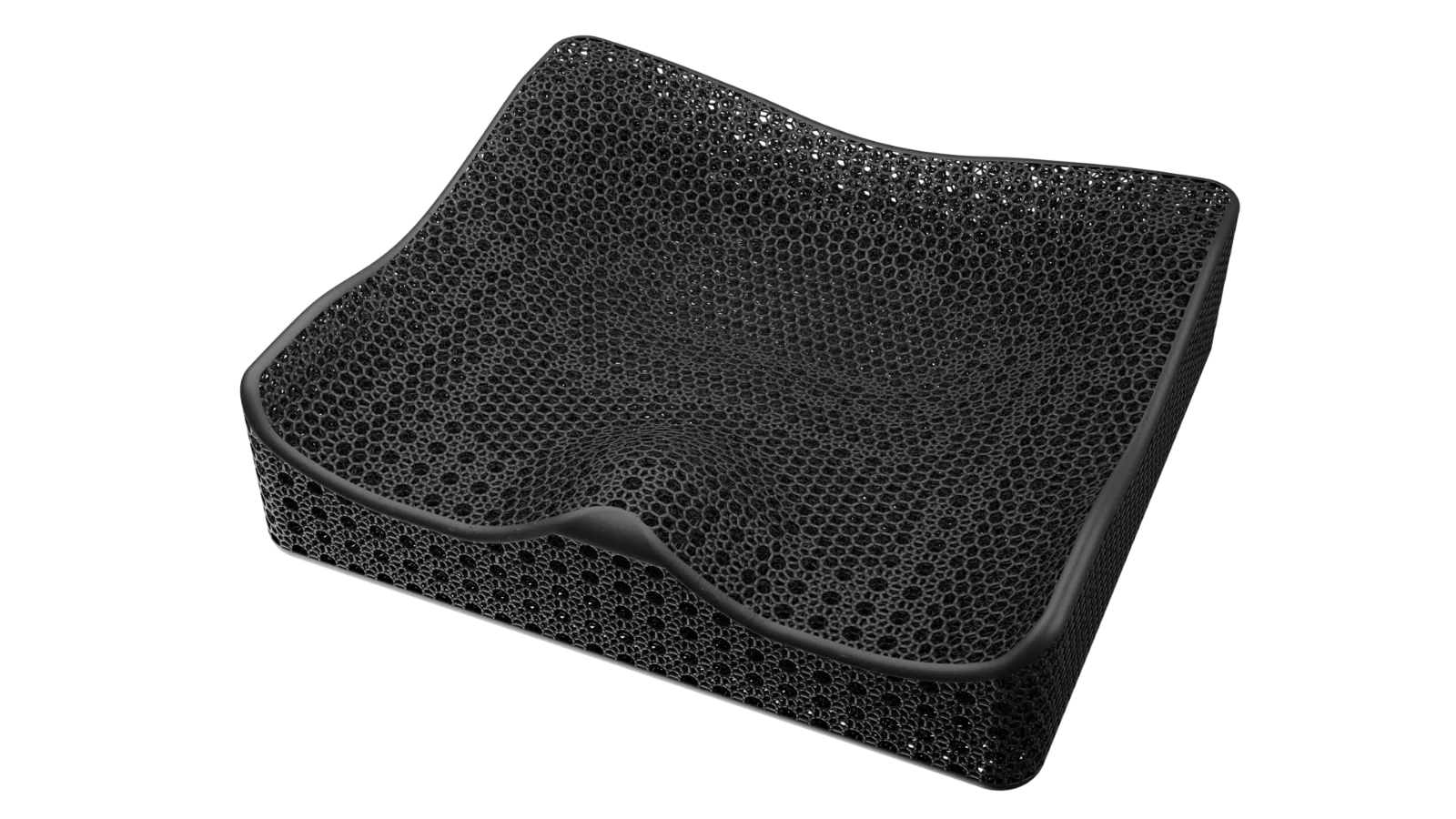
Kalogon sviluppa cuscinetti personalizzati con reticoli a densità variabile stampati in 3D
L’azienda americana propone una soluzione di seduta terapeutica basata su stampa 3D e customizzazione digitale per chi passa molte ore seduto.
Kalogon ha introdotto una tecnologia di seduta supportiva che utilizza la manifattura additiva per creare cuscinetti personalizzati destinati a persone costrette a rimanere sedute per lunghi periodi, come gli utenti di sedie a rotelle. Il sistema si basa su reticoli stampati in 3D con densità variabile per gestire la pressione e prevenire problemi circolatori.
La tecnologia, denominata “Support Seating Technology”, include un sistema di gestione della pressione che fornisce “sollievo mirato” a intervalli specifici. L’obiettivo è rivascolarizzare i tessuti e ripristinare il flusso sanguigno nelle zone sottoposte a pressione costante.
- Cuscinetti stampati in 3D con reticoli a densità variabile per seduta terapeutica
- Personalizzazione basata su misurazioni individuali tramite piattaforma digitale
- Materiale idrofobo, traspirante e facile da pulire
- Destinati a utenti di sedie a rotelle e chi rimane seduto a lungo
The Verro material: lattices with variable geometry
The heart of the technology is a 3D-printed material with zones of different rigidity, which adapts to the specific needs of each user.
The material used is called Verro Variable-Density Lattice and is produced with Kalogon's proprietary technology based on variable-density lattices. The structure is printed with different degrees of rigidity to provide localized support and relief zones.
This approach allows the cushion to be soft where pressure relief is needed and rigid where support is required. The material has specific technical characteristics: it is hydrophobic, promotes air passage for the microclimate, and is easy to clean.
Variable-density lattices allow modulating the mechanical properties within the same printed component, creating zones with different load and deformation capacities.
Digital customization process
Before printing, each user is profiled through a configuration platform that collects measurements and preferences.
Kalogon's system involves a customization process that begins with the collection of a series of measurements and option selections through a dedicated configuration platform. This data is processed to arrive at a personalized design.
Once the design is defined, the cushion is 3D-printed specifically for the customer. The process recalls systems already seen for the production of footwear perfectly fitted to the foot, but applied to seating.
Workflow
- Data acquisition: Measurements and preferences collected via digital platform
- Design: Processing of customized design with variable-density lattices
- Production: 3D printing of the customized cushion
- Delivery: Final product adapted to user's specifications
An emerging application of 3D printing
The Kalogon case represents the extension of additive customization to the medical and therapeutic support sector.
The application developed by Kalogon stands out from previous uses of 3D printing in the seating sector, such as printed furniture or advanced bicycle saddles. The main difference lies in the therapeutic approach and active pressure management.
According to the source, it is a “smart seat” that “adapts to the user”, reversing the traditional paradigm in which people have to adapt to seats. This application extends the world of customized 3D printed products and probably will not be the last in the sector.
The case highlights how additive manufacturing is finding space in specialized niches where mass customization and controlled mechanical properties offer advantages that are difficult to replicate with traditional technologies.
Fabbaloo – “Kalogon Uses 3D Printed Variable-Density Lattices for Customized Supportive Seating”
Q&A
How does Kalogon's Support Seating technology work?
It uses 3D-printed lattices with variable density to manage body pressure. The system provides targeted relief to revascularize tissues and restore blood flow.
What are the features of the Verro material?
The Verro Variable-Density Lattice combines soft zones for pressure relief and rigid areas for support. It is hydrophobic, breathable, and easy to clean.
How are the cushions personalized?
Each user is profiled via a digital platform that collects specific measurements and preferences. This data guides the creation of a unique design before printing.
Who are Kalogon cushions designed for?
They are primarily designed for wheelchair users and individuals required to sit for extended periods. The goal is to prevent circulation issues caused by constant pressure.
What is the advantage of variable-geometry lattices?
They allow mechanical properties to be modulated within the same printed component. This creates zones with different load-bearing and deformation capacities in a single object.