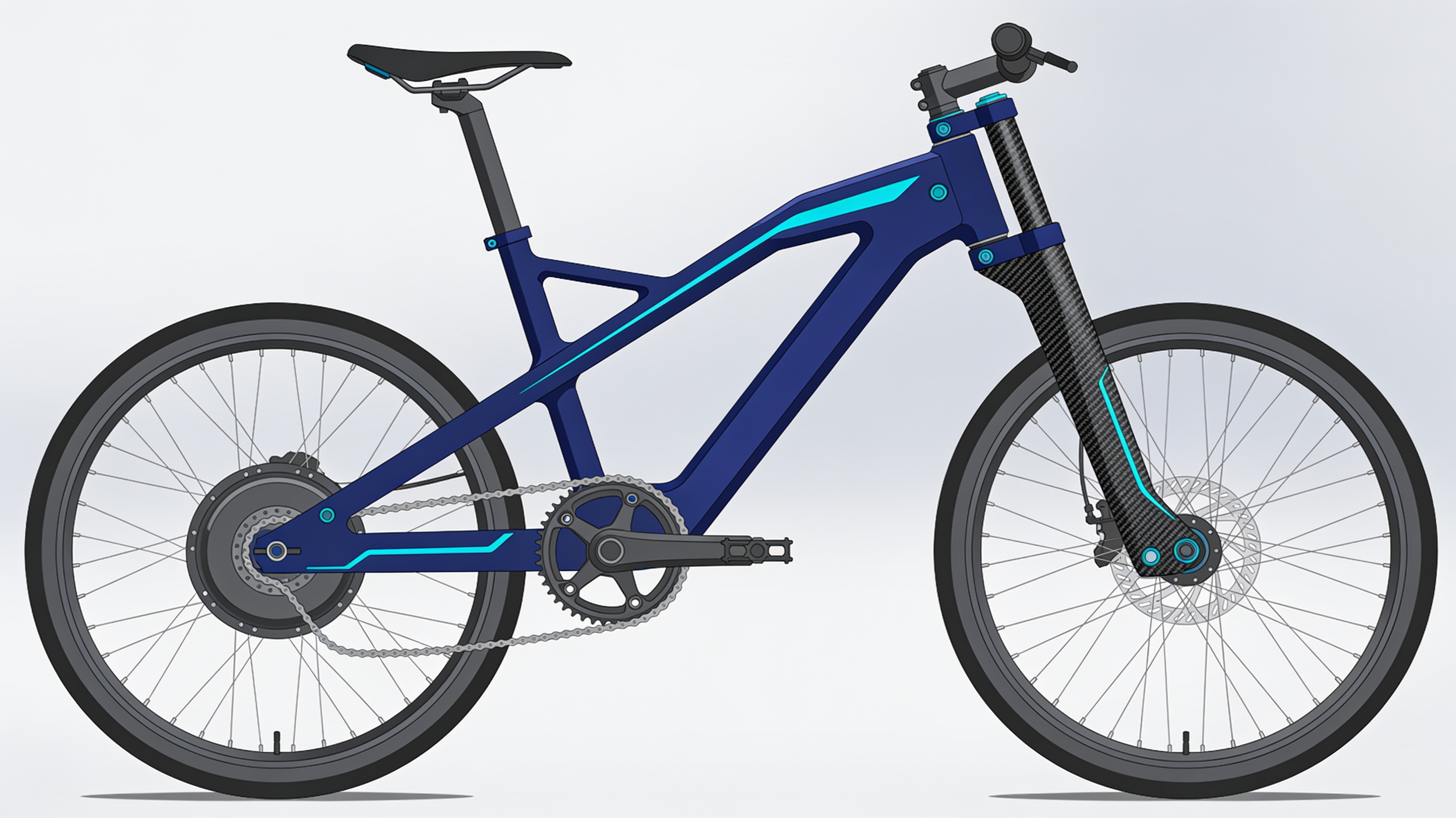
From 3D printing to carbon: PrusaLab develops a custom fork for a competition handbike
A custom front fork for a competition handbike, developed over ten months through 3D-printed iterations and made of carbon fiber. It is the project that PrusaLab completed together with Czech paratriathlete Jan Tománek, having already accumulated 3,500 km of use in training and racing as of September 2026.
The case demonstrates how additive manufacturing can accelerate the development of custom composite components, even when the final part is not printed directly.
- PrusaLab developed a carbon fork for a handbike using 3D printing for design iterations
- The process took about ten months from design to the final component
- The final fork is made of carbon fiber, not 3D printed, but validated through additive prototypes
- At the time of publication, the component had accumulated 3,500 km of testing
A hybrid workflow for unique components
3D printing did not produce the final component, but it made the development of a highly customized one-off part economically sustainable.
PrusaLab followed a traditional engineering approach: digital design, rapid additive prototyping, physical verification, and final composite manufacturing. 3D printing made it possible to verify shape, clearances, and integration on the handbike before tackling the expensive carbon lamination phase.
This distinction is fundamental. It is not a “3D-printed fork,” but a carbon fiber component whose development was accelerated by additive manufacturing. The value of 3D printing emerges in the ability to rapidly iterate on complex geometries when producing a single unit or very limited series.
Why handbikes require specific solutions
Competition handbikes have a completely different load distribution from traditional bicycles, making standard components inadequate.
Sports handbikes have a drive and steering front wheel, connected to the transmission powered by the athlete’s arms. The two rear wheels provide stability. The front assembly integrates functions that are distributed differently on a conventional bicycle.
Tománek had already modified a commercial component over time to adapt it to his needs. However, he had reached a limit beyond which further modifications were no longer possible. A component designed from scratch for that specific application was needed.
The final fork was made of carbon fiber using vacuum bagging, a process of compacting the composite laminate via vacuum bag that ensures a high strength-to-weight ratio.
The value of additive prototyping for composites
When working with composite materials, every change to the final component entails significant costs and time. 3D printing drastically reduces the risk of costly errors.
The PrusaLab project shows where additive manufacturing generates real value in the design of structural components. Not in the production of the final part, but in the rapid and cost-effective validation of complex geometries before committing resources to composite manufacturing.
For custom components or limited-series products, this hybrid approach becomes economically sustainable. 3D printing reduces the costs of design iterations, while traditional composite manufacturing guarantees the required structural performance.
The case of Tománek's handbike fork represents a concrete example of intelligent integration between additive manufacturing and traditional processes, applied to a context where extreme customization is an essential requirement and production volumes would not justify investments in dedicated equipment.
article written with the help of artificial intelligence systems
Q&A
Is the PrusaLab handbike fork 3D printed?
No, the final component is made of carbon fiber using vacuum bagging. 3D printing was used only for design iterations and prototypes, allowing shape and integration to be validated before composite lamination.
How long did the fork development take?
The project required about ten months from design to the final component. During this period, PrusaLab alternated digital design, additive prototyping, and physical testing on the handbike.
How many kilometers did the fork cover in testing?
As of September 2026, the component had accumulated 3,500 km of use between training and racing. The tests were conducted together with Czech paratriathlete Jan Tománek.
Why does a competition handbike require a custom fork?
Sports handbikes have a driven and steered front wheel, with a load distribution different from traditional bicycles. Standard components are not suitable, and Tománek had already reached the limit of possible modifications on a commercial part.
What is the advantage of 3D printing in a project like this?
Additive manufacturing made the development of a highly customized one-off part economically sustainable. It allowed rapid iteration on complex geometries and verification of clearances before the costly carbon lamination phase.