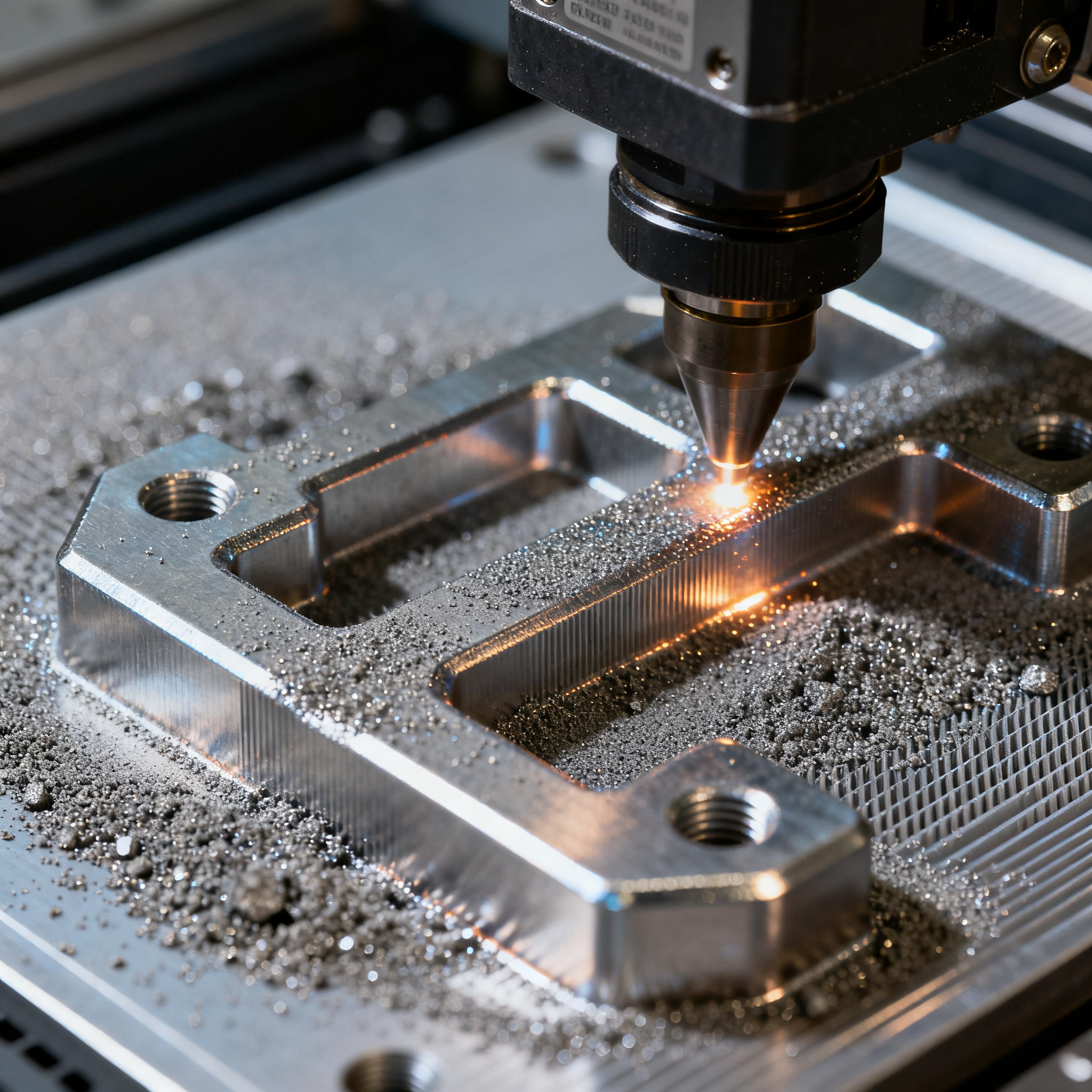
3D printing builds with waste?
3D printing not only builds houses but is also learning to do so using waste from the construction industry, reducing emissions and consumption.
The construction sector generates over a third of global CO₂ emissions related to energy and consumes 32% of global energy. The AddMamBa project from RWTH Aachen University is demonstrating that 3D printing can reverse this trend: it transforms scrap steel into complex structural components, closing the circle of sustainability.
The technology uses laser fusion and metal powder derived from steel scrap to produce brackets for ventilated facades and connectors for load-bearing structures. The process eliminates molds and tools, reducing waste and time.
From waste to resource: the heart of the AddMamBa project
AddMamBa demonstrates how to transform steel scrap into high-performance building components, drastically reducing the environmental footprint of the construction sector.
The project, funded by the German BMWE, starts from a concrete fact: the construction sector is responsible for 32% of global energy consumption. The answer is a process that recovers scrap steel and transforms it into reusable structural elements.
The material is first selected and analyzed based on its condition and chemical composition. Then it undergoes a gas atomization process (VIGA) that converts it into metal powder. The powder is sieved to obtain particles between 15 and 45 micrometers, ready for laser printing.
- The construction sector generates 32% of global energy consumption
- AddMamBa uses recycled steel to print structural components
- Metal powder is produced from scrap via gas atomization
- Final grain size: 15-45 micrometers for laser melting
Laser melting and metal powder: the key technology
Laser powder bed fusion allows the creation of intricate geometries impossible with traditional methods, while maintaining high mechanical performance.
The laser-based powder bed fusion technology fuses recycled metal powder layer by layer. This additive process eliminates the need for expensive molds and allows each component to be adapted to the specific geometries of the building.
Researchers also apply topology optimization: material is distributed following load paths, reducing weight without compromising strength. This approach is impossible with traditional melting techniques.
The team has developed a digital planning tool that selects the most suitable bracing solutions based on building, facade, and substructure data. The tool integrates regulatory standards, in particular DIN EN 1991-1-4/NA.
Smart facades, printed in recycled steel
Brackets for ventilated facades produced with AddMamBa show how structural functionality and sustainability can be integrated into a single component.
The project focuses on specific elements: brackets for ventilated facade systems (VHF) and connectors for load-bearing structures. These components must ensure mechanical strength, durability, and regulatory compliance.
3D printing allows for the design of connections for facades without constraints from tools or molding. Each bracket can be customized to the building's geometry, optimizing material distribution along load paths.
Production process
- Selection: Steel scrap is classified by condition and chemical composition.
- Atomization: The VIGA process transforms steel into fine metal powder.
- Sieving: The powder is filtered to obtain particles from 15-45 micrometers.
- Laser printing: Powder bed fusion creates components layer by layer.
Close the loop: less extraction, more regeneration
The use of recycled materials in 3D printing reduces the extraction of virgin resources and promotes a concrete circular economy in the construction sector.
The value of AddMamBa goes beyond a single technology. The project demonstrates that it is possible to build a circular supply chain: waste from the steel industry becomes raw material for high-performance building components, which in turn are designed to be disassembled and reused.
This approach simultaneously reduces three critical factors: CO2 emissions related to virgin steel production, energy consumption for extraction and processing, and waste destined for landfill. 3D printing adds an additional advantage: it eliminates the waste typical of subtractive processes.
The project represents a replicable model for other building materials. The logic is clear: transform waste streams into engineered resources, using the flexibility of additive manufacturing to obtain high-performance components without structural compromises.
Discover how advanced printing technologies are shaping the future of sustainable architecture.
article written with the help of artificial intelligence systems
Q&A
What is the AddMamBa project and what is its main objective?
AddMamBa is a project by RWTH Aachen University, funded by the German BMWE, that demonstrates how to transform scrap steel into high-performance structural components for construction. Its main objective is to reduce the environmental footprint of the construction sector, which is responsible for 32% of global energy consumption, closing the sustainability loop.
What are the stages of the process that transforms steel scrap into construction components?
The process begins with the selection of scrap based on condition and chemical composition. Subsequently, the steel is transformed into metal powder through gas atomization (VIGA) and sieved to obtain particles between 15 and 45 micrometers, ready for laser powder bed fusion.
What types of components are produced with this technology and what advantages do they offer?
Mainly brackets for ventilated facades and connectors for load-bearing structures are produced. 3D printing allows each component to be customized according to the specific geometry of the building, eliminating the need for expensive traditional molds and tools, and enables the creation of intricate geometries impossible with conventional methods.
How does 3D printing contribute to sustainability in the construction sector?
3D printing uses recycled steel instead of virgin material, reducing CO₂ emissions, energy consumption, and the extraction of virgin resources. Furthermore, the additive process eliminates the machining waste typical of subtractive methods and allows the design of dismountable and reusable components, promoting a concrete circular economy.
What is meant by topological optimization and how is it applied in the AddMamBa project?
Topological optimization is a design method that distributes material following structural load paths. In the AddMamBa project it is applied to reduce the weight of components without compromising their strength, creating intricate shapes that would be impossible to obtain with traditional casting techniques.