30% with fewer impurities? The secret is in direct production
Metal Powder Works and Westinghouse Electric Company advance to the operational phase of their project dedicated to metal powders for nuclear applications. The concrete objective is to increase production capacity over the next three months, bringing the materials to a technology readiness level (TRL) compatible with high-responsibility components.
Nuclear power represents the fastest-growing segment in energy additive manufacturing. Demand is driven by the need for urgent spare parts for existing plants and by the acceleration of SMR (Small Modular Reactor) projects.
- Increase in Technology Readiness Level (TRL) for nuclear components
- Scale-up of production capacity in three months
- Improvement of final component performance via additive manufacturing
DirectPowder process: how it works
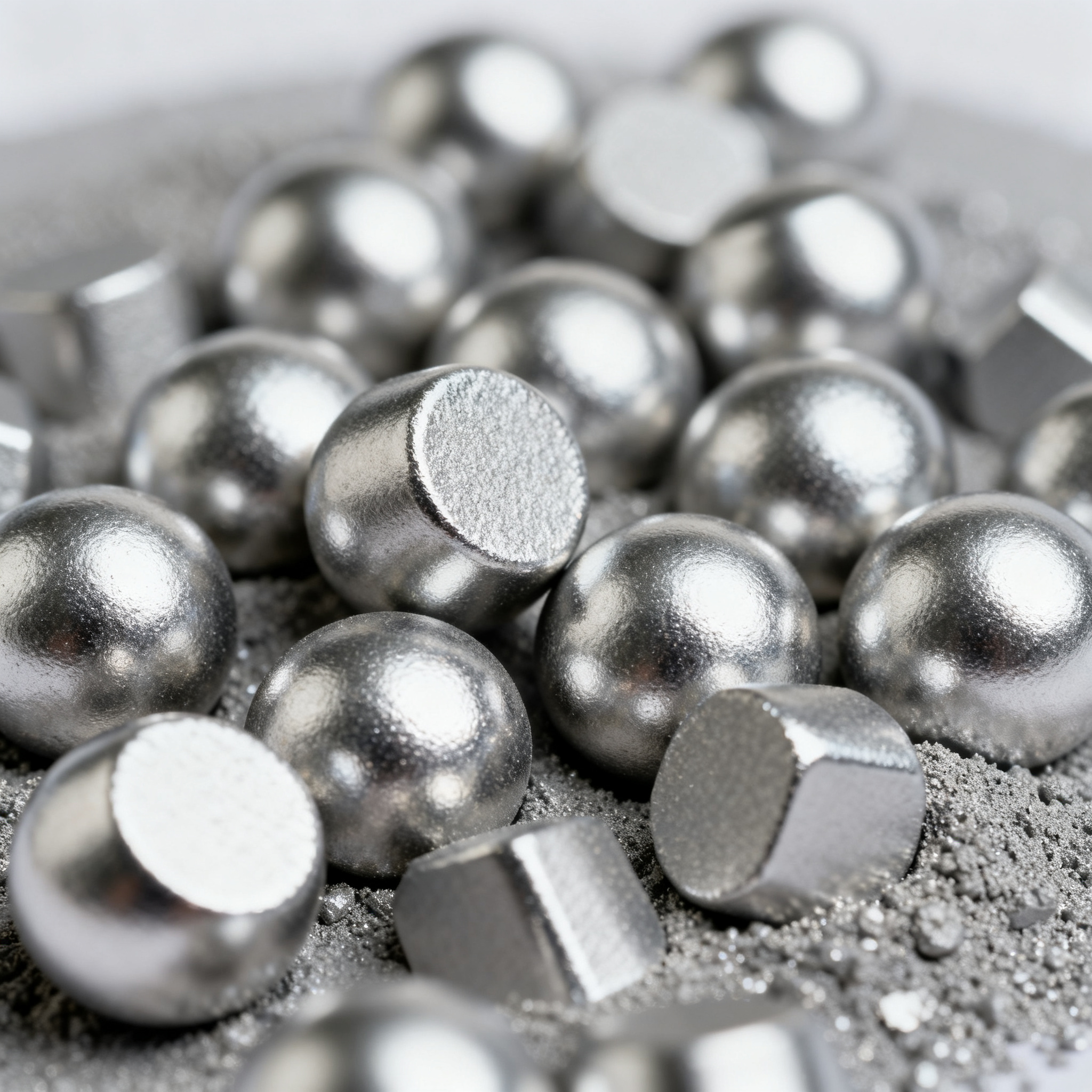
The patented DirectPowder technology eliminates traditional melting, transforming metal bars into solid-state powders with yields above 95%.
The process starts from metal bar stock and converts it into powder without melting steps. This characteristic reduces the contamination risks typical of traditional atomization, where the metal is melted and then transformed into particles using gas or water.
Metal Powder Works declares a yield above 95% in conversion to the desired particle size distribution. In conventional methods, a significant share of the powder generated does not meet specifications and must be separated or recycled.
Solid-state processing preserves the microstructure of the starting material. Phenomena such as unwanted segregation or evaporation of elements with high vapor pressure are avoided, which are common problems in melting and rapid solidification.
The absence of melting preserves the mechanical properties of the original material, reducing variability between batches and the presence of satellite particles.
Industrial scalability: goals and challenges
The project aims to triple production capacity within the next few months, while maintaining the rigorous standards required by the nuclear sector.
Westinghouse has achieved positive results in the previous phases of the collaboration. Now the two companies are focusing on increasing production scale, with a three-month contract to advance Metal Powder Works' capacity.
John Barnes, Managing Director of MPW, stated: “This contract highlights the solid performance of our DirectPowder process. Westinghouse's continued trust demonstrates that our powder works as expected and can meet their rigorous requirements, exceeding the capabilities of traditional atomization methods.”
In nuclear, qualification is not just about producing a good part once. It requires demonstrating that the process can repeat the same result, batch after batch, machine after machine.
Scale-up path
- Initial validation: Confirmation of DirectPowder process performance on pilot batches.
- Capacity increase: Production expansion in the three months of the current contract.
- Final qualification: Achievement of the target TRL for nuclear components in production.
TRL and nuclear specifications: where we are today
Materials are reaching high levels of technological maturity thanks to advanced controls on purity, morphology, and particle size.
Technology Readiness Level measures the maturity of a technology from basic research (TRL 1) to industrial production (TRL 9). For nuclear, reaching TRL 6-7 means demonstrating operation in a relevant environment with repeatable tests.
Metal Powder Works produces several special alloys: high-strength aluminum, copper, copper-nickel, commercially pure titanium, Zircaloy. For nuclear, each material must demonstrate corrosion resistance, stability under irradiation, and compatibility with high-temperature environments.
Particle size distribution, particle morphology, and chemical purity are critical parameters. A powder with poor flowability or internal defects compromises the quality of the final component, even with correct machines and parameters.
| Parameter | DirectPowder | Traditional atomization |
|---|---|---|
| Conversion yield | >95% | 60-80% |
| Material melting | No (solid state) | Yes |
| Contamination risk | Reduced | Standard |
| Small-batch flexibility | High | Limited |
Conclusion
Innovation in nuclear-grade powder production is redefining the foundations of industrial additive manufacturing. The collaboration between Metal Powder Works and Westinghouse demonstrates that raw material quality is as crucial as printing technology.
The transition from experimental batches to industrial scale requires rigorous control and repeatability. The DirectPowder process offers an alternative path to established methods, with specific advantages for high-responsibility applications.
Discover how the TRL of materials is accelerating the adoption of additive manufacturing in nuclear and which special materials are entering qualification for critical components.
article written with the help of artificial intelligence systems
Q&A
What is the main objective of the collaboration between Metal Powder Works and Westinghouse?
The objective is to increase the production capacity of metal powders for nuclear applications over the next three months, bringing the materials to a Technology Readiness Level (TRL) compatible with high-responsibility components. The project aims to demonstrate repeatability and industrial quality superior to traditional methods.
What does DirectPowder technology consist of and what is its advantage over traditional atomization?
DirectPowder transforms metal bars into solid-state powders, eliminating traditional melting. This process reduces contamination risks, preserves the original microstructure avoiding segregation and element evaporation, and guarantees a yield above 95% compared to the 60-80% of conventional atomization.
Why does the production of nuclear-grade powders require such rigorous standards?
In the nuclear sector, it is not enough to obtain a good component just once; it is necessary to demonstrate that the process can repeat the same result batch after batch. The materials must also resist corrosion, maintain stability under irradiation and compatibility in high-temperature environments, with strict control over purity, morphology, and particle size.
What materials does Metal Powder Works produce and which parameters are critical for nuclear applications?
The company produces special alloys such as high-strength aluminum, copper, copper-nickel, commercially pure titanium, and Zircaloy. For nuclear applications, particle size distribution, particle morphology, and chemical purity are critical, since powders with poor flowability or internal defects compromise the quality of the final component even with correct machines and parameters.
What does reaching a Technology Readiness Level (TRL) 6-7 mean for the nuclear sector?
Reaching TRL 6-7 means demonstrating the technology's operation in a relevant environment with repeatable tests, validating the maturity required for high-responsibility components. This level represents the transition from experimental batches to controlled and qualified industrial production.