Does steel breathe? Here’s how it really works
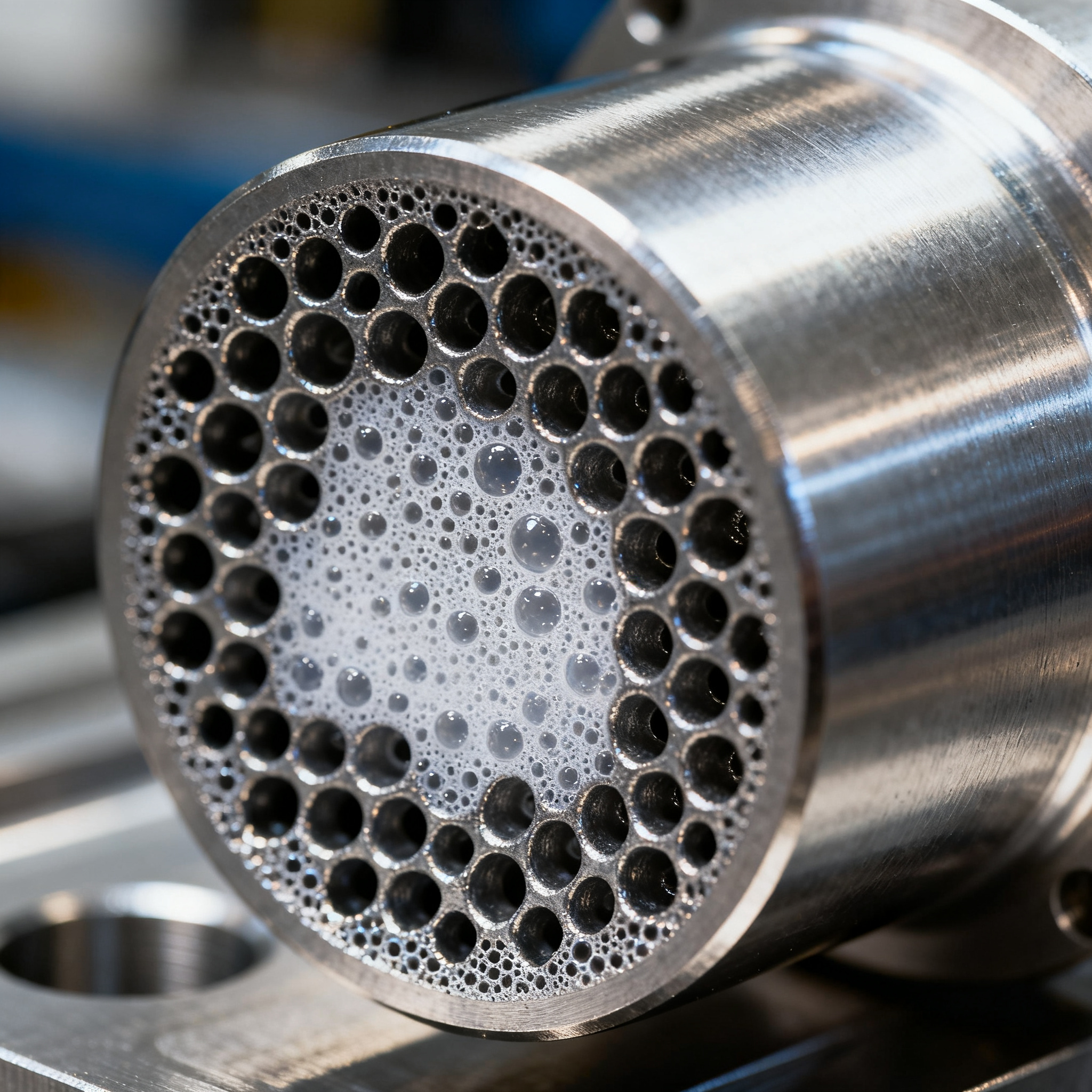
Breathable steel is a technical solution for eliminating trapped air during injection molding. Thanks to a microporous structure, it allows gases to pass through the metal without compromising mechanical strength or letting molten plastic through.
This technology stems from a concrete need: when hot plastic is injected into a mold, trapped air must escape. Otherwise, voids, surface defects, and irregularities form in the finished part.
What is breathable steel
A metallic material with microscopic porosity that allows controlled gas passage while maintaining impermeability to liquids.
Steel is normally a solid, impermeable material. The concept of “breathability” overturns this fundamental characteristic. The material has a network of interconnected microscopic pores that allow gases to flow through the metal structure.
These pores are small enough to block molten plastic but large enough to let air through. The structure maintains the mechanical properties needed to withstand the high temperatures and pressures of injection molding.
- Interconnected microscopic porosity for gas passage
- Impermeability to molten plastic during molding
- Mechanical strength comparable to traditional steel
How it is produced: key technologies
Production uses metal 3D printing techniques with foaming agents added to the metal powder.
The main technique uses selective laser melting (SLM) with metal powders. The distinctive element is the addition of a foaming agent to the steel powder. During the printing process, this agent creates the necessary micropores.
The method makes it possible to produce breathable bars and inserts to be integrated into larger molds. It represents a simpler solution compared to other powder metallurgy techniques, which are expensive and complex for obtaining small-sized pores.
The mechanical properties obtained are remarkable. Compressive strength, hardness, and corrosion resistance are superior to some traditional porous steels such as PM-35.
Advantages in the injection molding cycle
Breathable steel eliminates the need to design complex venting systems and drastically reduces defects caused by trapped gas.
Traditional molds require exhaust ports or vacuum connections to evacuate air. Designing these systems requires time and specialized expertise. If venting is insufficient or there are trapping zones, defects increase and redesign is required.
Breathable steel vents through the material itself. This drastically simplifies mold design and improves the quality of finished parts. Problematic areas with complex geometries become more manageable.
The reduction of trapped gas defects results in lower scrap rates and greater efficiency in high-precision mass production.
The technology is particularly effective where complex geometry would make it difficult or impossible to position traditional vents. It makes it possible to achieve cleaner, more uniform surfaces on molded parts.
Limitations and recommended applications
The technology is still under development and requires expensive metal 3D printing equipment, limiting its widespread adoption.
Breathable steel is not a universal solution. It requires advanced metal 3D printing hardware, with significant costs. Production is more complex than with traditional mold steels.
The ideal applications are those with complex geometries and stringent surface quality requirements. Sectors such as automotive, medical, and precision component manufacturing benefit the most.
For simple molds or low-volume production, traditional venting systems remain more economical. The technology makes sense where trapped gas defects represent a critical problem that justifies the investment.
Conclusion
Breathable steel represents a targeted solution for specific issues in the high-precision mold sector. It does not replace traditional steels but offers decisive advantages where geometric complexity and surface quality are priorities.
Evaluate the integration of this technology if you operate in contexts with high geometric complexity and stringent surface quality requirements. The investment makes sense when trapped gas defects significantly impact scrap rates and redesign costs.
article written with the help of artificial intelligence systems
Q&A
What is breathable steel and what is its main function?
It is a metallic material with interconnected microscopic pores that allow the controlled passage of gases. Unlike traditional steel, it allows air to flow through the structure without letting molten plastic pass through. It also maintains mechanical strength comparable to that of standard steel, making it suitable for the high temperatures and pressures of injection molding.
What injection molding defects does breathable steel solve?
During injection molding, air trapped in the mold can cause internal voids, surface defects and irregularities in the finished part. Breathable steel eliminates this problem by allowing air to escape through its micropores. In this way, higher quality parts are obtained without compromising the integrity of the mold.
How does the porous structure of breathable steel work at the microscopic level?
The structure features a network of interconnected microscopic pores that block molten plastic but are large enough to let gases pass through. This allows trapped air to pass through the metal during injection. The pores are designed not to compromise the mechanical strength of the material nor its ability to withstand high temperatures and pressures.
What technologies are used to produce breathable steel?
Production takes place mainly through selective laser melting (SLM), a metal 3D printing technique. During the process, a foaming agent is added to the steel powder to create the necessary microporosity. This method makes it possible to manufacture breathable bars and inserts to be integrated into larger molds.
Why is the SLM technique considered advantageous compared to other powder metallurgy techniques?
It represents a simpler and more economical solution compared to other powder metallurgy techniques, which are expensive and complex to obtain small pores. The process allows controlled porosity to be obtained while maintaining excellent mechanical properties. Furthermore, it enables the production of specific inserts for integration into existing molds.
What mechanical properties does breathable steel maintain despite its porosity?
Despite the microscopic porosity, the material retains mechanical strength comparable to that of traditional steel. Key properties include compressive strength, high hardness and the ability to withstand the high temperatures and pressures of injection molding. This makes it reliable for demanding industrial applications.