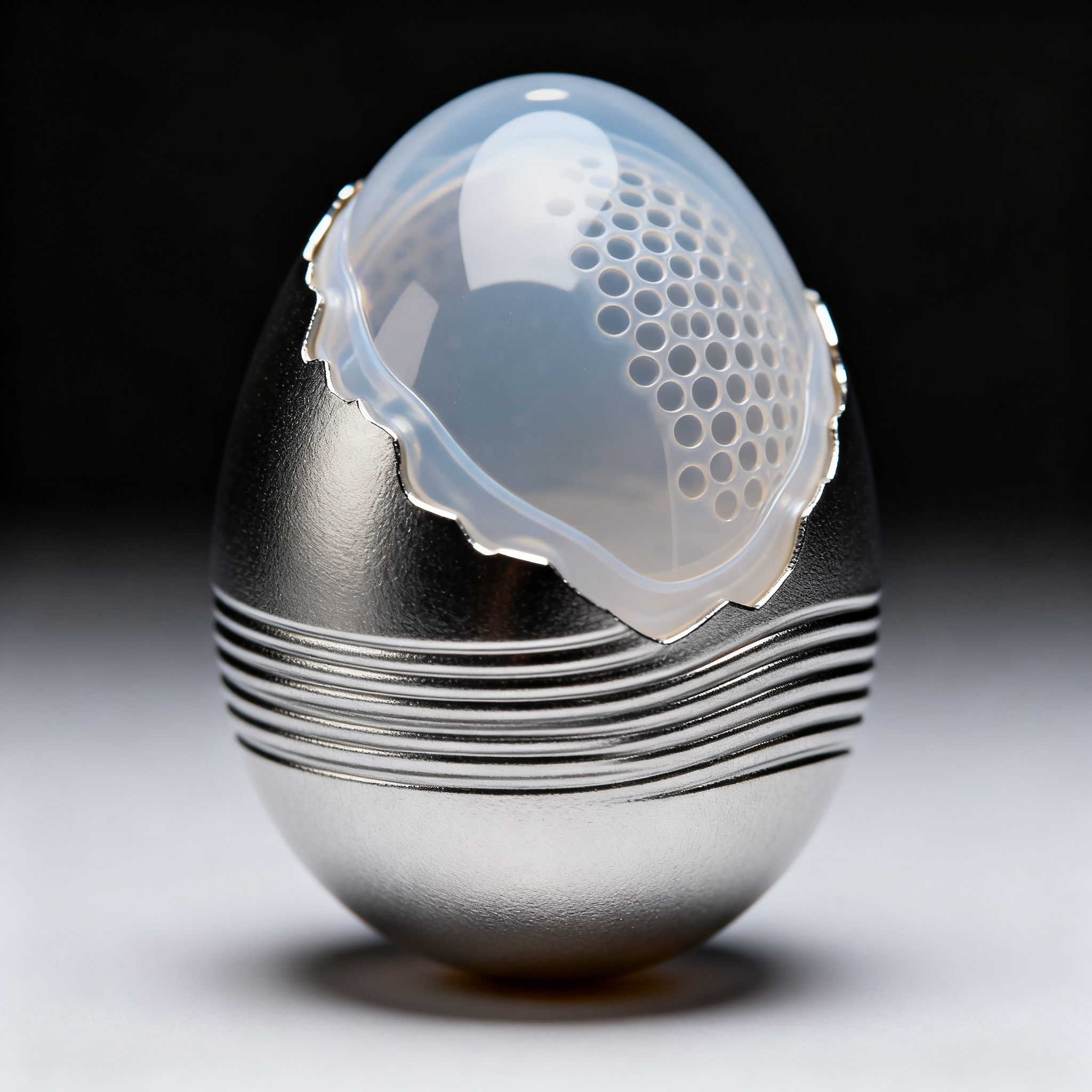
Does a printed egg save the moa?
A 3D-printed shell and a silicone membrane are revolutionizing artificial incubation for endangered and extinct species.
Colossal Biosciences has announced the birth of 26 live chicks using an artificial egg system that combines silicone membranes and 3D-printed shells. The technology aims to conserve endangered avian species and support de-extinction projects for large birds, such as the giant moa of the South Island.
The system overcomes a fundamental limitation: no living bird is large enough to naturally incubate eggs of extinct species like the moa, whose eggs were about 80 times the volume of a chicken egg.
The perfect shell: design and materials
The artificial shell is the heart of the system: computer-designed and printed in biocompatible resin, then coated in titanium for strength and biocompatibility.
The first shell prototypes were made with a Formlabs Form 4 printer and BioMed Black resin. Later versions were developed in titanium to improve strength and biological compatibility.
- 3D-printed shell (biocompatible resin or titanium)
- Gas-permeable silicone membranes
- Transparent observation window for monitoring
- Customizable sizes for different species
The shell is not just a container. It must replicate complex functions: oxygen flow control, humidity management, gas exchange, and calcium transfer during embryonic development. 3D printing allows for rapid modification of geometry and dimensions without building dedicated molds for each variant.
Colossal has indicated that the printed structure was also designed for a possible transition to injection molding, should higher volumes and lower costs be needed. This shows a typical use of additive manufacturing: rapid prototyping before moving to serial production processes.
Membranes and microclimate: the controlled environment
Silicone membranes allow for controlled gas exchange, essential for simulating the natural conditions of embryonic development.
A natural egg is not a passive barrier. The shell allows for the exchange of oxygen and carbon dioxide, controls humidity, provides calcium, and collaborates with the embryo's internal membranes.
Colossal's system attempts to replicate some of these functions through gas-permeable silicone membranes. These membranes are designed to recreate the environment that embryos need to survive and develop outside of a natural shell.
Calcium must be added artificially, because the embryo cannot absorb it from a synthetic structure as it would from a natural shell. This highlights that the system does not recreate the entire egg, but only some key functions.
The transparent observation window integrated into the shell offers an advantage for research in developmental biology. According to Vincent Lynch, evolutionary biologist at the University of Buffalo, the ability to directly observe the early formation of organs and blood vessels could benefit studies on complex embryonic processes.
Case study: the return of the giant moa
The moa de-extinction project uses artificial eggs to incubate genetically modified cells, bypassing the limits of natural incubation.
The giant moa of the South Island presents an obvious dimensional challenge. Its eggs contained about 80 times the volume of a chicken egg and about eight times that of an emu egg.
No living bird would be suitable to naturally incubate an embryo of that size. This is where the artificial incubation system comes into play: it allows working on large extinct species without relying on inadequate biological hosts.
| Species | Egg volume (relative to chicken) | Incubation solution |
|---|---|---|
| Chicken | 1x | Natural or artificial |
| Emu | ~10x | Natural possible |
| Giant moa | ~80x | Artificial only |
The problem is not only genetic. Even with the right cells, a physical place is needed where the embryo can develop. 3D printing builds this adjustable experimental environment, adapting to variable sizes, geometry, thickness, internal volume, and oxygen needs.
Colossal has added the moa to its list of de-extinction projects, which already includes the woolly mammoth, dire wolf, and dodo. Artificial egg technology could become essential for all projects involving extinct birds.
Industrial limits and prospects
The scalability of the system is still experimental, but promises applications in conservation and synthetic biology.
The result of 26 hatched chicks is significant, but presents documentary limits. Colossal has not yet released a peer-reviewed scientific publication or public datasets with data on number of attempts, survival rates, anomalies, long-term development, and comparisons with controls.
Without this data, it is difficult to independently evaluate the outcome. The scientific community is calling for greater openness and verifiability before considering the technology established.
The ethical debate remains open. For some researchers, such tools could help conserve endangered species. For others, the risk is shifting attention and resources from living species and already threatened habitats towards highly publicized but practically distant projects.
From an industrial perspective, additive manufacturing shows an unprecedented role here: it does not produce a mechanical or decorative object, but a part of a controlled environment where an embryo can develop. 3D printing becomes an interface between material, gas, humidity, and embryonic life.
Bioprinting applied to artificial eggs opens new paths for species conservation and controlled de-extinction. The convergence of 3D printing, advanced materials, embryology, and biotechnology is creating tailored biological tools that were unthinkable just a few years ago.
Follow the next developments of this technology: it could redefine the very concept of extinction.
article written with the help of artificial intelligence systems
Q&A
What is the fundamental problem that Colossal Biosciences' artificial eggs solve for extinct species like the moa?
No living bird is large enough to naturally incubate eggs from extinct species like the giant moa, whose eggs were about 80 times the volume of a chicken egg. The artificial system bypasses this limitation by providing a controlled environment where the embryo can develop without relying on inadequate biological hosts.
What is the artificial incubation system composed of and what functions must it replicate?
The system combines a 3D-printed shell made of biocompatible resin or titanium with silicone membranes permeable to gases. It must replicate complex functions such as oxygen flow control, humidity management, gas exchange, and calcium transfer during embryonic development.
What advantages does 3D printing offer for the creation of these artificial shells?
3D printing allows rapid modification of shell geometry and dimensions without building dedicated molds for each variant, facilitating rapid prototyping. Furthermore, it allows customization of size, thickness, and internal volume to adapt to the needs of different species.
Why must calcium be artificially added in Colossal's system?
The embryo cannot absorb calcium from a synthetic structure as it would from a natural shell. This highlights how the artificial system does not recreate the entire egg, but only some key functions necessary for development.
What are the main criticisms or limitations raised by the article regarding this technology?
Colossal has not yet published peer-reviewed scientific data or public datasets on survival rates, anomalies, and long-term development, making independent evaluation difficult. Furthermore, some researchers fear that these high-profile projects may divert resources from the conservation of living species and already threatened habitats.