
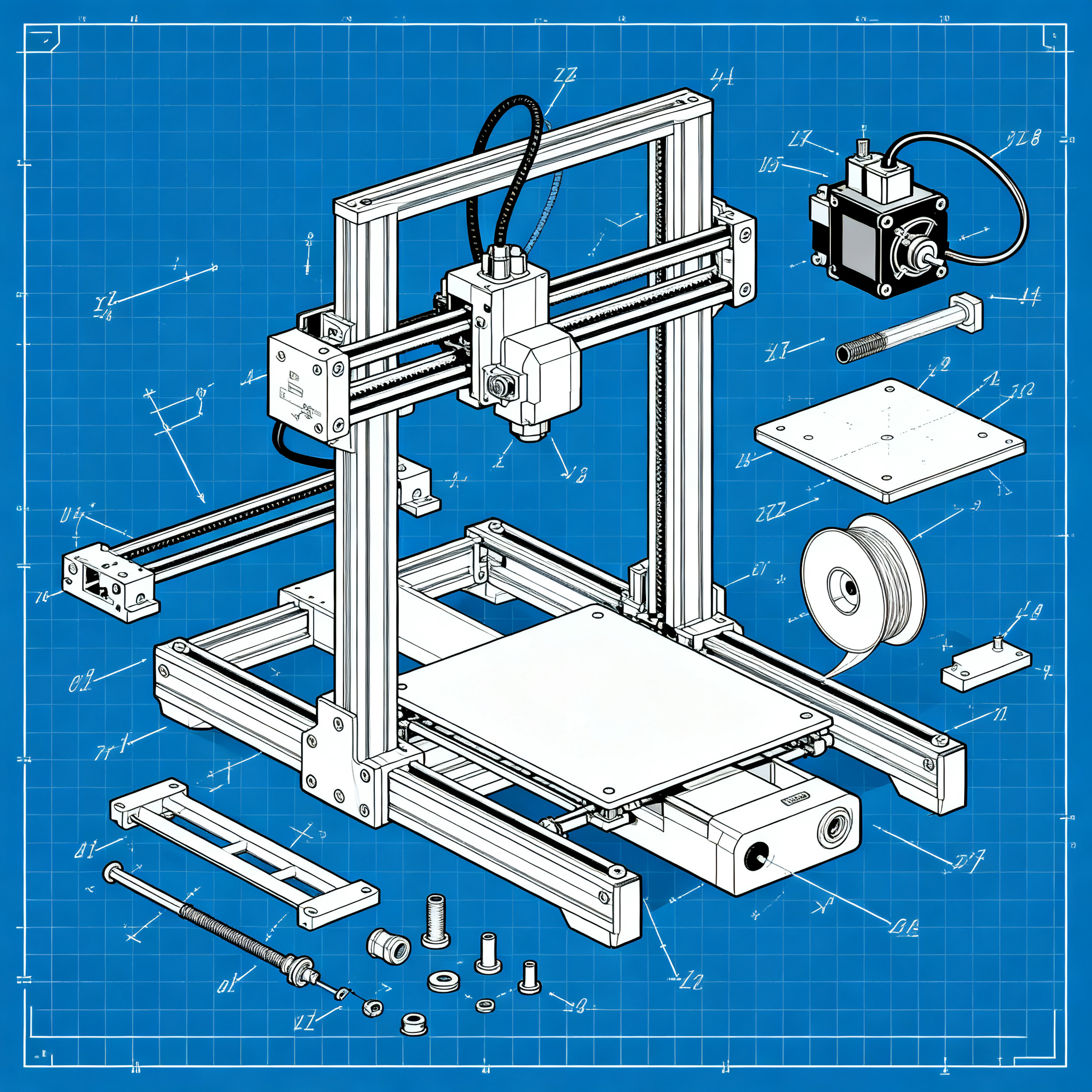
DIY 3D kit: save or waste time?
If you are considering moving from simple 3D printing to assembling a DIY machine, you need to know when a kit is truly the best choice. Kits promise cost savings and total control, but they require technical skills and hours of work.
What a DIY kit really offers
3D kits combine flexibility and an affordable price, but only those with time and manual skills can truly take advantage of them. Assembly requires varying effort, from a few hours to entire days.
3D printer kits start at €399 for basic models like the Dagoma Disco Ultimate. This French system offers dual color and a print volume of 200×200×200 mm, with assembly in less than a day.
The more advanced options require larger investments. The Sovol SV08 costs around €600-700 and arrives partially assembled: it takes about an hour to complete it. It includes Klipper firmware, linear guides on all axes, and speeds up to 700 mm/s.
- Lower price by 20-30% compared to pre-assembled models
- In-depth knowledge of the machine's mechanics
- Ease of maintenance and future repair
- Possibility of customization during assembly
The Prusa CORE One+ represents the tradition of high-end kits. It costs $999 in kit version and requires 8-12 hours of assembly according to the community. It offers a volume of 250×220×270 mm and compatibility with upgrades such as MMU3 for multi-material printing.
Assembling vs buying ready-made: the real trade-offs
The choice between a kit and a ready-to-use printer depends on clear goals: learning and customization versus operational immediacy. There is no universal answer.
Those who choose a kit invest time to acquire skills. Assembly teaches mechanics, electronics, and calibration. This knowledge makes them self-sufficient in solving future problems.
Pre-assembled printers eliminate this learning curve. They are operational in minutes, not hours. Ideal for those who want immediate results without investing time in technical training.
| Appearance | DIY kit | Pre-assembled |
|---|---|---|
| Setup time | 1-30+ hours | 15-60 minutes |
| Initial cost | 20-30% lower | Standard |
| Required skills | Medium-high | Minimal |
| Customization | Maximum | Limited |
| Maintenance | Autonomous | Often assisted |
The RatRig V-Core 4.1 exemplifies the modular philosophy. It offers build volumes from 300×300×300 mm up to 500×500×500 mm. It includes optional upgrades such as an IDEX system for simultaneous dual material.
Open-source and community: hidden advantages
Open-source projects like Voron offer ecosystems of continuous support and upgrades, but they require greater initial effort than commercial kits.
Open-source kits represent the highest level of involvement. The Voron project, inspired by the 2005 RepRap, requires over 30 hours of assembly. Each component must be purchased or printed separately.
The advantage lies in the global community. Forums, Discord, and GitHub repositories provide continuous support. Modifications and improvements are shared freely, extending the machine's capabilities over time.
Open-source projects offer detailed documentation, collaborative troubleshooting, and access to modifications tested by thousands of users. This ecosystem transforms the initial investment into growing value.
HTA3D's HPRO-330 demonstrates the hybrid approach. CoreXY system with speeds up to 600 mm/s, available both as a kit and pre-assembled. Modular architecture with a choice of extruder, hotend, and Z-axis height up to 725 mm.
When DIY becomes an obstacle
For occasional users or those without mechanical experience, a kit can turn into a frustrating investment that delays the start of actual production.
Assembly requires specific tools and adequate workspace. Patience is needed to follow detailed instructions, often in English. Assembly errors cause problems that are difficult to diagnose.
Those who print occasionally never recover the time invested in assembly. The initial cost savings dissolve into hours of troubleshooting and calibration.
Frustration increases when basic skills are lacking. Electrical problems, axis calibration, or firmware configuration become insurmountable obstacles without dedicated technical support.
Ready-to-use printers eliminate these risks. Factory calibration, quality testing, and included technical support ensure immediate results.
Conclusion
A 3D kit is worthwhile only with clear goals: deep learning, extreme customization, or a limited budget combined with available time. The financial saving of 20-30% only makes sense if you value the skills acquired.
For immediate production or occasional use, a pre-assembled printer eliminates risks and frustrations. The additional cost buys time and operational peace of mind.
Evaluate your level of commitment and concrete goals: only then will you know if a kit is truly the right choice for you. The decision depends on how much time you want to invest before printing your first useful part.
article written with the help of artificial intelligence systems
Q&A
How much can you save by choosing a DIY 3D kit compared to a pre-assembled printer?
Kits generally allow you to save between 20% and 30% compared to already assembled models. This economic advantage is however balanced by the need to invest time and have technical skills for assembly.
How long does it typically take to assemble a 3D printer kit?
Assembly time varies greatly depending on the chosen model. The Sovol SV08, partially assembled, requires about an hour, while the Prusa CORE One+ can take from 8 to 12 hours. Basic models like the Dagoma Disco Ultimate can be assembled in less than a day instead.
What are the main advantages of assembling a 3D printer from a kit?
Besides the lower price, kits offer in-depth knowledge of the machine's mechanics. This makes future maintenance and repairs easier, as well as allowing customizations during assembly.
What is a good budget 3D kit for those who want to start without spending much?
The Dagoma Disco Ultimate is a basic option starting from around 399 euros. It offers dual color, a print volume of 200×200×200 mm, and assembly that is completed in less than a day.
What distinguishes the Sovol SV08 kit from cheaper models?
The Sovol SV08 costs between 600 and 700 euros and arrives partially assembled, requiring about an hour of final assembly. It includes Klipper firmware, linear rails on all axes, and reaches print speeds up to 700 mm/s.
What does the Prusa CORE One+ offer and who is it intended for?
The Prusa CORE One+ is a high-end kit that costs 999 dollars and requires from 8 to 12 hours of assembly. It offers a print volume of 250×220×270 mm and is aimed at expert users looking for advanced performance and full control over the machine.


