Can AM revolutionize the transport of nuclear fuel?
The American nuclear industry is rediscovering the potential of additive manufacturing to address one of its greatest logistical challenges: the safe transport of spent fuel.
The United States generates approximately 2,000 metric tons of spent nuclear fuel each year. The material already accumulated exceeds 95,000 tons, distributed across 79 sites in over 30 states. The Department of Energy aims to build a centralized repository within 10-15 years, creating immediate demand for certified transport components.
- Traditional impact limiters cost up to $1 million per unità
- 3D printing can reduce costs up to $1.7 million per complete cask
- Orano and UNC Charlotte have validated gyroid structures with 51% infill
- Specific regulatory standards for industrial adoption are still lacking
Spent fuel logistics: an engineering challenge
The safe transport of spent nuclear fuel requires advanced engineering solutions and highly specialized components.
The casks for transporting spent fuel are massive structures. Those for road transport weigh 50,000 pounds, while rail casks reach 250,000 pounds, including the fuel. Each cask requires critical components to ensure safety during handling and transport.
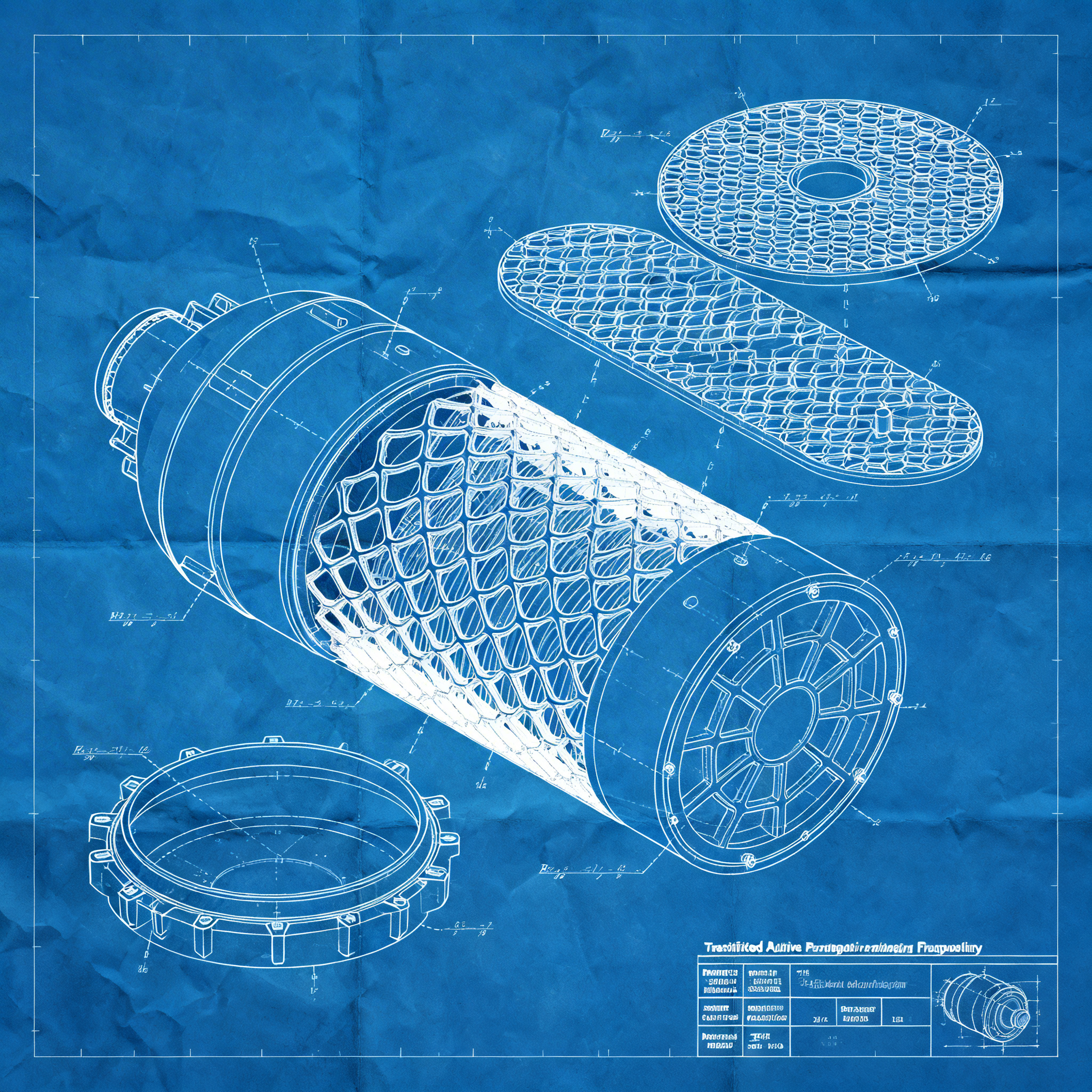
Impact limiters are circular elements installed at the ends of containers. They must absorb energy in extreme regulatory scenarios: 9-meter free fall, crushing, puncture, fire at 1,475°F for 30 minutes, and immersion in water.
Conventional solutions use redwood, balsa, or aluminum honeycomb structures. These materials require dedicated sourcing and a lot of manual labor, with costs ranging from $250,000 to $1 million per single limiter.
Additive Manufacturing: Operational Advantages in Transport Casks
AM enables complex geometries and rapid production of critical components such as impact limiters, improving efficiency and safety.
Additive manufacturing offers design flexibility impossible with traditional methods. Gyroid infill structures optimize the weight-to-strength ratio, reducing material and costs without compromising performance.
| Technology | Optimal Infill | Savings per cask |
|---|---|---|
| FFF (Fused Filament Fabrication) | 5% gyroid | Up to 1 million dollars |
| PBF (Powder Bed Fusion) | 5% gyroid | Up to 1.7 million dollars |
| Conventional production | N/A | Baseline ($2 million per cask) |
The economic break-even point is reached with 37% infill for SLM and 10% for FFF. Since the 5% is already adequate, additive production becomes cost-effective at scale.
Case study: Orano and UNC Charlotte test AM for nuclear components
A pilot project demonstrated the technical feasibility and regulatory compliance of using additive technologies in the nuclear sector.
Orano Federal Services and University of North Carolina Charlotte have tested both FFF and PBF to produce impact limiters. The researchers replaced stainless steel with conventional materials, validating performance through simulations and real compression tests.
The team determined that a 51% gyroid infill design produces acceptable results for drop events. The collaboration originated in a context oriented toward technical validation: the goal was to verify whether AM could produce certifiable components at a fraction of the cost.
Orano TN has managed irradiated fuel, dry storage, and shielded casks for years. The project with UNC Charlotte is part of a broader program related to the High Burnup Research Cask, which will transfer 32 high burnup assemblies to the Idaho National Laboratory in the fall of 2027.
The DOE, the Electric Power Power Research Institute, and Orano are collecting data to support future regulatory decisions. This shipment will represent the first case of large-scale transport of high burnup fuel.
Quality and certification: obstacles and opportunities
The adoption of AM in the nuclear sector requires stringent quality protocols, but opens new possibilities for cost optimization.
The transition from analysis to industrial adoption requires full regulatory qualification. The results obtained with samples and simulations are not sufficient to replace a complete regulatory pathway.
There are a lack of codes and standards specifically for nuclear to validate AM components with critical safety functions. The authors of the study explicitly indicate the need for further experimental data and real drop tests on a 1:1 scale.
The research demonstrates that the idea is credible from an engineering point of view. However, it is not yet ready to become an industrial standard without a more robust certification and inspectability process.
The entire AM industry would benefit from a concentrated effort to expand its use in the nuclear sector. The government has already invested in R&D for nuclear submarines: combining these two objectives would accelerate standardization and adoption.
Conclusion
Additive manufacturing represents a concrete breakthrough for nuclear logistics. The ability to produce critical components with optimized geometries, reduced lead times, and lower costs meets a real need in the American industry.
The Orano-UNC Charlotte case demonstrates that the technology is technically mature. The next step requires the development of quality standards and certification protocols specific to the nuclear sector.
Learn how nuclear suppliers are integrating additive manufacturing into their production processes and what qualification standards are emerging for critical applications.
article written with the help of artificial intelligence systems
Q&A
What is the main logistical challenge that the American nuclear industry is trying to solve with additive manufacturing?
The main challenge is the safe transport of spent nuclear fuel, which requires highly specialized components such as impact limiters. Currently in the USA there are over 95,000 tons of spent fuel distributed across 79 sites.
How can additive manufacturing reduce costs in the production of impact limiters?
AM can reduce costs by up to $1.7 million per full cask thanks to optimized gyroid structures with 5% infill. This compared to traditional costs ranging from $250,000 to $1 million per single limiter.
What safety requirements must impact limiters meet in transport casks?
Impact limiters must withstand extreme scenarios such as free fall from 9 meters, crushing, puncture, fire at 1,475°F for 30 minutes, and submersion in water. These critical components ensure safety during handling and transport.
What was the result of the pilot project between Orano and UNC Charlotte?
The project demonstrated that a 5% infill gyroid design produces acceptable results for drop events. They validated both technical feasibility and regulatory compliance using FFF and PBF with stainless steel.
What are the main obstacles to industrial adoption of additive manufacturing in the nuclear sector?
There is a lack of specific regulatory standards for AM components with critical safety functions. A complete regulatory pathway with experimental data and full-scale 1:1 drop testing is needed to obtain industrial certification.