3D Micropile for Immunotherapy? Here's How It Works
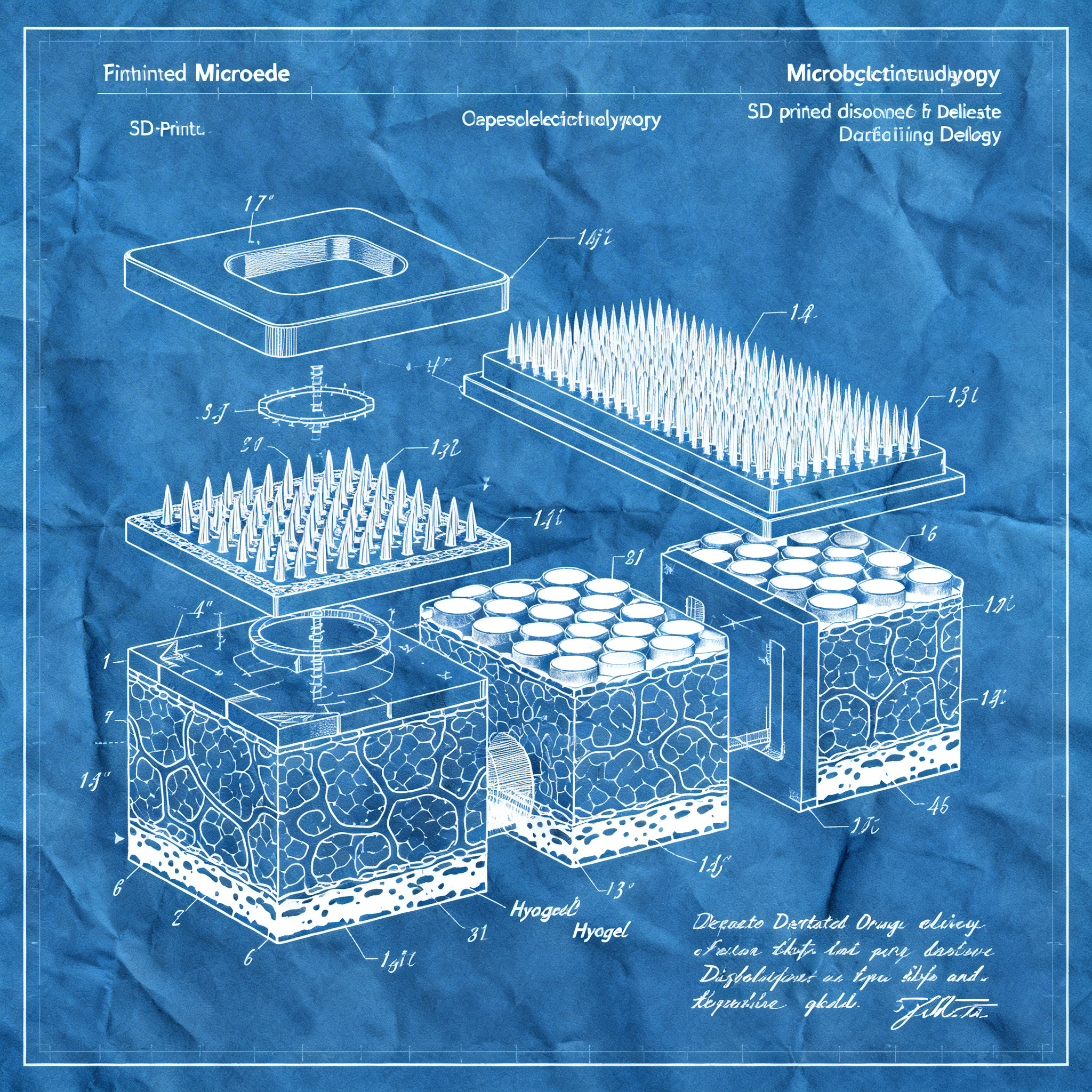
3D-printed microneedles based on polysaccharides are opening new paths for cancer immunotherapy thanks to the targeted and activatable delivery of therapeutic molecules directly into the skin. These microscopic structures penetrate the outer skin layer, creating temporary channels that bypass gastrointestinal degradation and reach the immune-active regions of the skin.
Smart materials for therapeutic microneedles
Natural polysaccharides such as hyaluronic acid, chitosan, and alginate represent the ideal material base for biodegradable microneedles that act as active therapeutic platforms.
Unlike silicon or synthetic polymers that act as passive shells, polysaccharides are biocompatible, biodegradable, and capable of stimulating the immune system. These “complex carbohydrates” dissolve into harmless metabolites after administration, eliminating the risk of dangerous fragments in the skin.
The main advantage is intrinsic bioactivity. Polysaccharides act as natural adjuvants that “prime” the immune system to more effectively recognize tumor cells.
- Hyaluronic acid: high biocompatibility and water-binding capacity
- Chitosan: antimicrobial properties and mucosal adhesion
- Alginato: controlled gelation and programmed release
Design and release mechanisms
The geometry and composition of micropiles determine how and when drugs are released into the tumor microenvironment.
Main configurations include dissolvable and hydrogel-based structures. The former dissolve completely after penetration, releasing the therapeutic payload. The latter maintain structural integrity and release drugs gradually.
Responsive systems represent the most advanced evolution. pH-sensitive materials release drugs when they detect the acidity typical of tumors. Enzyme-responsive systems react to enzymes present in the tumor microenvironment. Electrically activated configurations allow external control of release.
| Type of micropile | Mechanism | Main advantage |
|---|---|---|
| Dissolvable | Complete dissolution | Rapid and complete release |
| Hydrogel | Gradual diffusion | Prolonged release |
| pH-responsive | Acidity activation | Specific tumor targeting |
| Electro-responsive | External control | Programmable dosing |
Applications in cancer immunotherapy
Local administration via microneedles drastically reduces systemic side effects by increasing the concentration of active ingredients in the tumor microenvironment.
Microneedles can deliver small molecules, proteins, and nanoparticles directly into the target tissue. In studies on triple-negative breast cancer, patches of microneedles combined with dendritic cell-targeting nanovaccines have shown promising results.
Biodegradable microneedles that release anti-PD-1 antibodies enhance the antitumor immune response. The microneedle becomes an integral part of the therapeutic strategy, defining the timing, location, and mode of exposure of the immune system to antigens.
Local targeting allows to concentrate the therapeutic action where needed, reducing the systemic drug load that causes severe side effects in traditional treatments.
Challenges and future perspectives
The direct compatibility of polysaccharides with 3D printing processes remains limited due to rheological and photoreactivity reasons.
Photopolymerization processes such as stereolithography (SLA) and digital light processing (DLP) offer adequate micrometric resolution. However, most applications use hybrid workflows: 3D printing produces high-precision master molds, subsequently filled with polysaccharide solutions.
Rapid prototyping allows to optimize shapes (conical, pyramidal, hollow), heights, and density of arrays. Customization based on patient anatomy or application area represents a potential that has not yet been fully exploited.
Industrial initiatives aim to bring high-resolution printed microneedle technologies to market for drug delivery and vaccination. The transition from research to clinical practice requires large-scale validation, safety studies, and regulatory approval.
Conclusion
Polysaccharide-based microneedles represent a promising frontier for targeted immunotherapy, combining biocompatibility, biodegradability, and immune activation capability. 3D printing enables complex geometries and customization, although hybrid workflows remain necessary to overcome the rheological limitations of natural materials.
The technology has demonstrated potential in reducing systemic side effects and improving therapeutic efficacy. However, the path to routine clinical application requires further validation, standardization of production processes, and demonstration of industrial scalability.
Explore ongoing clinical trials to discover how this technology is entering oncological practice.
article written with the help of artificial intelligence systems
Q&A
What materials are used to make 3D microneedles and why are they advantageous?
3D microneedles are made primarily from natural polysaccharides such as hyaluronic acid, chitosan, and alginate. These materials are biocompatible, biodegradable, and stimulate the immune system, dissolving into harmless substances without leaving toxic residues.
How do microneedles work in the context of cancer immunotherapy?
Microneedles penetrate the outer layer of the skin, creating temporary channels for targeted delivery of therapeutic molecules directly into immune-active areas. This method avoids gastrointestinal degradation and increases local treatment efficacy.
What are the different release mechanisms of microneedles and what are their purposes?
There are dissolvable microneedles, hydrogel-based, pH-responsive, and electro-responsive ones. Each has a specific advantage: rapid release, prolonged release, activation in acidic tumor environments, or external dosage control.
What promising results have been achieved using microneedles in oncology?
In studies on triple-negative breast cancer, the use of microneedle patches with nanovaccines showed effective activation of dendritic cells. Additionally, local release of anti-PD-1 antibodies enhanced the antitumor immune response.
What are the main challenges in the production and distribution of 3D microneedles?
The main challenge involves the compatibility of polysaccharides with 3D printing processes, limited by rheological issues. Therefore, hybrid methods are used which involve printing a precise mold and then filling it with polysaccharide solutions.