3D Printing at School Without Uncertainties?
3D printing can become a powerful tool for educational inclusion, but it requires a clear plan to be sustainable and scalable. Without an operational structure, even the most motivated projects risk collapsing under the weight of demand or remaining confined to isolated experiments.
Fast Models for Slow Impacts
Simplifying 3D models reduces production times without sacrificing educational value. The key is to optimize each print to maximize throughput.
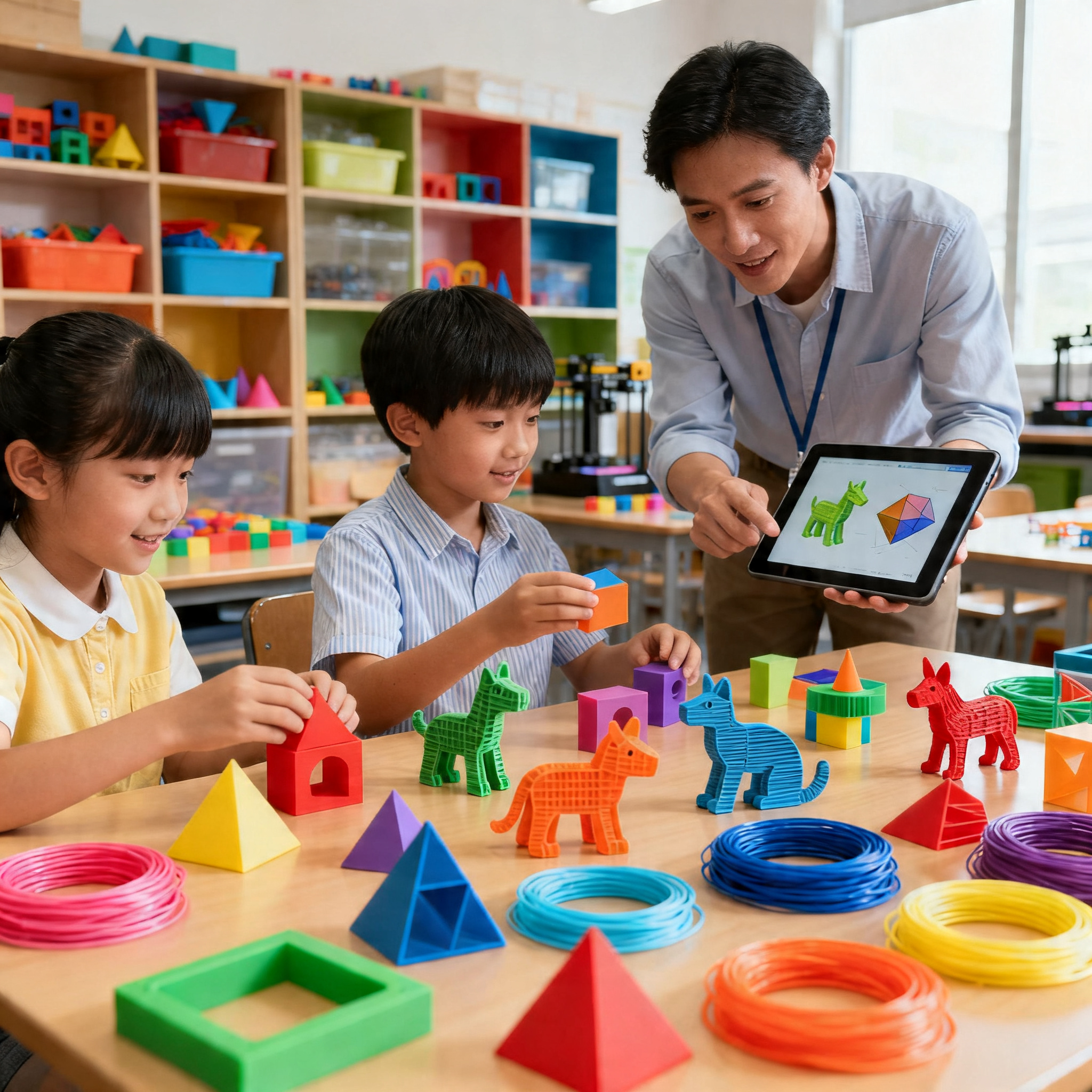
3D printed educational toys work best when designed to reduce supports and optimize the number of pieces per plate. The 3D Printing Elves organization distributed over 15,900 toys in 2025, tripling the volumes of the previous year. This result was possible thanks to calibrated print profiles and simple shapes that maintain high aesthetic quality.
PLA remains the most used material for non-structural educational projects. It allows fast and reliable prints, essential when managing thousands of pieces per year. Planning print queues and preventive maintenance of machines become critical elements to sustain growing volumes.
- Simple shapes with minimal supports reduce print times
- PLA guarantees ease of printing and good aesthetic yield
- Calibrated profiles increase the number of pieces per plate.
Scalable Collaborations
Partnerships with teachers and institutions guarantee constant feedback and controlled dissemination of resources. Without involved teachers, projects remain isolated.
Teachers from Fresno and Madera counties use printed toys as participation prizes and tools for sensory activities. Some link prizes to specific goals like completing reading programs, integrating 3D printing into lesson planning.
The When Young Minds Create program attracted nearly 200 young participants in a few weeks. The most effective projects were designed for specific people and needs. Many youths set up stands at local markets, sharing creations with classmates and offering custom designs.
Collaboration with educators requires ongoing dialogue to adjust volumes and propose batches compatible with production capabilities. Priority should be given to classes and initiatives aimed at children in disadvantaged socio-economic conditions, concentrating resources where social impact is greater.
A viral video on TikTok generated a sudden increase in demand for 3D Printing Elves, testing the laboratory's production capacity. Social media amplifies visibility but requires careful planning to avoid expectations exceeding actual capabilities.
Plan Educational Production
Organizing print batches based on the seasonality of school activities improves efficiency and satisfaction. Casual production generates waste and frustration.
Demand management requires delivery scheduling across multiple time windows. 3D Printing Elves dialogues with teachers and contacts to propose toy batches compatible with production capabilities, avoiding unmanageable peaks.
The sustainability model is based on donations, sponsorships, and volunteer support. The main risk is that peaks in visibility generate demand exceeding the laboratory's capabilities. This requires an almost industrial logic: queue planning, quality control, preventive maintenance, and warehouse organization.
Planning process
- Dialogue with teachers: Collect requests and define priorities based on social impact.
- Lot definition: Schedule volumes compatible with the laboratory's production capacity.
- Staggered deliveries: Distribute toys across multiple time windows to manage demand.
Integration with industrial partners like Prusa Research shows how 3D printing companies can support initiatives with strong ethical value. This reinforces the role of additive technologies within the educational community.
Conclusion
An educational initiative based on 3D printing works only if it starts from simple processes, active collaboration, and realistic planning. Without these elements, even the most motivated projects risk remaining isolated experiments or collapsing under the weight of demand.
Start with a pilot model: choose a project, a teacher, and a batch of 10 prints. Then scale. Technology is accessible, but success depends on the ability to structure partnerships, optimize models, and manage expectations transparently.
article written with the help of artificial intelligence systems
Q&A
What are the fundamental requirements to make a sustainable 3D printing project at school?
A 3D printing project at school requires a clear plan, a solid operational structure, and realistic planning. Without these elements, even the most motivated projects risk collapsing under demand or remaining isolated experiments.
How can 3D models be optimized to improve efficiency in school production?
3D models must be simplified to reduce production times, minimizing the use of supports and optimizing the number of pieces per plate. This approach maintains high educational value without sacrificing efficiency.
Why is collaboration with teachers crucial in 3D printing projects?
Teachers provide constant feedback and help distribute resources in a controlled manner. Moreover, they integrate 3D printing into teaching activities, for example using toys as rewards or sensory tools.
What is the role of PLA in educational 3D printing projects?
PLA is the most commonly used material because it allows fast, reliable prints with good aesthetic results. It is ideal for non-structural educational projects, especially when managing large production volumes.
How are demand peaks generated by social media managed in a project like 3D Printing Elves?
Demand peaks require careful planning: it is necessary to organize print batches compatible with production capabilities, stagger deliveries, and maintain an almost industrial logic with quality control and preventive maintenance.