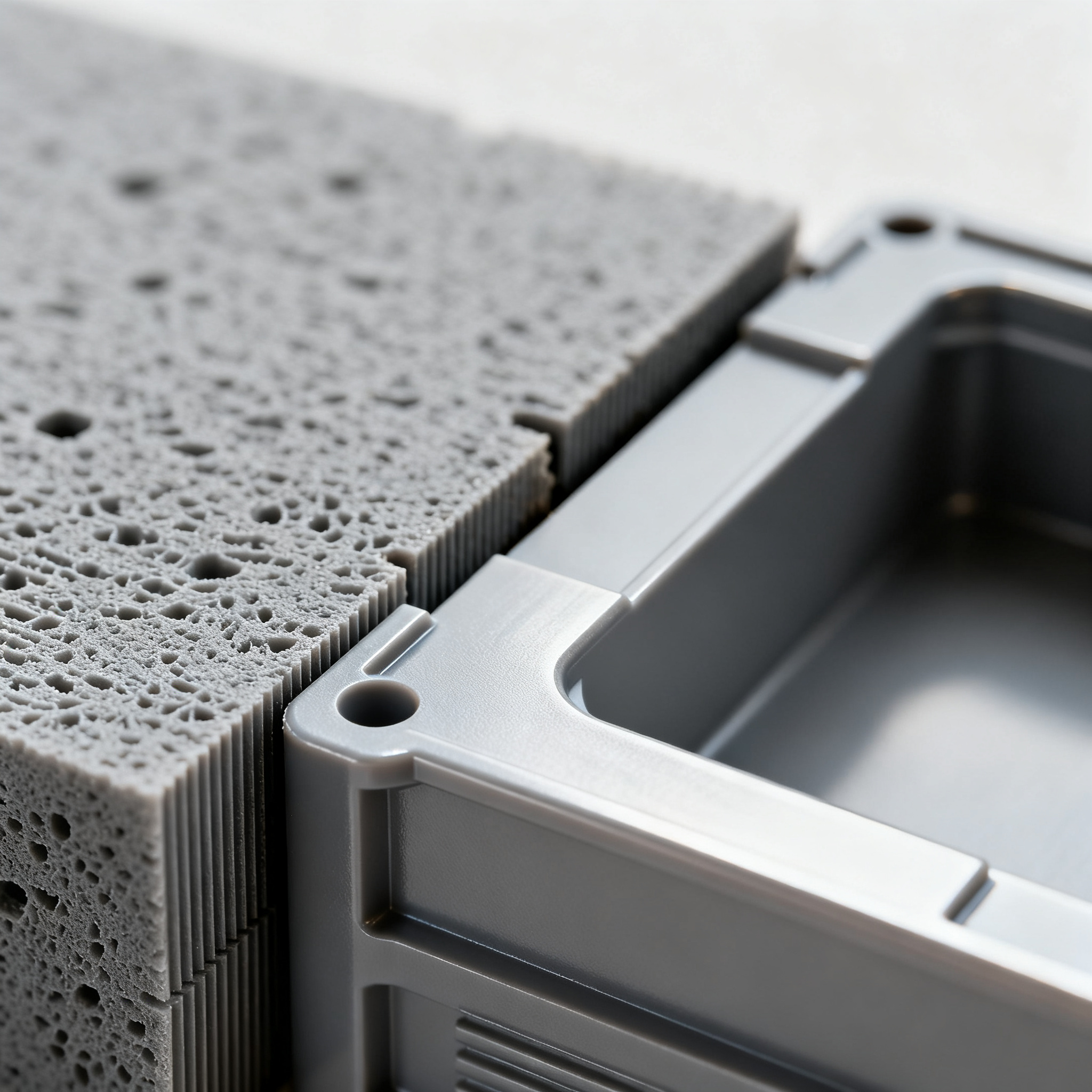
Designing for production: the mistake that costs dearly
Designing a product also means knowing how to produce it: here's how to align design and manufacturing from the earliest iterations.
The choice of production process is not a decision to postpone. Defining whether a component will be 3D printed or made with injection molding influences every aspect of the design, from geometry to unit costs. Separating the design phase from the production phase generates delays, redesigns, and avoidable costs.
The problem arises when the designer delivers the CAD model without considering the constraints of the manufacturing process. The result: 150,000 defective parts or costs doubled compared to forecasts.
- 3D printing allows complex geometries but is not always compatible with other production processes
- Injection molding requires long mold times but produces large volumes rapidly
- Integrating production constraints into the design reduces iterations and setup costs
Design-driven manufacturing: when the product guides the choice
The early definition of the production process influences every design decision, especially in terms of scalability and costs.
3D printing easily produces arbitrary shapes that other processes cannot replicate. This advantage becomes a problem when the design moves to mass production. A component optimized for additive manufacturing may be incompatible with injection molding.
The key question is: how many units are needed? For small volumes, 3D printing is ideal. For large quantities, injection molding reduces unit costs but requires high initial investment for molds.
Integrated services that combine design and manufacturing expertise eliminate this gap. PCBWay offers enclosure design with direct knowledge of available production processes, ensuring the design is optimized for the chosen method from the start.
Rapid iterations with production feedback
Integrating production constraints and opportunities into the design cycle accelerates development and reduces the risk of redesigns.
Design iterations are inevitable. The problem is when they occur too late, after discovering that the part is not producible or costs twice as much as expected.
Integrated process
- Constraint definition: identify production process and materials before detailed design.
- DFM Optimization: apply Design for Manufacturing principles during CAD modeling.
- Rapid Validation: produce prototypes using the same process intended for production.
An integrated approach considers manufacturing constraints from the very first click in CAD software. If the component requires heat dissipation, CNC machined aluminum is evaluated immediately. If rapid iteration is needed, high-performance 3D printing resins come into play right away.
PCBWay applies this methodology to enclosure projects, where the internal layout and external enclosure are designed together. For devices with RK3568 boards requiring AI and high-definition applications, the enclosure protects components while meeting professional technical and aesthetic requirements.
Integrated Services: The Hidden Competitive Advantage
Having access to cross-disciplinary design and production expertise under a single management increases efficiency and quality control.
Supply chain fragmentation slows development. When design and production are managed by separate suppliers, issues emerge late in the process. Incompatible tolerances with internal electronics can waste weeks of work.
| Appearance | Fragmented Approach | Integrated service |
|---|---|---|
| Development times | Weeks lost due to handoff | Continuous flow |
| Risk of errors | High (communication between vendors) | Reduced (single management) |
| DFM optimization | Late or absent | Integrated from the first step |
End-to-end services eliminate these bottlenecks. A single provider managing mechanical design, internal layout, and physical production ensures consistency. Fewer steps mean fewer risks of communication errors and delays between departments.
Companies that centralize design and production reduce time-to-market by moving from concept to deployment more quickly, transforming integration from a commodity into a competitive advantage.
This integration is particularly critical for electronics, where enclosure, PCB, and mechanical components must be synchronized. PCBWay offers turnkey solutions in which design, enclosure, and internal components are coordinated, reducing handoff and miscommunication.
Conclusion
Integrating design and production is not a stylistic choice, but an operational necessity for competitive products. Separating these phases generates hidden costs: redesigns, delays, non-compliant components.
The solution is to incorporate production constraints from the earliest iterations. Choose the manufacturing process before finalizing the design, apply DFM principles during modeling, and validate with realistic prototypes.
Evaluate your development process: where do you lose time due to predictable errors? If your team discovers producibility issues only after completing the design, you are paying an avoidable price. Integration between design and manufacturing not only accelerates development: it reduces costs and increases the quality of the final product.
article written with the help of artificial intelligence systems
Q&A
Why can separating design from production be costly?
Separating these phases generates delays, redesigns, and avoidable costs. When the designer delivers the CAD model without considering manufacturing process constraints, the result can be batches of defective parts or costs doubled compared to forecasts.
How does the choice between 3D printing and injection molding influence a product's design?
3D printing allows complex geometries and is ideal for small volumes, but can create incompatibilities if the design must move to mass production. Injection molding requires significant initial time and investment for molds, but lowers unit costs for large quantities.
What is meant by a 'design-driven manufacturing' approach?
It means that the early definition of the production process guides every design decision, especially in terms of scalability and costs. Integrating manufacturing constraints from the first iterations in CAD software reduces the risk of late redesigns.
What are the concrete advantages of an integrated service that combines design and production?
An integrated service eliminates the bottlenecks of a fragmented supply chain, reduces communication errors between separate vendors, and ensures consistency between mechanical design and physical production. Companies that centralize these phases reduce time-to-market and turn integration into a competitive advantage.
How does PCBWay apply the integrated methodology in enclosure design?
PCBWay offers enclosure design with direct knowledge of available production processes, optimizing the design for the chosen method from the beginning. It coordinates internal layout and external enclosure, even for devices with RK3568 boards that require professional technical and aesthetic requirements.
What are the three fundamental steps of an effective integrated process?
The process involves: defining production constraints and materials before detailed design; DFM optimization during CAD modeling; rapid validation through prototypes made with the same process planned for mass production.