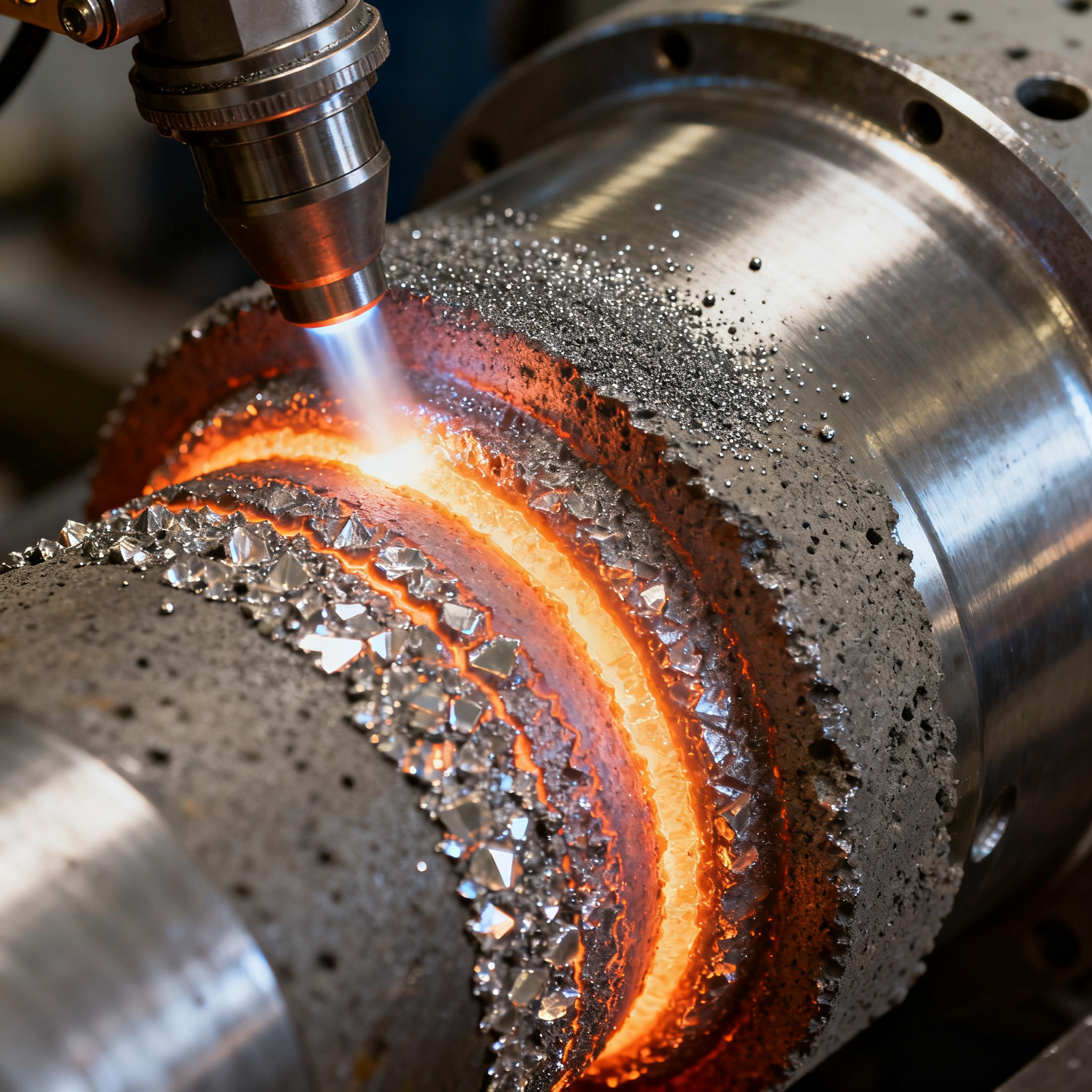
Tailor-made defense: how additive manufacturing is reinventing the production chain
Additive manufacturing in the defense sector has moved beyond the experimental phase. It is no longer just about emergency repairs in the field: 3D printing has become a primary production process for new components, with structured programs involving dozens of companies and million-dollar investments.
From emergency to strategy: additive manufacturing enters the DNA of defense
Additive manufacturing is no longer confined to emergency solutions, but becomes an integral part of production planning and military procurement strategies.
The change is evident in the numbers. The Defense Logistics Agency involved 24 companies in the fourth round of its qualification program, for a total value of 9.8 million dollars. The goal: to build a network of qualified suppliers to accelerate the introduction of 3D-printed parts in aircraft, naval vessels, and military vehicles.
Applications range from components for armored vehicles to 5-inch-diameter naval artillery shells, produced via directed energy deposition instead of forging. Collins Aerospace has installed two machines with 12 lasers each, concentrating in a single room work that previously required an entire supply chain.
- 24 companies involved in the DLA program for 9.8 million dollars
- Production of critical components such as naval shells and parts for armored vehicles
- Reduction in delivery times of more than 80% in some cases
The growth of 3D Systems' aerospace and defense sector exceeded 15% in 2025, with forecasts of acceleration above 20% in 2026. The National Defense Authorization Act provided further momentum, introducing restrictions on the procurement of AM machines from selected countries.
Special materials from a circular perspective: the case of tungsten alloys
Recycling and reconversion into powder for 3D printing of advanced materials such as tungsten alloys are opening new frontiers for sustainability in defense processes.
6K Additive has recorded an increase in demand for refractory materials for armored vehicle components. The company's response comes through circular economy programs: the recent Phase II award from the Defense Logistics Agency focuses on converting metal scrap into new powders for 3D printing directly at military depots.
“We have ammunition made from heavy tungsten alloys,” explains Frank Roberts, CEO of 6K Additive. “We will convert that spent ammunition into high-purity tungsten powder that can be used to print components.”
Circular conversion process
- Collection: Recovery of spent ammunition and metal scrap from military depots.
- Conversion: Transformation of the material into high-purity powder via the UniMelt process with microwave plasma.
- Print: Use of regenerated powder to produce new components for armored vehicles.
This approach reduces dependence on external supply chains and drastically shortens material availability times. SSAB demonstrated the practical application with two versions of hinges for armored vehicle doors, made of impact-resistant steel.
Key collaborations: when private industry accelerates military innovation
Partnerships between private companies and military institutions are accelerating the operational integration of additive manufacturing into existing production processes.
Phillips Corporation has developed the Phillips Additive Hybrid system, a large-format hybrid machine designed for deployment. The company already has operational systems on U.S. Navy ships and machines deployed with military units during exercises.
“For defense, additive manufacturing becomes truly valuable when it can be moved, deployed, and used where the need exists,” emphasizes Brian Kristaponis, General Manager of the Hybrid division at Phillips Corporation. The goal is to reduce setup times from hours to minutes.
| Appearance | Traditional approach | With deployable AM |
|---|---|---|
| Setup time | Several hours | Few minutes |
| Supply chain dependence | High | Drastically reduced |
| Production location | Centralized | In the field/ship |
ADDiTEC presented the Hybrid X expeditionary unit, a self-sufficient system that combines additive and subtractive technologies on a single platform. The logic is clear: produce or repair parts on site, without waiting for long supply chains.
Stratasys has launched a qualification program for SAF PA12 material in collaboration with Boeing and RTX, following the Advanced Industrial Solutions path developed with the National Center for Advanced Materials Performance. This approach brings service bureaus directly into the process, acting as a bridge between large contractors and their suppliers.
The qualification of materials and processes remains the main bottleneck. The technology is mature, but regulatory and certification frameworks struggle to keep pace with the available technical capabilities.
Conclusion
Additive manufacturing is no longer a supporting technology in the defense sector, but a strategic pillar of the modern military industry. Government programs are building networks of qualified suppliers, while private companies develop deployable solutions that bring production capacity where it is needed.
The shift from a system centered on large batches and long contracts to a modular and dynamic model is underway. On-demand production is becoming a structural component of the industrial strategy for defense.
Discover how your sector can adopt similar models to improve resilience and production flexibility.
article written with the help of artificial intelligence systems
Q&A
How has the role of additive manufacturing changed in the defense sector?
It has evolved from a tool for emergency field repairs to a primary and strategic production process. Today it is an integral part of production planning and military supply strategies, with structured programs involving dozens of companies and multimillion-dollar investments.
What are the key data points of the Defense Logistics Agency (DLA) qualification program?
The DLA involved 24 companies in the fourth round of the program, for a total value of $9.8 million. The goal is to build a network of qualified suppliers to introduce 3D printed parts into aircraft, naval vessels, and military vehicles.
Which military components are produced using additive manufacturing and what technologies are used?
Applications include components for armored vehicles and 5-inch diameter naval artillery projectiles. The latter are produced through directed energy deposition, an alternative to traditional forging.
What operational advantages has the adoption of 3D printing brought to defense?
In some cases, delivery time reductions exceeding 80% have been recorded. Collins Aerospace has also consolidated work that previously required an entire supply chain into a single room, drastically simplifying production logistics.
How is the additive manufacturing market developing in the defense and aerospace sector?
3D Systems' defense and aerospace sector exceeded 15% growth in 2025, with forecasts of acceleration beyond 20% in 2026. The National Defense Authorization Act has also introduced restrictions on the procurement of AM machines from selected countries, affecting the market.
What is the contribution of additive manufacturing to sustainability in defense processes?
The recycling and conversion into 3D printing powder of advanced materials such as tungsten alloys promotes a circular approach in defense processes. The company 6K Additive is responding to the growing demand for such refractory materials for armored vehicle components.