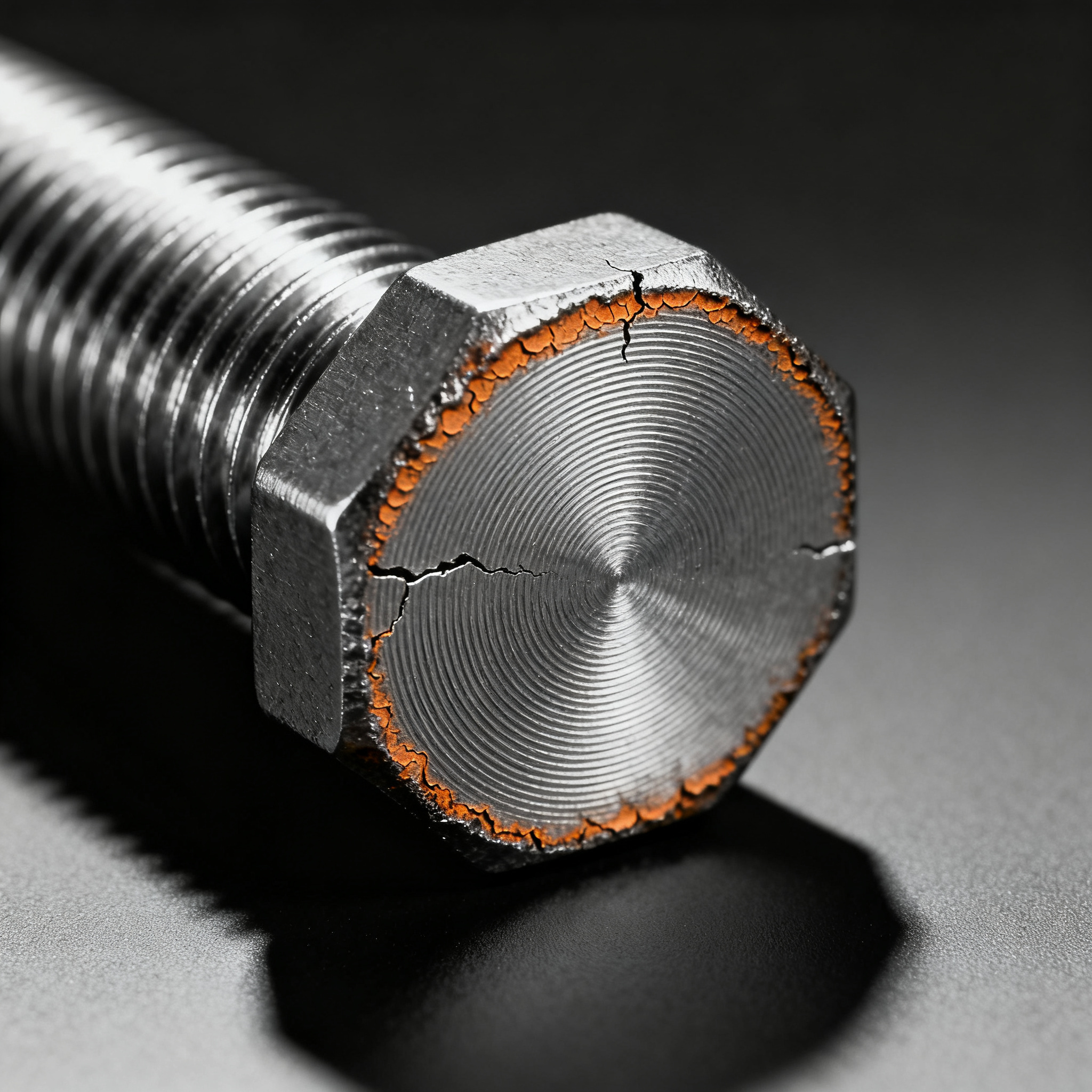
Ti-6Al-4V in the field: here's how to cut costs by 30%
Additive manufacturing is redefining the use of titanium in the industrial sector, enabling the production of high-performance components with greater economic and engineering efficiency. Ti-6Al-4V, also known as Titanium 64, is a strategic alloy for critical applications, but its use requires proven process parameters and a redesigned design to minimize waste and costs.
Why Ti-6Al-4V changes the rules
This alloy is not just strong: it is the only practical candidate for many critical applications, if printed correctly.
Ti-6Al-4V is chosen when high strength-to-weight ratio, corrosion resistance, and mechanical performance in demanding environments are required. Traditionally, however, titanium is discarded upstream for economic reasons: expensive material, complex processing, and high waste in subtractive manufacturing.
With a wire additive process, the reasoning changes. The material is deposited where needed, reducing the amount of metal removed in post-processing. This allows titanium to be considered even for components that would have been less cost-effective with traditional manufacturing.
- Ti-6Al-4V offers superior corrosion resistance and strength-to-weight ratio
- Additive manufacturing reduces waste compared to traditional subtractive machining
- The material requires specific process parameters and protection from oxidation
Recent tests on Ti-6Al-4V fasteners have shown torque values higher than SAE Grade 8 steel. 3/4-10 bolts achieved a torque-to-yield between 563 and 615 ft-lbf, compared to 480-502 ft-lbf for the reference steel. This demonstrates that titanium can enter applications where cost previously made it less competitive.
Key parameters for stable fusion
Controlling the atmosphere, laser power, and scanning speed is essential to avoid defects and ensure mechanical properties.
Having a printable material does not only mean being able to melt it. Process parameters, thermal control, protection from oxidation, and a deposition strategy compatible with the required geometry are needed.
Titanium is sensitive to the presence of oxygen at high temperatures and requires a protected environment. Without atmospheric control, the risk of contamination compromises the mechanical properties of the finished component. Suppliers who already have parameters available for Titanium 64 significantly simplify the implementation path.
Ti-6Al-4V requires protection from oxygen during melting. High-temperature oxidation degrades mechanical properties and can cause structural defects in the finished component.
The deposition strategy must consider the geometry of the part. Parameters such as power, scanning speed, and thermal control directly influence the microstructure and final properties of the deposited material.
Design for economic sustainability
Optimizing geometry reduces wasted material and post-processing time, cutting costs by up to 30%.
Design for additive manufacturing requires a different approach from traditional design. Components redesigned for three-axis printing, with attention to overhang angles, reduce the need for complex support structures.
An overhang limit of up to 75 degrees and a non-planar strategy minimize supports. Less support means less material to remove, lower risk of damaging the part, and less manual work. This aspect affects both production time and subsequent operations.
Design optimization
- Geometric analysis: identify overhang angles and critical zones that would require extensive supports.
- Redesign: adapt the geometry to reduce supports while maintaining required functionalities.
- Validation: verify that changes do not compromise mechanical or functional performance.
Modifications such as hollow edges to accommodate sealing material improve tightness without complicating assembly or disassembly. This is an example of design for maintenance: not only aiming to produce a shape, but to facilitate the use of the part in the real environment.
When it is really worth using titanium
It is not always the best choice: specific cases where the strength-to-weight ratio justifies the investment.
Titanium finds ideal application in aerospace structural components, high-performance fasteners, and parts exposed to corrosive environments. In these contexts, the weight advantage and corrosion resistance justify the higher cost compared to steel.
Components such as structural hinges for helicopters or fasteners for military vehicles represent concrete use cases. The operational validation of recycled titanium components demonstrates that the supply chain can become more accessible by reducing dependence on imported virgin material.
| Application | Main advantage | Critical factor |
|---|---|---|
| Aerospace components | Strength-to-weight ratio | Certification and repeatability |
| Fasteners | Strength and lightness | Cost and availability |
| Corrosive environments | Superior durability | Process quality control |
The choice of titanium must be evaluated case by case. When the buy-to-fly ratio is unfavorable in traditional production, a near-net-shape process reduces the difference between purchased material and finished part. This changes the economic equation, making titanium competitive even for previously excluded applications.
Conclusion
Ti-6Al-4V is not just a material: it is a production strategy that requires proven process parameters, optimized design, and rigorous environmental control. Additive manufacturing reduces waste and opens up new application possibilities, but success depends on correct implementation.
Concrete results show cost reductions of up to 30% through design optimization and support minimization. The key is to evaluate where the strength-to-weight ratio justifies the investment and where the additive supply chain offers real advantages over traditional processes.
Analyze your critical projects: where could titanium become your new competitive lever?
article written with the help of artificial intelligence systems
Q&A
Why does additive manufacturing make Ti-6Al-4V more cost-effective compared to traditional machining?
Additive manufacturing deposits material only where it is needed, drastically reducing the waste typical of subtractive machining. This lowers the buy-to-fly ratio and makes it possible to consider titanium even for components that traditionally would have been too expensive.
What are the critical parameters to control during the additive manufacturing of Ti-6Al-4V?
It is essential to control the protective atmosphere, laser power, scanning speed, and thermal management. Titanium is sensitive to oxygen at high temperatures, and without adequate protection there is a risk of oxidation that degrades mechanical properties.
How can optimized design reduce costs by 30% in the additive manufacturing of titanium?
Redesigning components for three-axis printing, limiting overhangs to 75 degrees and adopting non-planar strategies, minimizes support structures. Fewer supports mean less material to remove, lower risk of damaging the part, and less post-print manual work.
In which applications has Ti-6Al-4V proven competitive compared to high-strength steel?
Tests on 3/4-10 Ti-6Al-4V bolts showed torque-to-yield values (563-615 ft-lbf) higher than SAE Grade 8 steel (480-502 ft-lbf). This makes it ideal for high-performance fasteners, aerospace structural hinges, and components in corrosive environments.
When is it advantageous to choose titanium over other industrial materials?
Titanium is justified when high strength-to-weight ratio, corrosion resistance, and performance in demanding environments are required, such as in aerospace or military applications. Economic convenience increases when near-net-shape production reduces material waste compared to traditional processes.