Applicazione: Research

HyCAT: 300 km/h in 3 days?

HyCAT: 300 km/h in 3 days?

HyCAT, a Pentagon program, accelerates hypersonic aerodynamic testing with dedicated vehicles and commercial launchers, reducing time and costs.

Why does 15% GelMA work?

Why does 15% GelMA work?

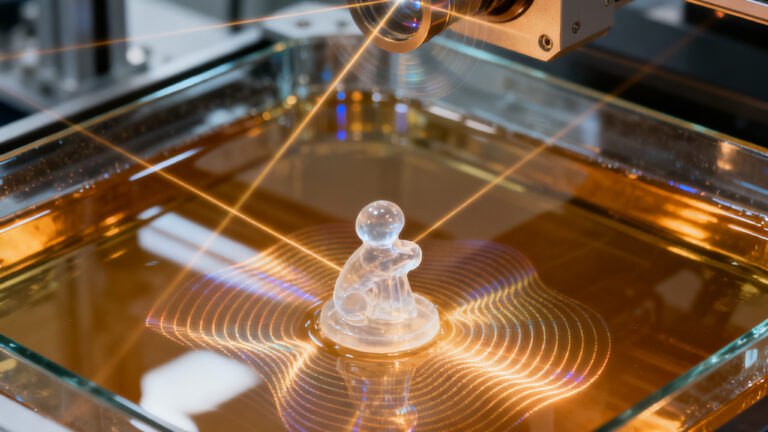
3D bioprinting uses 15% GelMA and 0.5% LAP to create precise and reproducible tissue models. Photopolymerization at 405 nm and low/intermediate speed printing ensure high cell viability. The use of viscoelastic supports such as Pluronic allows for complex geometries without cell damage. Modular systems such as MagMix easily integrate existing platforms, improving

Metal 3D Printing in Space: How Close Are We to Real Production?

Metal 3D Printing in Space: How Close Are We to Real Production?

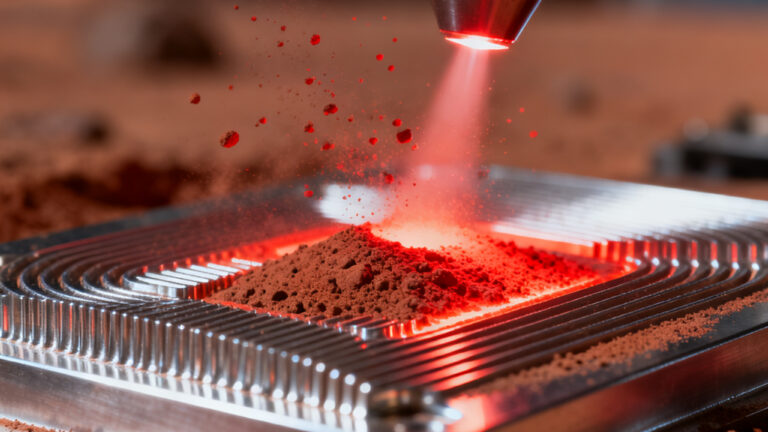
Metal 3D printing in space is still experimental. Suborbital experiments show potential but last only a few minutes, insufficient for complex processes. The first metal objects have been produced on the ISS, demonstrating long-term feasibility. However, challenges such as thermal control, power supply, structural integration, and material quality are slowing down the application

Can AI read defects in LPBF metal?

Can AI read defects in LPBF metal?

An artificial intelligence model developed by KIMS and Max Planck Institute predicts the mechanical properties of metal components produced with LPBF, analyzing pore morphology without destructive testing.

Scrap steel becomes a structure? Here's how

Scrap steel becomes a structure? Here's how

The German project AddMamBa transforms scrap steel into structural components for construction via 3D printing, reducing emissions and waste. Through the atomization of metal scraps into powder suitable for laser melting, brackets and connectors are obtained with performance similar to traditional components, but with lower environmental impact. The approach includes chemical control, optimization

Aerosol Jet Printing: Really Revolutionary?

Aerosol Jet Printing: Really Revolutionary?

Transistors produced with Aerosol Jet Printing are overcoming the limits of printed electronics, opening new paths for flexible and low-cost devices. Thanks to a resolution of 10-50 micrometers and the use of printable materials, this technology allows for the realization of circuits on 3D substrates with good electrical reliability, suitable for sensors, wearable electronics, and circuits lo

Sensors that sense without electronics?

Sensors that sense without electronics?

Bio-inspired soft sensors represent an engineering revolution: the material structure itself becomes the true sensor, generating electrical signals without electronic components. Thanks to porous and anisotropic microarchitectures, these smart materials convert mechanical stimuli into electrical responses by leveraging natural physical phenomena, such as streaming potential. Studies inspired by the spines

3D Micropile for Immunotherapy? Here's How It Works

3D Micropile for Immunotherapy? Here's How It Works

3D microneedles based on polysaccharides represent a new frontier for cancer immunotherapy. These biodegradable structures penetrate the skin to release drugs directly into the tumor microenvironment, reducing side effects and increasing therapeutic efficacy. Thanks to 3D printing, it is possible to customize their shape and composition for targeted and controlled release. I

Can AM revolutionize the transport of nuclear fuel?

Can AM revolutionize the transport of nuclear fuel?

Additive manufacturing could revolutionize the transport of spent nuclear fuel, reducing costs and production times for critical components such as impact limiters. Technologies like FFF and PBF allow for complex geometries and savings of up to $1.7 million per cask. Studies by Orano and UNC Charlotte confirm technical feasibility, but specific regulatory standards are still lacking.

How Lightweight Reticulated and Foamed Structures Work: A Technical Overview of Advanced Composite Materials

How Lightweight Reticulated and Foamed Structures Work: A Technical Overview of Advanced Composite Materials

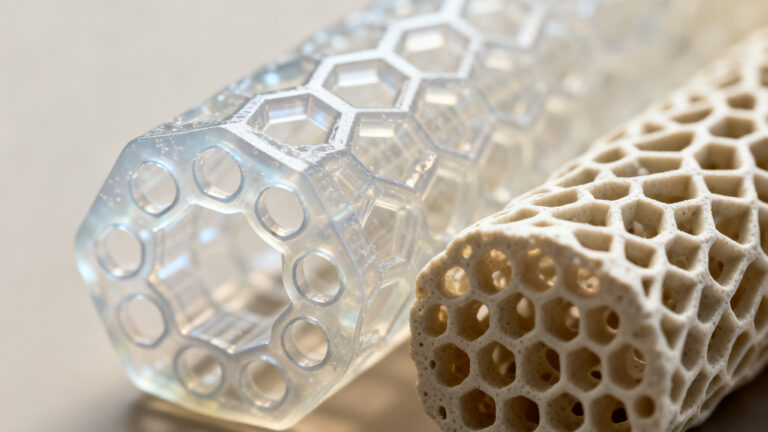
New IFAM technique combines foam and 3D structures for lightweight, high-performance, low-cost composites, with energy absorption up to 10x higher.

HP extends Multi Jet Fusion service: here is how the 3D printing industry is changing

HP extends Multi Jet Fusion service: here is how the 3D printing industry is changing

HP expands Multi Jet Fusion service with the new IF 600HT printer and the Maintenance & Monitoring Service, targeting the industry with greater reliability, scalability, and flexibility on materials.

How to Design a High-Volume 3D Printing University Makerspace

How to Design a High-Volume 3D Printing University Makerspace

The University of Wisconsin–Madison Makerspace is a model of a high-volume 3D printing university laboratory, based on standardized workflows, FDM/FFF technologies, and a hybrid team of students and technicians. Thanks to this approach, the center manages thousands of annual prints with high efficiency, supporting teaching, research, and innovation in a scalable and sustainable ecosystem.

/