Materiale: Polymers

Which toolchanger wins in speed and precision?

Which toolchanger wins in speed and precision?

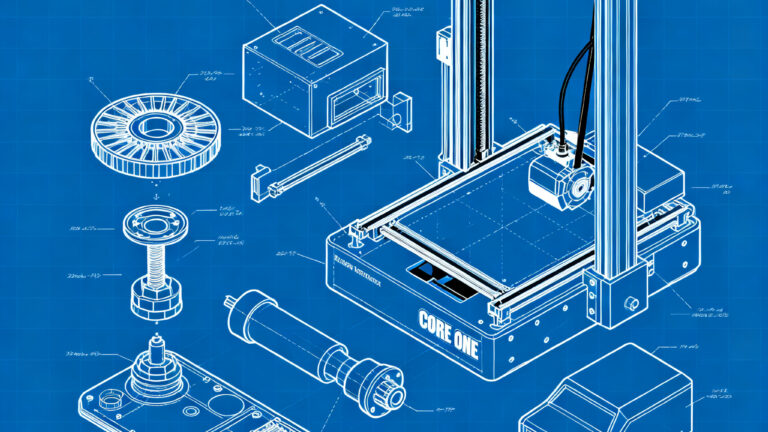
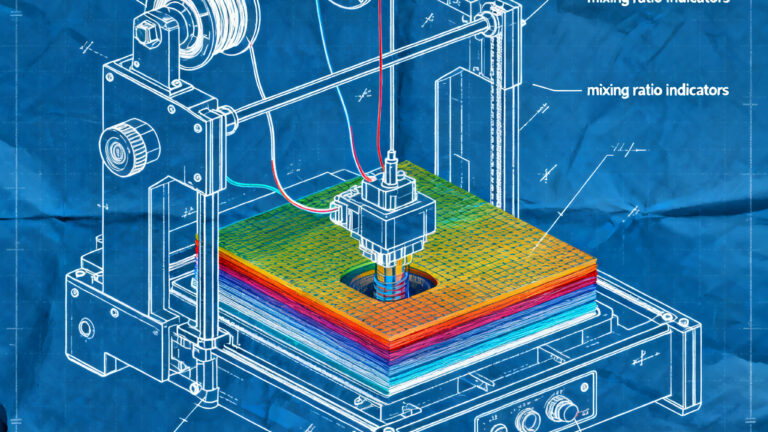
Snapmaker with SnapSwap system stands out for speed, precision, and waste reduction in multicolor 3D printing. Thanks to kinematic couplings and dedicated hotends, it offers fast changes, high repeatability, and less downtime compared to traditional filament change systems. Ideal for complex productions with frequent color changes.

Customizing on a large scale? Here's how it's done in sports

Customizing on a large scale? Here's how it's done in sports

Large-scale customization in the sports industry is made possible by 3D printing, which allows for the production of customized equipment without increasing costs. Thanks to parametric design and AI, companies and teams like Legacy Motor Club are able to create functional components quickly and with significant savings. The technology enables the efficient management of thousands of variants,

Aerosol Jet Printing: Really Revolutionary?

Aerosol Jet Printing: Really Revolutionary?

Transistors produced with Aerosol Jet Printing are overcoming the limits of printed electronics, opening new paths for flexible and low-cost devices. Thanks to a resolution of 10-50 micrometers and the use of printable materials, this technology allows for the realization of circuits on 3D substrates with good electrical reliability, suitable for sensors, wearable electronics, and circuits lo

3D Printing at School Without Uncertainties?

3D Printing at School Without Uncertainties?

3D printing in schools can be inclusive and scalable if well planned. Simple models, materials like PLA, and collaboration with teachers allow for optimizing production and educational impact, avoiding waste and overloads. Starting with pilot projects and scaling gradually is the key to success.

Sensors that sense without electronics?

Sensors that sense without electronics?

Bio-inspired soft sensors represent an engineering revolution: the material structure itself becomes the true sensor, generating electrical signals without electronic components. Thanks to porous and anisotropic microarchitectures, these smart materials convert mechanical stimuli into electrical responses by leveraging natural physical phenomena, such as streaming potential. Studies inspired by the spines

3D Printer Upgrades: What Real Value?

3D Printer Upgrades: What Real Value?

Upgrades for desktop 3D printers can improve quality and versatility, but they must be chosen carefully. Always verify mechanical, electrical, and firmware compatibility before purchase. Prioritize high-impact modifications like heated beds, hardened nozzles, and direct extruders, suitable for the materials you use. Start with simple upgrades like the PEI bed or filament sensors, then move on

Why do 8 out of 10 additive startups fail?

Why do 8 out of 10 additive startups fail?

Many additive startups fail because they focus on technology without building a sustainable business. A solid economic model, paying customers, and strategic patience are needed.

AM in production? Only if you know what to stop

AM in production? Only if you know what to stop

Additive Manufacturing (AM) succeeds in production only when applied to specific cases with high functional requirements, not to replace traditional methods, but to solve needs that these cannot satisfy. Success depends on consolidated designs, controlled materials, fixed parameters, and disciplined post-processing. Sectors such as aerospace, medical, and tooling exploit the

Why is powder flow revolutionizing AM?

Why is powder flow revolutionizing AM?

3D printing improves with two patented innovations: controlled vibrations and smart sensors for precise powder distribution. These systems reduce defects, waste, and post-production rework, increasing quality and repeatability without changing materials or machinery.

Two nozzles, a real advantage? Here's how the Bambu X2D works

Two nozzles, a real advantage? Here's how the Bambu X2D works

The Bambu Lab X2D introduces a dual nozzle system with mechanical switching to improve precision and support removal. One nozzle prints the model, the other handles supports with dedicated material, reducing post-processing and waste. The absence of additional motors on the head increases reliability and precision, with over a million change cycles tested. Main Extruder

Metrology in 3D Scanning: How Integrated Processing Works and Its Industrial Applications

Metrology in 3D Scanning: How Integrated Processing Works and Its Industrial Applications

Integrated metrology in 3D scanners enables real-time quality control, reducing time and costs. Thanks to advanced sensors, geometric algorithms, and connectivity, these systems process dimensional data directly during scanning, integrating with metrology platforms and production processes. Despite some technological limitations, they represent a breakthrough for high-

Polyamide for 3D printing: why traditional PA is no longer enough (and what to use today)

Polyamide for 3D printing: why traditional PA is no longer enough (and what to use today)

Technical polyamides offer excellent performance, but their printing complexity often makes them impractical. SP4 CF15 from 3DBooster was created to solve this paradox: 8.5 GPa rigidity, thermal resistance up to 180°C, and open-air printability without advanced setups.

/