Materiale: Polymers

3 hours, not 3 days: how to really optimize production?

3 hours, not 3 days: how to really optimize production?

Optimizing additive production requires a holistic vision that includes not only print time, but also preparation phases, order aggregation, and post-processing. Often overlooked, these latter stages represent the true bottlenecks. To improve efficiency and reduce delivery times from 3 days to 3 hours, it is essential to integrate the entire production flow into a system

How does the army print in mission?

How does the army print in mission?

Additive production is revolutionizing military logistics, reducing supply times and costs. The Camp Lejeune model shows how targeted training and technological integration allow for the printing of critical parts in the field, saving up to 99.81% compared to traditional methods.

Recycle to compete? The hidden advantage of high-performance polymers

Recycle to compete? The hidden advantage of high-performance polymers

Recycling high-performance polymers, such as PA12, offers significant economic and environmental benefits. Transforming waste powder into recycled filament reduces costs by up to 30% and increases independence from the supply chain. Maintaining high mechanical performance, the recycled material can be used in non-critical structural applications. A controlled process ensures

Why is your 3D printer making noise?

Why is your 3D printer making noise?

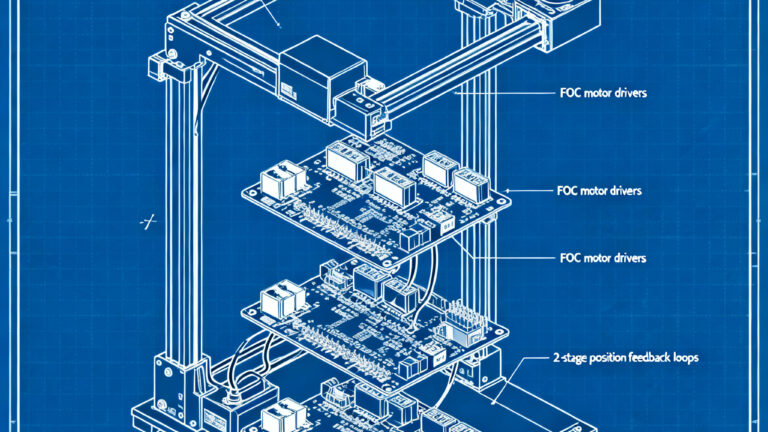
The noise from 3D printers mainly comes from stepper motor vibrations during movement. To reduce it, acoustic insulation is not enough; it is necessary to intervene on motor control, acceleration, and feedback. Techniques like input shaping allow vibrations to be prevented at the source, improving both noise and print quality. Good tuning of the parameters d

Can you really 3D print the CORE One?

Can you really 3D print the CORE One?

Prusa releases the CORE One CAD files under the new open-source OCL license, which allows modifications, sharing, and internal use, but prohibits direct sale without an agreement. Discover what you can concretely do with STEP and Fusion 360 files.

Mix colors without threads? Here's how

Mix colors without threads? Here's how

The new color mixing tool in Bambu Studio allows you to obtain infinite shades by combining different filaments without physical fusion, leveraging the controlled alternation of layers. Through the Add Mixed Filament function, it is possible to create custom gradients with a few spools, ideal for visual effects and soft gradients. The result depends on the Transmission Distance and the geometry

90% uptime? The truth about industrial 3D printers

90% uptime? The truth about industrial 3D printers

The real uptime of industrial 3D printers exceeds 90%, with less than 73 hours of annual downtime. Metrics such as MTBF and MTTR are essential for evaluating reliability. The difference between hobby and industry lies in construction details: robust frames, mechanical auto-leveling, and automation reduce dead times. The main causes of downtime are thermal instability, mechanical wear, and human errors.

Touch keys in 3D printing? Here's how to do it

Touch keys in 3D printing? Here's how to do it

Here's how to integrate touch keys into your 3D printed objects using self-adhesive copper tape and scheduled pauses during printing. Working capacitive sensors are created with simple measures: three-layer depth positioning, holes for electrical connections, and post-print soldering. An economical and accessible solution for integrated touch interfaces.

How to print 1000°C of competitive advantage?

How to print 1000°C of competitive advantage?

Additive manufacturing offers competitive advantages in automotive and motorsport, reducing development times and optimizing components. Technologies like SLS, binder jetting, and PBF allow on-demand production, weight reduction, and greater strength. Practical cases demonstrate the effective integration of 3D printing without disrupting existing production lines.

Perpetua or subscription? Choose the right model for your print farm

Perpetua or subscription? Choose the right model for your print farm

The choice between a perpetual license and a subscription for desktop print farms impacts costs, flexibility, and growth. A perpetual license is cost-effective for those with defined budgets and stable expansion plans, while a subscription offers flexibility and continuous access to advanced features. Solutions like AutoFarm3D Lite and Prusa Connect represent the two models, with different advantages depending on the es

Why are additive manufacturing giants focusing on vertical niches?

Why are additive manufacturing giants focusing on vertical niches?

The additive manufacturing sector is consolidating on vertical niches such as aerospace, medical, and foundry, abandoning the logic of horizontal coverage. The companies that survive focus on specialization, integration into client workflows, and reliable solutions, not just innovation. Success now depends on the ability to generate concrete economies and ensure uptime and repeatability.

Can 3D printing really save the planet?

Can 3D printing really save the planet?

3D printing can be sustainable with targeted choices. Additive-X demonstrates how: every kg of filament sold removes plastic from the oceans and offsets CO₂ emissions. Thanks to partnerships with Plastic Bank and Carbon Footprint™, in 2022, 64 tons of CO₂ were offset. Additive manufacturing reduces waste and emissions, especially with on-demand models and certified systems. Traceability,

/