Materiale: Polymers

Managing Software and Firmware Updates for Printers: A Technical Operational Guide

Managing Software and Firmware Updates for Printers: A Technical Operational Guide

Updating printer firmware and software is essential to prevent errors, optimize materials, and improve efficiency. Neglecting them can cause waste, interruptions, and a drop in quality. Following an accurate procedure, with testing and backups, allows you to fully leverage technological advantages and extend the life of the machines.

How to Design a High-Volume 3D Printing University Makerspace

How to Design a High-Volume 3D Printing University Makerspace

The University of Wisconsin–Madison Makerspace is a model of a high-volume 3D printing university laboratory, based on standardized workflows, FDM/FFF technologies, and a hybrid team of students and technicians. Thanks to this approach, the center manages thousands of annual prints with high efficiency, supporting teaching, research, and innovation in a scalable and sustainable ecosystem.

Bioinspired Soft Robotics: How Multimaterial 3D Printing is Revolutionizing Integrated Actuators and Sensors

Bioinspired Soft Robotics: How Multimaterial 3D Printing is Revolutionizing Integrated Actuators and Sensors

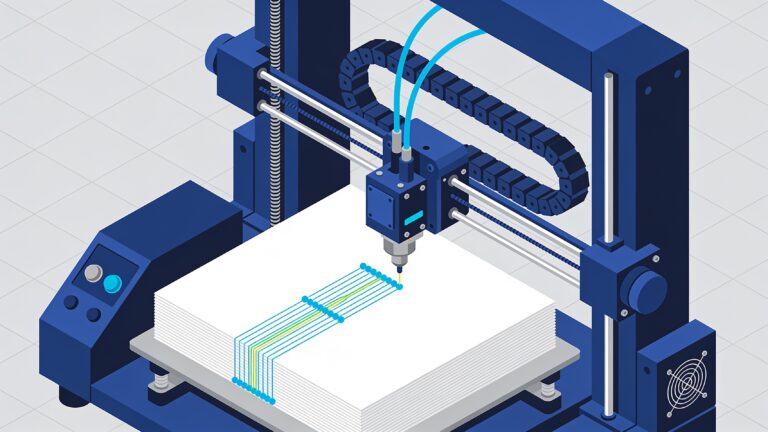
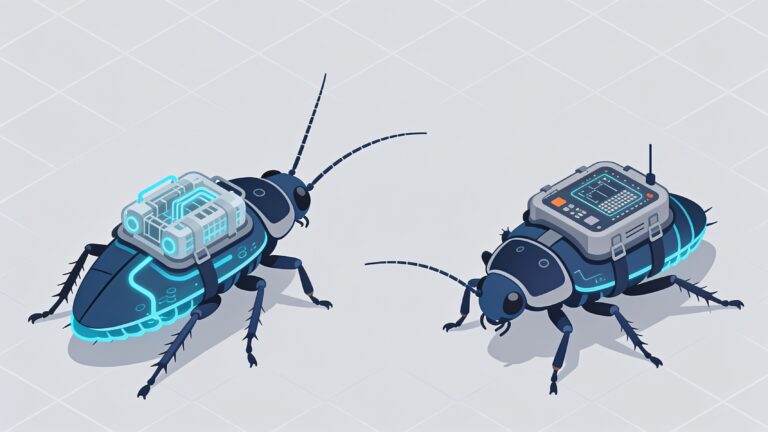
Multimaterial 3D printing is revolutionizing bioinspired soft robotics, allowing the direct integration of actuators and sensors into flexible structures. This approach eliminates complex processes and accelerates prototyping and customization, opening new opportunities in the medical, surgical, and industrial fields.

New Frontiers of the Workforce in Additive Manufacturing: Operational Skills at the Center of Industrial Transformation

New Frontiers of the Workforce in Additive Manufacturing: Operational Skills at the Center of Industrial Transformation

The additive manufacturing industry is evolving towards greater maturity, with a focus on specific skills, production, and customer interaction. An increasing number of professionals is changing the job market, making hiring more selective and promoting internal skill development.

Implementing Direct-to-Consumer in the industrial sector: an operational plan for regional expansion

Implementing Direct-to-Consumer in the Industrial Sector: An Operational Plan for Regional Expansion

Implementing a Direct-to-Consumer (DTC) model in the industrial sector requires a structured approach that goes beyond online sales, integrating design, production, and logistics into an end-to-end workflow. Success depends on the governance of distributed capacity, secure digital platforms, and transparency in processes. Cases like Polymaker and Juise Mobility show how DTC, if well pro

How Conductive Elastomer Pellets Work for Reliable 3D Printing

How Conductive Elastomer Pellets Work for Reliable 3D Printing

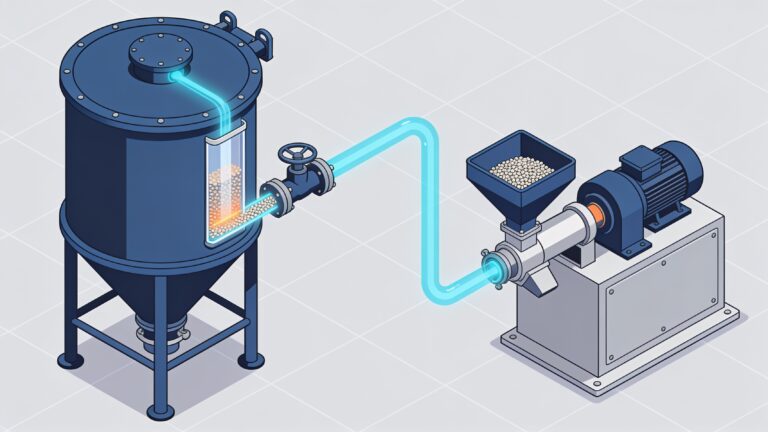
Mechnano's new conductive elastomeric pellets offer reliable electrical and mechanical performance thanks to D'Func technology, which guarantees uniform dispersion of carbon nanotubes, overcoming the limits of traditional ESD materials. Ideal for sectors such as electronics, automation and medical, these materials enable the scalable production of flexible components with yields

Sustainable 3D Printing: Quality vs. Environmental Impact in Recycled Materials

Sustainable 3D Printing: Quality vs. Environmental Impact in Recycled Materials

Industrial 3D printing with recycled materials offers environmental benefits but requires balancing between quality, cost, and performance. The use of recycled powders, if well managed, can reduce the carbon footprint without compromising mechanical properties, provided that parameters such as sphericity, oxygen content, and particle size distribution are controlled. Studies show up to 98.71% reduction

Desktop 3D printer: industrial or prosumer? How to choose

Desktop 3D printer: industrial or prosumer? How to choose

Entry-level desktop 3D printing offers low costs but presents limitations in quality, materials, and reliability compared to industrial systems. Compromises on advanced materials, post-sales support, and longevity make a careful evaluation of actual production needs necessary before purchase.

New Investment Criteria for Additive Manufacturing: Operational Excellence Over Speculation

New Investment Criteria for Additive Manufacturing: Operational Excellence Over Speculation

Investors in additive manufacturing are increasingly focusing on operational efficiency and solid business models, leaving technological speculation behind. Businesses with stable contracts, sustainable margins, and the ability to generate real value in the production chain are being rewarded.

Implementing Mass Customization with Additive Manufacturing: A Technical Playbook for Consumer Products

Implementing Mass Customization with Additive Manufacturing: A Technical Playbook for Consumer Products

Mass customization is now possible thanks to additive manufacturing, artificial intelligence, and parametric design. These technologies allow for the production of thousands of customized variants while maintaining efficiency and margins, overcoming the limits of traditional production. The integration of software toolchains and automated processes enables the management of variability without au

How AI is stitching together the engineering workflow with Aibuild OS

How AI is stitching together the engineering workflow with Aibuild OS

Aibuild OS is an AI platform that unifies the engineering workflow, integrating CAD, CAE, and CAM into a single intelligent environment. It eliminates fragmentation between tools, automates complex processes with “Digital Engineers,” and generates 3D models from text or 2D inputs, reducing errors and production times.

How to Integrate Consumer and Educational 3D Resources into Your Projects

How to Integrate Consumer and Educational 3D Resources into Your Projects

Integrate free or premium 3D resources into your educational or consumer projects to accelerate development and innovation. Choose suitable platforms, verify quality and licenses, and optimize the workflow for professional results.

/