US Navy boosts additive manufacturing capabilities with new hybrid and composite systems
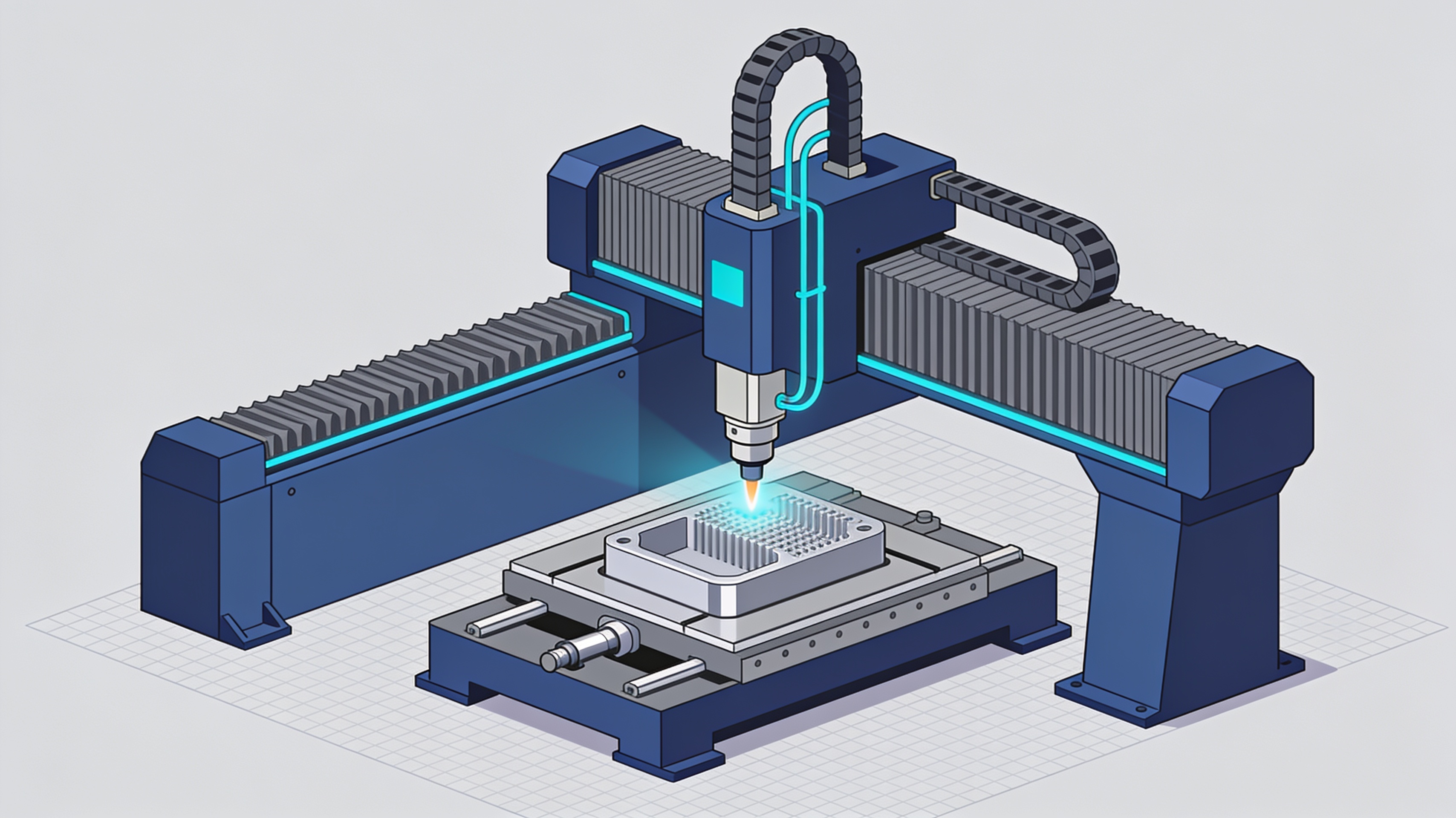
The US Navy has recently acquired several advanced additive manufacturing systems to expand its production capabilities. The investment concerns both hybrid technologies and composite printers, destined for the Schoolhouse in Danville, Virginia.
The initiative is part of the US Navy's Deployed Advanced Manufacturing Initiatives program, which aims to develop on-demand production and personnel training through the integration of metallic and polymeric additive technologies.
Phillips Federal hybrid systems for naval applications
The US Navy has chosen Phillips Federal hybrid systems that integrate DED technology for advanced manufacturing applications.
The Naval Schoolhouse, owned by the Naval Sea Systems Command (NAVSEA) and managed in collaboration with the Institute for Advanced Learning and Research (IALR), has acquired several Phillips Federal hybrid production systems.
These systems integrate Directed Energy Deposition (DED) technology provided by Meltio. DED represents one of the key technologies for training military personnel in additive manufacturing.
The purchase was carried out through BlueForge Alliance on behalf of the Navy. The goal is to increase the fleet's operational readiness through advanced production capabilities both on land and aboard ships.
- Phillips Federal hybrid systems with Meltio DED technology
- Markforged X7 composite printers
- Destination: Schoolhouse in Danville, Virginia
- Focus: personnel training and on-demand production
Markforged composite printers for advanced materials
Markforged X7 printers expand the Navy's capabilities in composite materials.
In addition to hybrid systems, the Navy has acquired Markforged X7 composite printers. These systems allow working with advanced composite materials, expanding production possibilities beyond traditional metals.
The combination of different technologies allows the Schoolhouse to offer comprehensive training on multiple additive processes. Naval personnel can thus acquire skills in both directed energy deposition and composite printing.
Kind Designs raises 10 million for 3D-printed coastal infrastructure
The Miami company expands production of living marine barriers after tripling revenue in 2026.
In the civil sector, Kind Designs announced a $10 million Pre-Series A funding round, bringing the total raised to $21.5 million. The Miami-based company produces Living Seawalls, large 3D-printed structures that protect coastlines, restore marine ecosystems, and improve water quality.
The round included existing investors such as Mark Cuban and former Washington D.C. mayor Adrian Fenty, along with new investor Kyle Kuzma, an NBA player.
The company generated $10 million in contract revenue, built an active pipeline of $175 million, and expanded projects toward luxury hospitality and federal defense applications.
Production Expansion and New Markets
Kind Designs aims to triple production capacity and penetrate the California and New York markets.
Demand for Living Seawalls has grown as coastal communities replace outdated infrastructure with more resilient solutions. Kind Designs now also offers Living Seawall Tiles, Living Shorelines, and 3D-printed artificial coral reefs.
The raised capital will be used to accelerate expansion in California and New York, expand the engineering and operations team, and triple the plant's production capacity.
The recent legislative action by Florida Governor Ron DeSantis, which facilitates the approval of living shoreline projects, will further favor the company's growth.
“The marine barrier industry is a hundreds-of-billions-dollar market that has never had a true technology company. We are building one of the most important American tech companies to put resilience on the map as the next major industrial category,” said Anya Freeman, founder and CEO of Kind Designs.
article written with the help of artificial intelligence systems
Q&A
Which additive manufacturing systems did the US Navy acquire?
The US Navy acquired Phillips Federal hybrid systems featuring Meltio DED technology and Markforged X7 composite printers. These devices are destined for the Danville Schoolhouse to enhance production capabilities.
Where will the Navy's new additive systems be installed?
The new systems will be installed at the Danville Schoolhouse in Virginia. This facility is operated by the Naval Sea Systems Command in collaboration with the Institute for Advanced Learning and Research.
What is the goal of the Deployed Advanced Manufacturing Initiatives program?
The program aims to develop on-demand production and train military personnel by integrating metal and polymer additive technologies. The ultimate goal is to increase fleet operational readiness both ashore and afloat.
What type of technology do the Phillips Federal hybrid systems use?
The Phillips Federal hybrid systems selected by the Navy integrate Directed Energy Deposition (DED) technology provided by Meltio. This technology is essential for training personnel on advanced direct energy deposition processes.
What advantages do Markforged X7 printers offer the Navy?
Markforged X7 printers enable work with advanced composite materials, expanding production possibilities beyond traditional metals. This allows naval personnel to acquire specific skills in composite printing.