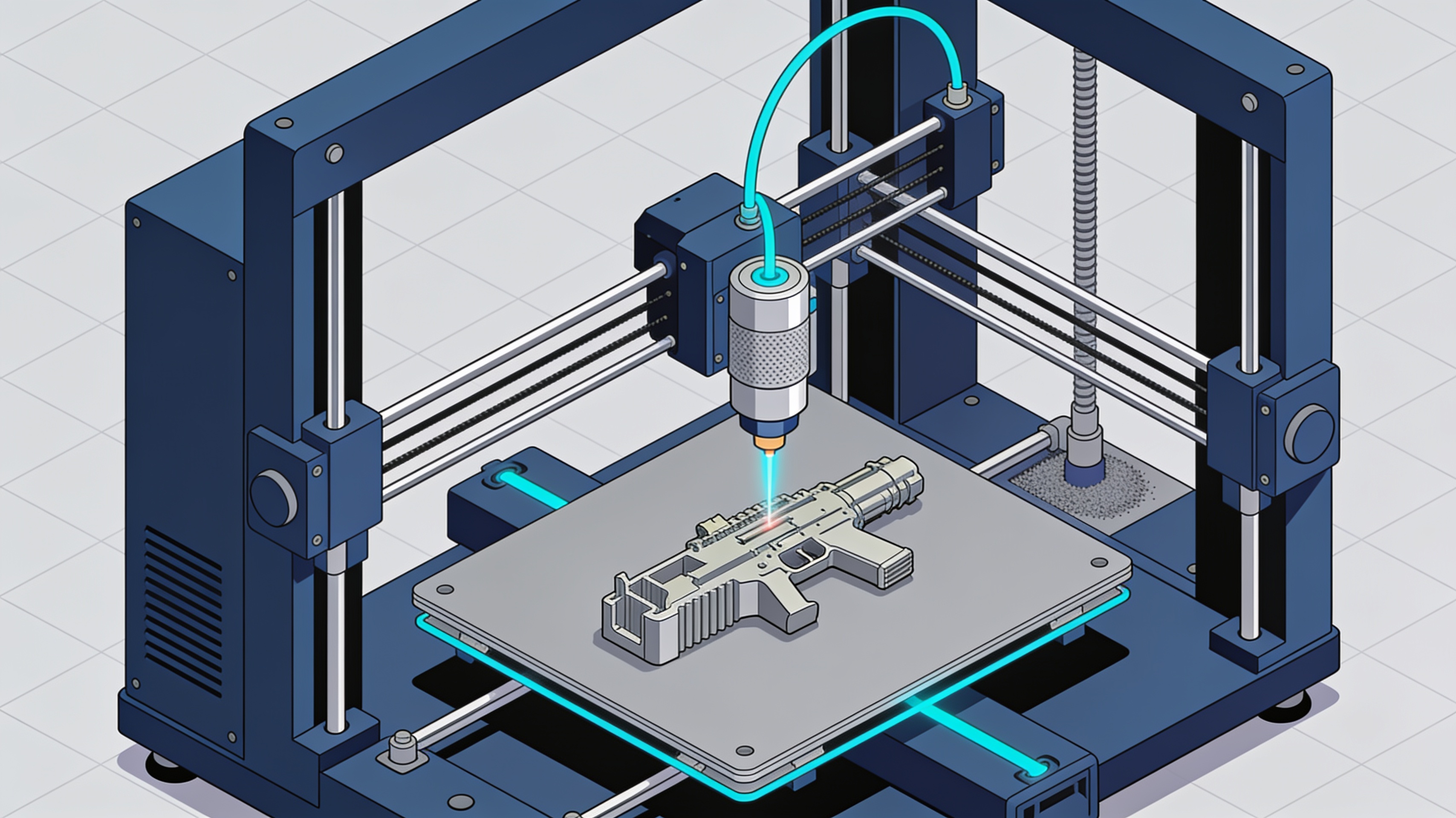
US Executive Order on Defense: New Opportunities for Additive Manufacturing
A new White House executive order on the security of military supply chains could accelerate the adoption of 3D printing in the US defense sector. Signed on 20 July 2026, the document does not explicitly mention additive manufacturing, but it creates favorable conditions for rapid domestic production technologies.
Contents of the executive order
The Executive Order “Securing America’s Defense Supply Chains and Ensuring Domestic Acquisition of Critical Materials” requires the Department of Defense to reduce dependence on foreign suppliers for critical military materials and components.
The order signed by the White House introduces stringent requirements for the Department of Defense. The new directives include stricter rules for waivers, complete mapping of supply chains, and accelerated qualification of domestic suppliers.
The document encourages the use of US and allied sources for critical materials and components. Charles R. Goulding and Preeti Sulibhavi highlight how this policy could create significant growth opportunities for the American 3D printing industry.
- Reduction of dependence on foreign suppliers for military systems
- Stricter rules for exemptions and supplier qualification
- Complete mapping of supply chains
- Incentives for rapid and transparent domestic production
Why it favors additive manufacturing
Although the order seems focused on minerals and rare earths, the implications extend to production technologies that ensure speed, transparency, and domestic localization.
The order creates incentives for manufacturers capable of producing qualified components domestically, quickly, and with transparent supply chains. These characteristics correspond exactly to the areas where additive manufacturing has matured over the last decade.
Many advanced defense systems depend on materials from countries considered strategic competitors, particularly China. Rare earth magnets, special alloys, titanium, tungsten, tantalum products, and electronic components traverse complex international supply chains before reaching American manufacturers.
Additional security measures
On July 29, 2026, the White House extended protectionist measures by banning the import of Chinese humanoid and quadruped robots.
The Federal Communications Commission has enforced the ban to eliminate national security and cybersecurity risks for U.S. critical infrastructure. This move further strengthens the push toward domestic production of advanced technological components.
The executive order addresses a strategic problem that has been building for years: the dependence on critical materials from geopolitical competitors for advanced defense systems.
Implications for the AM industry
Additive manufacturing companies that can demonstrate qualified domestic production capabilities are in an advantageous position to benefit from the new policies.
3D printing offers specific advantages to meet the requirements of the executive order. On-demand production reduces the need for warehouses and complex supply chains. Localizing production ensures greater control and transparency.
Additive technologies also enable faster qualification of new domestic suppliers compared to traditional manufacturing processes. This alignment between technological capabilities and policy requirements could translate into significant growth for the sector.
Future perspectives
The executive order represents a paradigm shift in U.S. defense procurement policies, with potentially lasting effects on the domestic manufacturing industry.
Although additive manufacturing is not explicitly mentioned in the document, experts consider it among the best-positioned technologies to respond to the new directives. The combination of rapid production, flexibility, and supply chain control perfectly matches the strategic objectives of the order.
AM companies investing in qualification for defense applications and material certification could see accelerated growth opportunities in the coming years. The strengthening of protectionist policies suggests a long-term commitment to the resilience of domestic supply chains.
article written with the help of artificial intelligence systems
Q&A
What does the new executive order require the Department of Defense to do?
The order mandates reducing reliance on foreign suppliers for critical military materials and components. It also introduces stricter rules for waivers and requires a complete mapping of supply chains.
Why is additive manufacturing favored by this policy?
3D printing is favored because it ensures speed, transparency, and domestic production localization. These features align with the order's incentives to manufacture qualified components domestically.
Which strategic materials are at the center of supply chain concerns?
Defense systems often rely on materials from strategic competitors like China, including rare earth magnets and special alloys. Titanium, tungsten, and tantalum are specifically cited as critical components.
What additional security measures have been introduced by the White House?
On July 29, 2026, the ban on importing Chinese humanoid and quadruped robots was extended. This measure aims to eliminate risks to national security and the cybersecurity of critical infrastructure.
Who highlighted growth opportunities for American 3D printing?
Charles R. Goulding and Preeti Sulibhavi emphasized how the new policy could create significant growth opportunities. The U.S. 3D printing industry is well-positioned to leverage incentives for domestic production.