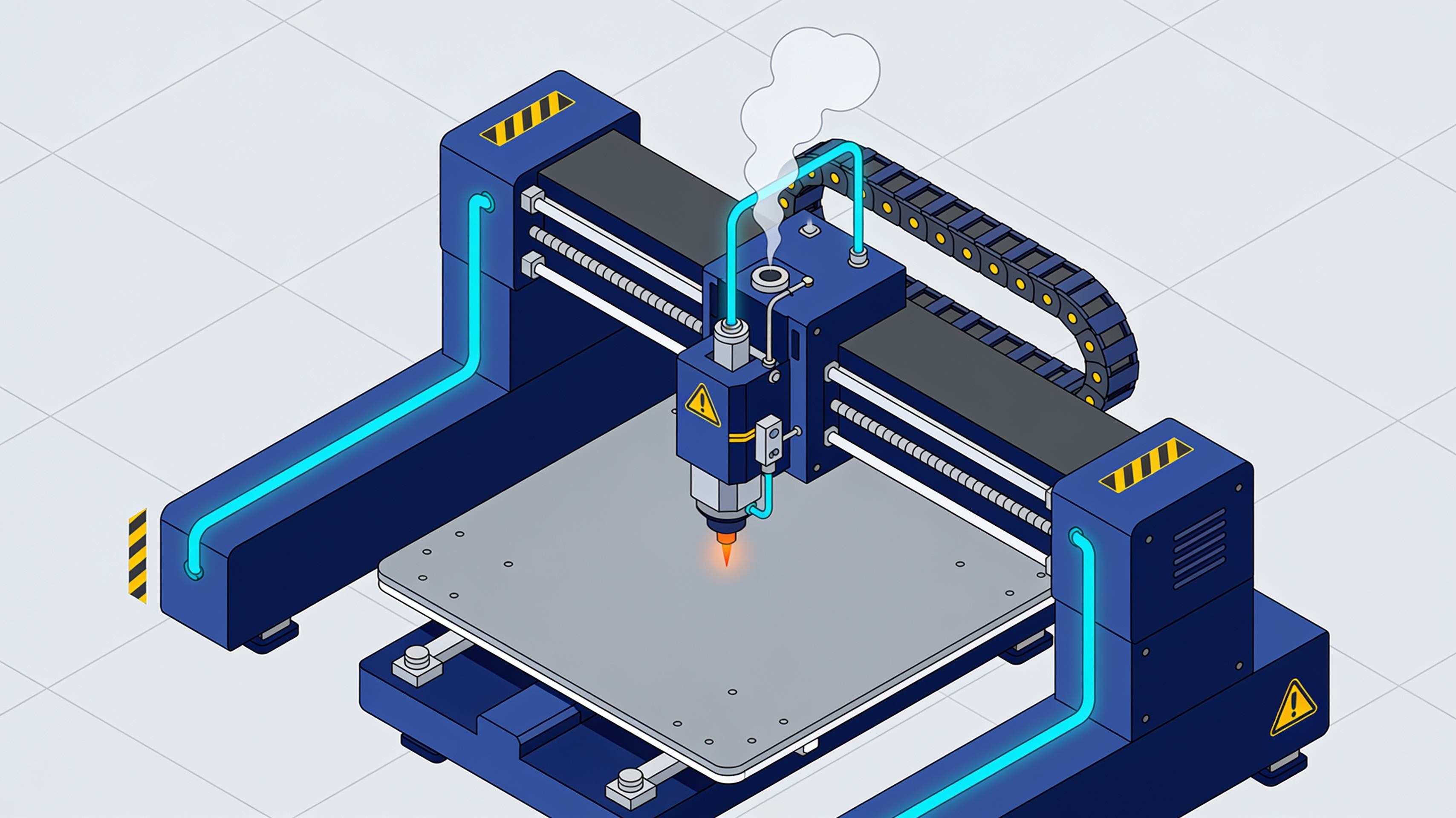
NIOSH publishes safety labels for 3D printing
The US National Institute for Occupational Safety and Health (NIOSH) has released new safety labels dedicated to 3D printing. The initiative aims to raise awareness among operators and companies about the risks related to additive manufacturing.
The identified risks
NIOSH, part of the CDC, has identified four main categories of risk associated with the use of 3D printers in the workplace.
The labels published by the institute highlight the following hazards:
- Emissions from the materials used
- Emissions during printing operations
- Risk of mechanical entanglement
- Risk of burns
- NIOSH has published freely downloadable safety labels
- The labels contain QR codes that link to detailed procedures
- The initiative responds to the rapid expansion of 3D printing in the industrial sector
- Experienced operators know the risks, but novices often ignore them
A training problem
Experienced 3D printer operators have known these risks for years and take the right precautions to mitigate them during daily operations.
The problem mainly concerns novices and some companies, which are often unaware of the dangers associated with the technology.
NIOSH's approach
The institute has developed a comprehensive program that includes research, educational materials, and practical tools for workplace safety.
NIOSH explains its mission: “The rapidly expanding use of additive manufacturing (3D printing) can expose workers to potential safety and health risks.” The institute conducts research and provides recommendations to support safe and responsible use of the technology.
The activities include in-depth research and field studies, useful for determining precise risks for different operational scenarios.
Available tools
In addition to the basic introductory page, NIOSH has developed a series of videos on safety in additive manufacturing. The materials are available free online.
The downloadable labels represent the most practical element of the initiative: they can be printed and posted near workstations with 3D printers.
The labels contain QR codes that lead directly to NIOSH pages with detailed procedures and safety precautions.
Impact and prospects
Part of the information published by NIOSH had already been available for some time. The labels, however, represent a new tool for reaching those approaching 3D printing.
The initiative may seem like a small step, but these stickers could help operators in various situations and work contexts.
The rapid growth of additive manufacturing makes the dissemination of safe practices increasingly urgent. NIOSH, part of the CDC, applies to 3D printing the same approach used for other industrial sectors.
The institute's recommendations are technically developed for the American context, but the safety principles are universal and applicable in any country.
The free accessibility of materials and the ease of use of labels could favor greater adoption of safe practices, especially in small and medium enterprises that are approaching technology.
article written with the help of artificial intelligence systems
Q&A
What are the four main risks identified by NIOSH for 3D printing?
NIOSH has identified four risk categories: emissions from materials used, emissions during printing operations, mechanical entanglement hazards, and burn risks. These hazards are specific to the use of 3D printers in workplace environments.
Who are the new NIOSH safety labels primarily aimed at?
The initiative aims to raise awareness especially among beginners and companies not yet fully aware of the hazards associated with the technology. Experienced operators already know these risks and have been taking precautions for years.
What is the function of the QR codes on the safety labels?
The labels contain QR codes that link directly to NIOSH pages with detailed procedures and safety precautions. This allows immediate access to in-depth information right from the workstation.
What practical tools does NIOSH offer besides downloadable labels?
In addition to labels to be posted near printers, NIOSH has developed a series of videos on safety in additive manufacturing and educational materials. All these resources are available free online to support training.
Why did NIOSH feel the need to publish these new guidelines?
The institute is responding to the rapid expansion of additive manufacturing in industry, which can expose new workers to potential health and safety risks. The goal is to provide recommendations based on thorough research for responsible use.