Materiale: Polymers

30€ and 2 days: here's how I built my tool changer

30€ and 2 days: here's how I built my tool changer

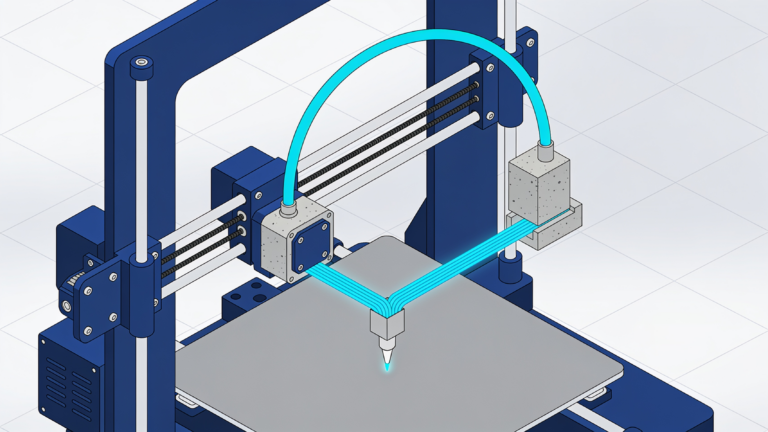
Practical guide to building a tool changer system for 3D printers with less than €30 and a weekend of work. Discover which components to buy, what to print, the critical tolerances to respect, and common errors to avoid to build a functional DIY tool changer.

3D printed shoes? Here's who's already making money from them

3D printed shoes? Here's who's already making money from them

In 2026, 3D shoes become industrial reality: Zellerfeld, PollyFab and others offer production platforms, AI design and dedicated materials. From custom footwear to orthopedic soles, the industry abandons experimentation for scalable models and digital customization.

30 printers, 1 historic environment: how they did it

30 printers, 1 historic environment: how they did it

The Saint Louis Art Museum replicated a section of the Trajan's Column with 30 desktop 3D printers. A modular workflow of modeling, printing, and assembly created a full-scale tactile replica, demonstrating that distributed desktop production is scalable for cultural heritage.

Thus I digitized an industrial piece

Thus I digitized an industrial piece

Digitizing industrial components for 3D printing in a few hours is possible with real-time visual feedback scanners, automatic mesh cleaning, and parameters aligned with the printer. A method that reduces errors, iterations, and the learning curve.

3 tools that cut setup times by up to 70%

3 tools that cut setup times by up to 70%

Three solutions to optimize print farms: SimplyPrint, AutoFarm3D, and 3D Print Manager. Reduce setup times by up to 70% with centralized queues, multi-start, automatic monitoring, and integrated material and cost management.

Functional 3D fidget toys? Here's how to make them properly

Functional 3D fidget toys? Here's how to make them properly

Guide to creating functional 3D fidget toys: choose tested models, use print-in-place and snap-fit with tolerances of 0.2-0.3 mm, and suitable materials: PLA for rigid clickers, PETG for stress, and TPU for soft grips. Calibrate the printer for durable results.

Refactoring without breaking changes? Here's how to verify it

Refactoring without breaking changes? Here's how to verify it

Refactoring 3D models without breaks: verify hierarchical constraints, test dependencies, and validate the STL. A three-level system to maintain parametricity and integrity before production.

Additive manufacturing in APAC: from laboratory to production line?

Additive manufacturing in APAC: from laboratory to production line?

Additive manufacturing in the APAC region is now a production infrastructure. TCT Asia 2026 confirms the overcoming of the experimental phase: the market competes on reliable workflows, industrial integration, and operational costs, shifting the focus from prototyping to mass production.

80 hours of therapy in 10 hours of production?

80 hours of therapy in 10 hours of production?

SLS 3D printing in Nylon 12 produces custom pediatric prostheses in 8-10 hours. The Pedi-Knee prototype weighs 240g with 0-120° flexion. Rapid workflow and clinical-industrial partnerships allow devices to be adapted to a child's growth with frequent iterations and sustainable costs.

Custom 3D in series: how to do it without failing?

Custom 3D in series: how to do it without failing?

To customize wearable devices in series, four pillars are needed: modular architecture, AI and biometric scans for ergonomic variants, hybrid production processes, and end-to-end digital integration. Missing one and the system collapses.

How does stiffness arise in flexible 3D structures?

How does stiffness arise in flexible 3D structures?

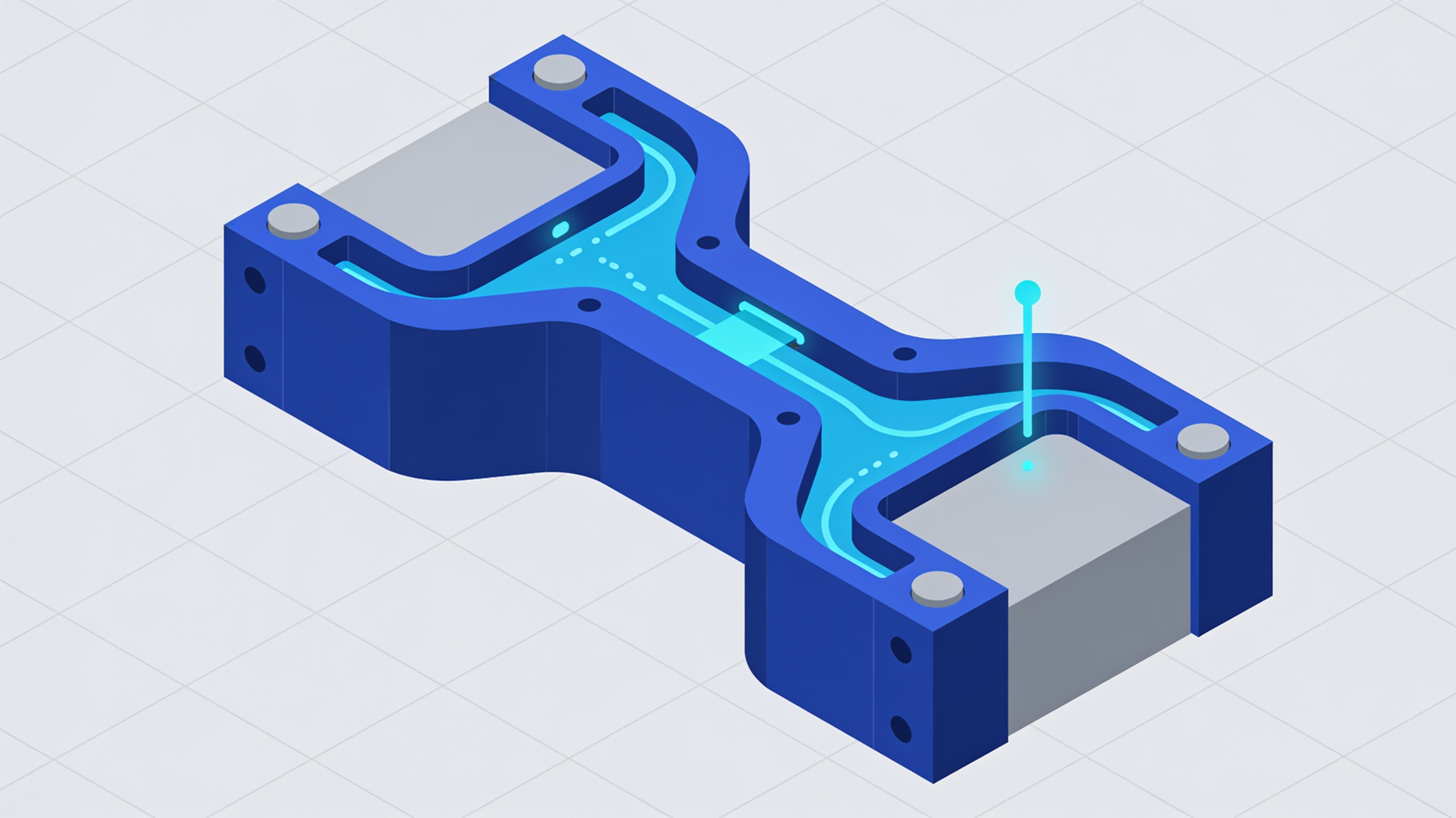
Flexible 3D structures that become rigid: variable geometries, asymmetric struts, and central limiting structures allow for the controlled transition from flexibility to rigidity, optimizable with 3D printing and composite materials.

How is a color created in Bambu Studio 2.5.3?

How is a color created in Bambu Studio 2.5.3?

Bambu Studio 2.5.3 introduces Color Mixing: create custom shades by combining 2-3 filaments of the same type. Thanks to a software-controlled optical effect, it generates uniform colors or gradients without purchasing new spools. Requires compatible and translucent materials for optimal results.

/