Haddy inaugurates the first LFAM microfactory in Florida: proximity additive manufacturing for large-scale products
St. Petersburg, Florida — Haddy has opened a 30,000-square-foot microfactory dedicated to large-format additive manufacturing (LFAM), bringing automated and digital production closer to demand. The facility houses eight CEAD robotic systems and represents a new on-demand production model in the United States.
The plant is located a few blocks from downtown St. Petersburg. Seven systems are dedicated to production, while one is reserved for research and development.
Eight robotic systems for flexible production
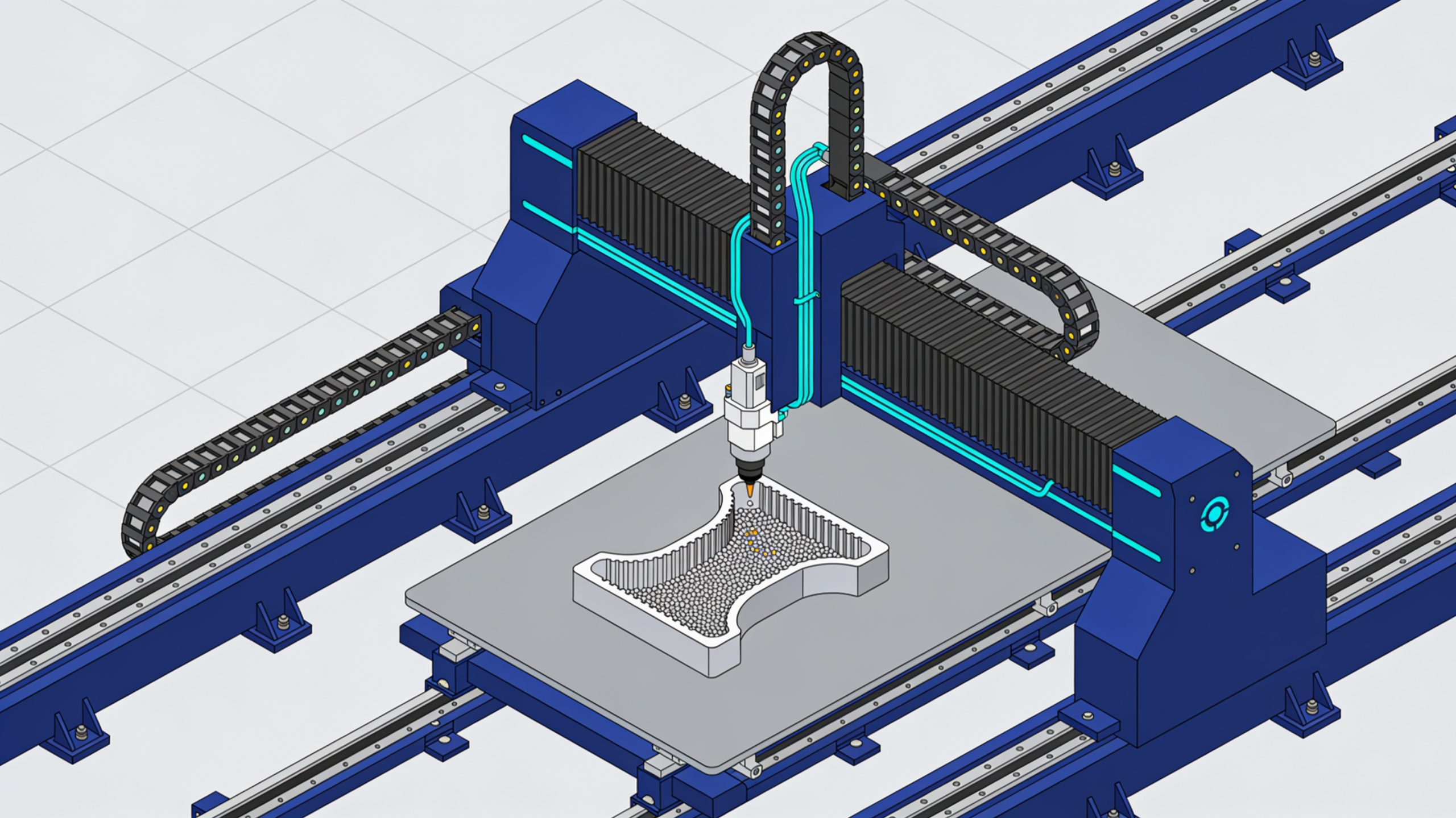
CEAD's LFAM systems operate on rails to increase their range of action. They primarily use fiber-reinforced thermoplastic pellets and recycled materials.
Haddy uses technology provided by CEAD, a Dutch company based in Delft. The seven production systems are mounted on rails to extend operational capacity.
The machines can both print and mechanically work on components. This dual functionality allows complex parts to be completed without transfers between stations.
- 30,000 square feet of production space
- 8 CEAD LFAM systems (7 production + 1 R&D)
- Rail systems with printing and mechanical processing capabilities
- Materials: fiber-reinforced and recycled thermoplastic pellets
Proximity manufacturing: response to tariffs and supply chain disruptions
Haddy opened the facility in April 2025, the same month the Trump administration announced tariffs that disrupted global supply chains.
The microfactory model addresses recent trade challenges. As reported by Forbes in April 2025, this approach does not seek to rebuild the manufacturing past, but to bring profitable production back to the United States.
Digital design files can be sent tariff-free from any country. The coffee bar design discussed in the article comes from the United Kingdom.
On-demand production reduces waste. Haddy prints only what customers need, when and where it is needed.
From disaster to innovation: the Paradeco case
After Hurricane Ian in 2022, Haddy allowed a local coffee shop to reopen in two weeks with custom flood-resistant furniture.
Paradeco, a historic coffee shop in St. Petersburg, was devastated by Hurricane Ian in 2022, the year Haddy was founded. Traditional suppliers could not respond quickly.
Haddy printed ready-to-install replacements for the destroyed wooden furniture. The furnishings were flood-resistant and customized according to Paradeco's specific needs.
The venue reopened in just two weeks with a new coffee bar. This intervention demonstrates the responsiveness of proximity additive manufacturing.
Haddy produces a growing range of innovative items: BlackBird door architectures, Vizcom chairs, architectural screens, transparent PETG chairs, coffee bars, and Coexiste animal cage tables.
Expansion strategy: microfactory network within 8-10 hours from major cities
The company plans new strategically located sites to reduce transportation times and costs.
Haddy is reducing transportation distances by positioning microfactories within 8-10 hours of major cities. The strategy includes adding new sites, with Chicago and the Midwest as next destinations.
This model replaces slow and unresponsive production of furniture and other products with customized designs. Many solutions would otherwise be economically inaccessible or technically impossible.
Large-format additive manufacturing is evolving from a niche technology to a scalable industrial solution for distributed production.
article written with the help of artificial intelligence systems
Q&A
Where is Haddy's new microfactory located?
The facility is located in St. Petersburg, Florida, just a few blocks from downtown. It occupies 30,000 square feet dedicated to additive manufacturing.
How many robotic systems are installed at the Haddy facility?
The plant hosts eight robotic systems provided by the Dutch company CEAD. Seven systems are dedicated to active production, while one is reserved for research and development.
What materials does Haddy's LFAM technology use?
The systems primarily operate using thermoplastic pellets reinforced with fiber. Recycled materials are also employed to support a sustainable production model.
How did Haddy help the Paradeco coffee shop after Hurricane Ian?
Following the damage from Hurricane Ian in 2022, Haddy printed custom flood-resistant furniture. This allowed the venue to reopen in just two weeks despite the unavailability of traditional suppliers.
How does the microfactory respond to supply chain disruptions?
The model allows sending digital design files without tariffs and producing locally on-demand. This reduces waste and eliminates the need for long global supply chains.