Why additive manufacturing has become indispensable for modern defense
Additive manufacturing is transforming the way armed forces manage maintenance, logistics and operations. It is no longer about experimentation, but about strategic necessity. Eight concrete reasons explain this evolution.
Field production: the end of endless waits
Traditional supply chains slow down military operations. 3D printing allows components to be produced where they are needed, when they are needed.
Waiting times for spare parts can exceed six months for outdated platforms in remote locations. Every day of downtime means reduced operational capability.
Additive manufacturing solves this problem at its root. Components are produced locally from secure digital files, eliminating dependence on centralized supply chains. The result is immediate: fast repairs and greater operational flexibility.
- Deployable production directly on the operational field
- Maintenance of obsolete platforms without original suppliers
- Drastic reduction of procurement times
- Repair costs reduced by up to 99,9%
When the original supplier no longer exists
Military platforms last decades. Their suppliers often do not. 3D printing bridges this critical gap.
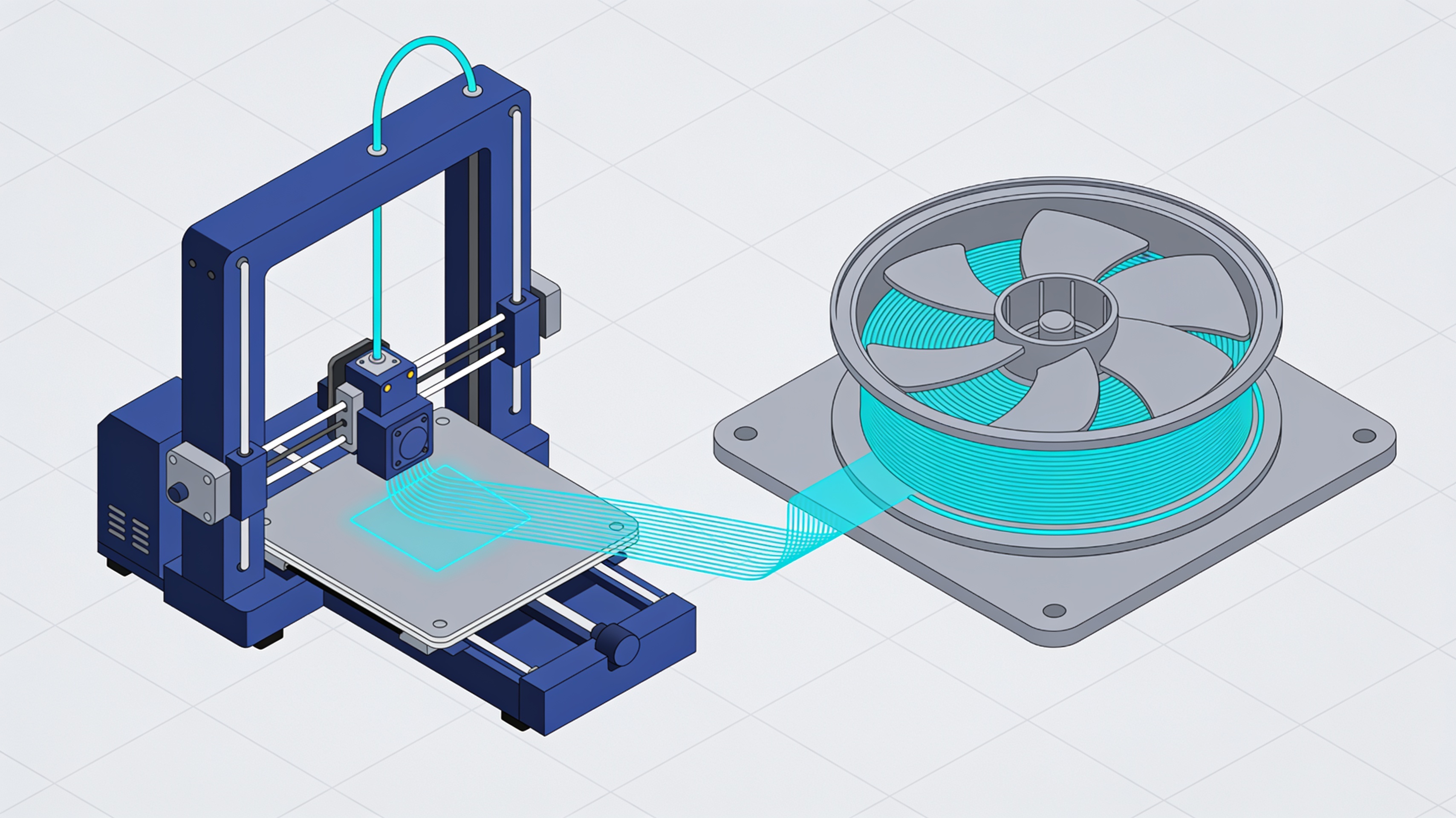
An Arleigh Burke-class destroyer demonstrated the potential in 2025. A fan rotor failed on a chilled water pump. Replacing the entire pump would have required $316,544.
The Southeast Regional Maintenance Center chose another path. It reverse-engineered the original aluminum component and printed a blade in aerospace thermoplastic. Final cost: $131.21. A savings of 99,96%.
Operational speed: the F-35 case
In defense, every day of downtime directly reduces mission capability. Additive manufacturing accelerates everything.
The F-35 Joint Program Office had a critical tooling need in 2025. The Fleet Readiness Center East Innovation Lab responded with two people and a printer.
Using digital light processing, they produced 2,000 tools for the installation of O-rings in less than two weeks. Traditional procurement would have taken six months. Less than 10% of the expected time.
| Method | Time | Cost | Team |
|---|---|---|---|
| Traditional | 6 months | Not specified | Complete chain |
| 3D Printing | <2 weeks | Reduced | 2 people |
Beyond individual cases: a paradigm shift
Defense organizations are completely rethinking production, maintenance, and adaptation of equipment.
Supply chains are under increasing pressure. Operational requirements change rapidly. Additive manufacturing is no longer an experiment: it has become an essential tool to respond to these challenges.
The ability to produce components on-demand transforms military logistics. It is no longer necessary to stock huge warehouses of spare parts. Secure digital files and printers distributed across the territory are enough.
Strategic implications
Additive manufacturing redefines what it means to be operationally ready. Readiness no longer depends solely on warehouses and suppliers.
This technology offers multiple strategic advantages. It reduces the vulnerability of supply chains. It increases the operational autonomy of deployed units. It allows platforms that would otherwise be obsolete to remain in service.
The materials used range from aerospace thermoplastics to metals like titanium, ensuring performance equivalent or superior to original components.
The question is no longer whether to adopt additive manufacturing in defense. It is how quickly organizations will be able to fully integrate it into their operations. The numbers speak clearly: those who adopt it gain time, reduce costs, and increase operational readiness.
The eight reasons cited by the sources converge on one point: additive manufacturing has gone from a promising technology to an essential capability. Armed forces that do not invest in this direction risk finding themselves with equipment grounded while others operate.
article written with the help of artificial intelligence systems
Q&A
How much can be saved by using 3D printing for military spare parts?
In the case of a pump rotor for a destroyer, the cost dropped from over $316,000 to about $131. This represents a repair cost reduction of up to 99.96% compared to traditional methods.
How does additive manufacturing solve the problem of suppliers no longer in business?
The technology enables reverse engineering of original components and local production using secure digital files. This eliminates dependence on centralized supply chains or defunct original suppliers.
What time advantage was demonstrated in the F-35 tooling case?
While traditional procurement would have taken six months, 3D printing produced 2,000 tools in under two weeks. The process involved only two people, reducing timelines to less than 10% of the estimate.
Why is on-site production critical for military operations?
Wait times for spare parts in remote locations can exceed six months, reducing operational capability. 3D printing allows components to be produced where and when needed, ensuring rapid repairs.
What materials were used in the practical case of the Arleigh Burke destroyer?
The original component was aluminum, but for the additive solution, a blade was printed in aerospace thermoplastic. This demonstrates flexibility in material selection to replace obsolete metal parts.