Settore Industriale: Manufacturing

Sustainable materials in action: how the industry is implementing bio-based solutions on a large scale

Sustainable materials in action: how the industry is implementing bio-based solutions on a large scale

The industry is implementing bio-based sustainable materials on a large scale, integrating responsible agricultural supply chains, technological innovation and circular economy. Projects such as Pragati, Bio.3DGREEN and Virtucycle demonstrate how sustainability and industrial performance can coexist, thanks to strategic partnerships and standardization.

Self-produced design without compromise: the True Iconic Design case

Self-produced design without compromise: the True Iconic Design case

There's a prejudice that's hard to die: 3D printed products have an inevitably compromised aesthetic. True Iconic Design overturns this logic by building sculptural home accessories where the production technology disappears completely — and only the design remains.

Part Identification via CAD without ML Model Retraining

Part Identification via CAD without ML Model Retraining

A new innovative method enables the automatic identification of 3D printed parts directly using CAD models, without the need to retrain machine learning models. Developed by KU Leuven, Materialise, and Iristick, the system leverages geometric representations and few-shot learning techniques to classify new parts quickly and efficiently, reducing times and

How Chemical Vapor is Revolutionizing the Post-Processing of 3D Parts

How Chemical Vapor is Revolutionizing the Post-Processing of 3D Parts

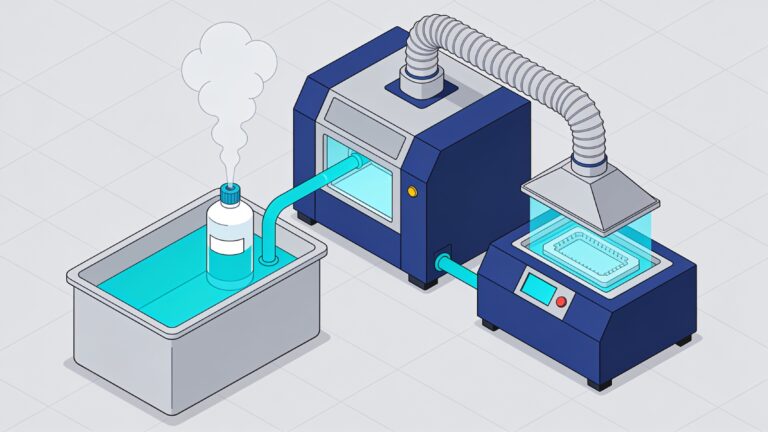
Chemical vapor is revolutionizing the post-processing of 3D parts, offering smooth, waterproof, and repeatable finishes without material removal. Automated technologies like AMT PostPro eliminate production bottlenecks, reduce costs, and improve mechanical properties, making additive production scalable and certifiable for demanding industries.

Additive Manufacturing in Production: How Industrial Companies Build Reliable Processes

Additive Manufacturing in Production: How Industrial Companies Build Reliable Processes

The adoption of additive manufacturing in industry requires operational discipline, focus on defined part families, and rigorous process control. Technology alone is not enough: organizational management is needed to ensure reliability and repeatability. Winning applications are born where performance advantages outweigh complexity, such as in aerospace, medical, and tooling. Integration

Implementing the Digital Thread in Additive Manufacturing: An Operational Playbook for Multi-CAD Integration

Implementing the Digital Thread in Additive Manufacturing: An Operational Playbook for Multi-CAD Integration

Implementing the digital thread in additive manufacturing is now an operational necessity, no longer a futuristic vision. Multi-CAD integration requires reliable solutions to overcome interoperability barriers, ensure traceability, and maintain data consistency throughout the entire production cycle. Case studies and best practices show how middleware, clear governance, and hybrid toolchains can

Practical Guide to Using Consumer-Grade LiDAR: Tools, Workflow, and Maker vs Industrial Use Case

Practical Guide to Using Consumer-Grade LiDAR: Tools, Workflow, and Maker vs Industrial Use Case

The guide illustrates the use of consumer-grade LiDAR for 3D scanning, comparing tools such as smartphones with integrated LiDAR, portable scanners like 3DMakerpro Lynx and Toucan, and practical workflows for makers and small productions. The advantages of each technology are analyzed in terms of precision, portability, and costs, with application examples in design, teaching, and prototyping

How the Mintion V1 3D Printing Filtration System Works: Complete Technical Guide

How the Mintion V1 3D Printing Filtration System Works: Complete Technical Guide

The Mintion V1 is an accessible filtration system for FFF/FDM 3D printers, designed to reduce ultrafine particles and VOCs. It uses HEPA and activated carbon filters, easily integrating into home or maker spaces. It improves air quality by reducing odors and pollutants, but requires conscious use and correct installation to maximize effectiveness.

Safety and Standards in Post-Processing of Resins for Stereolithography

Safety and Standards in Post-Processing of Resins for Stereolithography

Post-processing is crucial in stereolithography to ensure safety and regulatory compliance. Stages such as washing and post-curing eliminate chemical residues and complete polymerization, ensuring mechanical properties and biocompatibility. The use of validated systems and low-risk solvents improves operational efficiency and safety.

How the Plug-and-Play Optical Interface Made with 3D Printing Works

How the Plug-and-Play Optical Interface Made with 3D Printing Works

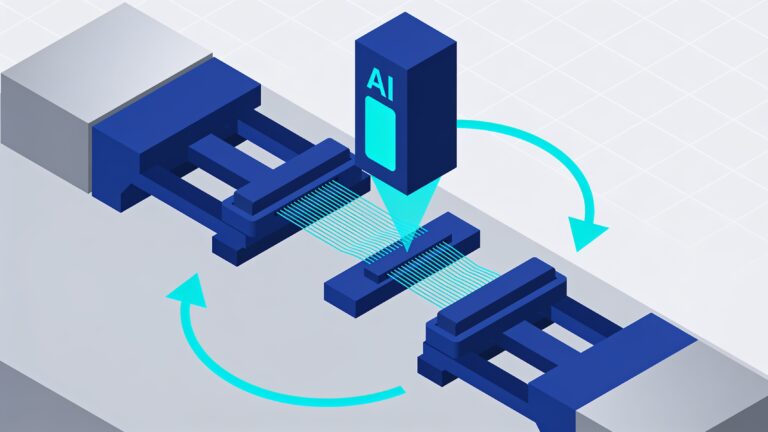
New plug-and-play optical interface developed with 3D printing enables high-efficiency connections between optical fibers and integrated photonic circuits, with losses of only 0.78 dB. Thanks to polymer structures created via two-photon polymerization, the system offers passive alignment, compatibility with standard MTP cables, and stable performance over broad bandwidth, paving the way for photonic systems

PreFlight and the Architecture of the Future: A New Approach to Slicing for FFF/FDM

PreFlight and the Architecture of the Future: A New Approach to Slicing for FFF/FDM

PreFlight is a new open-source slicer for FFF/FDM developed by oozeBot, designed to overcome the architectural limitations of traditional software. With a native 64-bit architecture and modern stack (C++20, OpenCASCADE, CGAL), it aims to ensure greater reliability, precision, and scalability in professional slicing. It introduces advanced features such as Athena Perimeter Generator and Interlocking Per

Accessible LPBF: How Startups Can Produce Metal Without Costs from Industry

Accessible LPBF: How Startups Can Produce Metal Without Costs from Industry

New entry-level LPBF systems, such as Metal-Base, make metal 3D printing accessible to startups and labs with costs under €10,000, thanks to innovative technologies, compact design, and open-source software.

/