3D-printed foundations for the new Hemavan chairlift: optimized infrastructure in the mountains
In the Syterbyn ski area, in northern Sweden, 3D concrete printing finds an unprecedented application: robotic foundations for ski lifts. The project by Hyperion Robotics, Hemavan Alpint and Doppelmayr demonstrates how additive construction can solve logistical and economic problems in high-altitude construction.
A different application from printed houses
The world's first chairlift on foundations optimized with 3D printing marks a paradigm shift: not printing everything, but only what is needed.
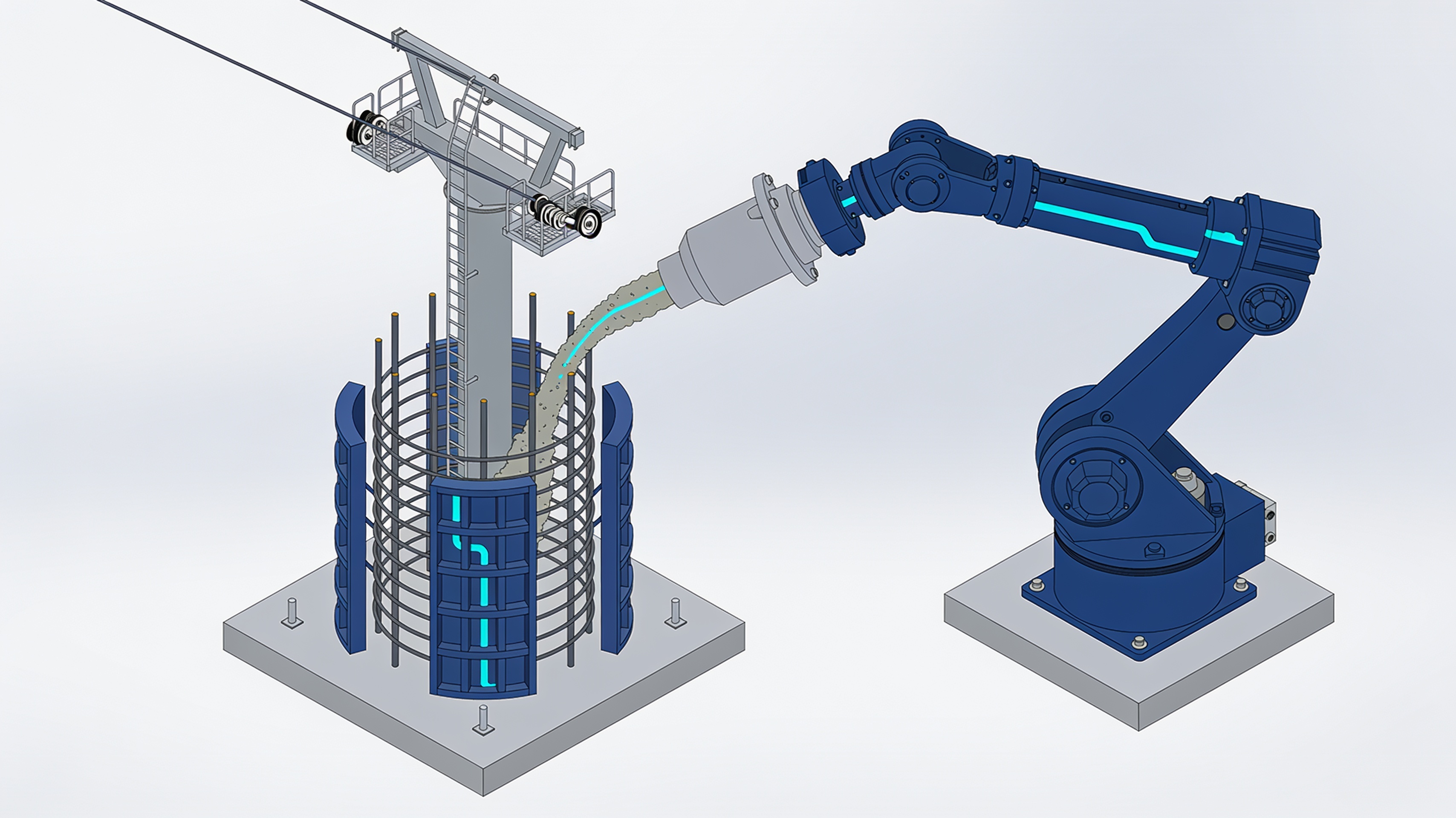
The new Hemavan ski lift, about 1,300 meters long, uses foundations developed with a combination of computational design, robotics, 3D-printed permanent formwork, steel reinforcement and conventional concrete.
This is the first documented application of robotic foundations for ski lift supports. There are already buildings and even cable car stations partially made with 3D concrete printing, but no specific precedents for this structural typology.
- World's first application of 3D-printed foundations for ski lifts
- Reduction of 30-40% in material compared to conventional solutions
- Hybrid system: printed formwork + reinforcement + traditional concrete
- Logistical advantages in remote mountain locations
The economic advantage in the mountains
At altitude, the problem is not printing every cubic centimeter, but reducing weight, transport, and complex processing.
In a remote mountain location such as Hemavan, additive construction solves very concrete critical issues. Reducing weight, material volume, transport, formwork, crane hours, and work at altitude means bringing to the site elements that are already optimized and ready for installation.
Hyperion Robotics states that the foundations use about 30-40% less material than conventional solutions. The figure comes from the project partners, not from a specific independent Life Cycle Assessment. However, it is consistent with previous Hyperion applications in water and electrical infrastructure, where documented reductions have been confirmed by clients such as National Grid.
How the hybrid system works
It is not the entire foundation that is printed: the Hyperion process is more sophisticated and combines different technologies.
The definition “3D-printed foundation” can be misleading. The system does not deposit the entire structural volume layer by layer.
The production process
- Digital design: The component is optimized according to loads and site conditions.
- Robotic printing: A robotic structure creates a permanent formwork with optimized geometry.
- Reinforcement: The formwork is combined with a steel reinforcement cage.
- Pour: The structural volume is completed with conventional concrete.
The printed formwork remains an integral part of the final structure. This hybrid approach makes it possible to leverage the advantages of computational design and robotics without sacrificing the performance of traditional reinforced concrete.
Precedents in infrastructure
Hyperion has already tested the system with British industrial partners in critical sectors such as energy and water.
The company has collaborated with National Grid on electrical substation foundations. With Welsh Water and Mott MacDonald Bentley, it has built 66 foundations for the Usk Reservoir project.
These precedents in water and power infrastructure provided data on material reduction and validated the approach before application to ski lifts. The partnership with the University of Sheffield and National Grid also enabled structural verifications through finite element analysis.
The Hemavan foundation project was assessed by DEKRA to ensure compliance with safety standards for ski lift systems.
Implications for additive construction
The Hemavan project indicates a pragmatic direction: additive manufacturing in construction may make more sense in infrastructure than in housing.
For years, communication about construction 3D printing has focused on printed houses. The Swedish project demonstrates that the real value of the technology can emerge in more narrowly scoped but strategic applications.
Optimized foundations, complex prefabricated elements, components for infrastructure in difficult locations: these areas make it possible to leverage the advantages of computational design and robotics without having to face the regulatory and technical complexities of printing entire habitable buildings.
The funding of the 3DGeoCarbon project by the European Innovation Council confirms European institutional interest in infrastructure applications of low-carbon 3D printing.
The Hemavan ski lift represents a concrete case study: less spectacular than a printed house, but probably more relevant for the industrial adoption of the technology.
article written with the help of artificial intelligence systems
Q&A
What is the main novelty of the Hemavan project?
It is the first documented application of robotic 3D-printed foundations for the supports of a ski lift. There are precedents for buildings and cable car stations, but not for this structural typology.
How much material is saved with 3D-printed foundations?
Hyperion Robotics claims a material use 30-40% lower than conventional solutions. The figure comes from the project partners and not from an independent Life Cycle Assessment, but it is consistent with previous applications in water and power infrastructure.
Is the entire foundation 3D printed?
No. The system is hybrid: it combines computational design, robotics, 3D-printed permanent formwork, steel reinforcement and conventional concrete. The entire structural volume is not deposited layer by layer.
What advantages does 3D printing offer in a remote mountain location like Hemavan?
Reducing weight, material volume, transport, formwork, crane hours and work at height. This way, pre-optimized elements ready for installation are brought to the site.
Who are the partners of the Hemavan chairlift project?
The project involves Hyperion Robotics, Hemavan Alpint and Doppelmayr. The ski lift is about 1,300 meters long and is located in the Syterbyn area, in northern Sweden.