Settore Industriale: Manufacturing

3D printers at school? Not enough: here's the real plan

3D printers at school? Not enough: here's the real plan

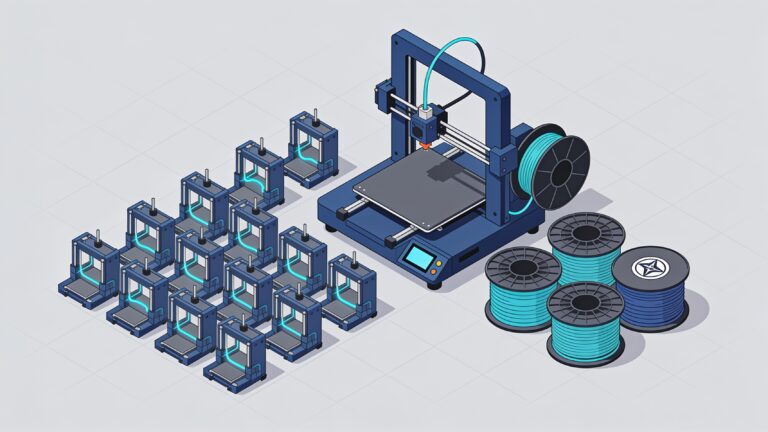
Equipping schools with 3D printers is not enough: a structured educational plan oriented towards professional objectives is needed. Programs must integrate practical skills, critical thinking, and knowledge of materials to train professionals capable of choosing and applying technology with awareness.

Critical bugs fixed: OrcaSlicer and Marlin are now more reliable

Critical bugs fixed: OrcaSlicer and Marlin are now more reliable

OrcaSlicer v2.3.2 and Marlin 2.1.3-b3 resolve critical bugs: no more crashes in multi-material slicing, 3MF vulnerabilities closed, and native support for FLY boards and GD32 processors. Essential updates for stability, security, and modern hardware.

Cooling by half a millimeter?

Cooling by half a millimeter?

A photopolymerizable ceramic slurry formulation enables 3D printing of components with cooling channels down to 0.2 mm. DLP technology overcomes the limits of traditional bonding, opening new perspectives for wafers, micro-coolers, and laser mirrors. Scalability and material stability remain to be verified.

AI and Digital Twin: the future of smart recycling?

AI and Digital Twin: the future of smart recycling?

Fraunhofer IAPT combines AI and Digital Twin for intelligent recycling in 3D printing. The closed-loop system manages the variability of recycled polymers in real time, reduces waste, and builds a shared technical memory for sustainable and predictive production processes.

Threaded inserts, allies for additive manufacturing

Threaded inserts, allies for additive manufacturing

Metal threaded inserts make industrial 3D printing ideal for assembleable and durable parts. Integrating them into digital quotes reduces times, errors, and costs, eliminating the weak points of plastic threads.

MJF/SLS post-processing: 3 tricks for small labs?

MJF/SLS post-processing: 3 tricks for small labs?

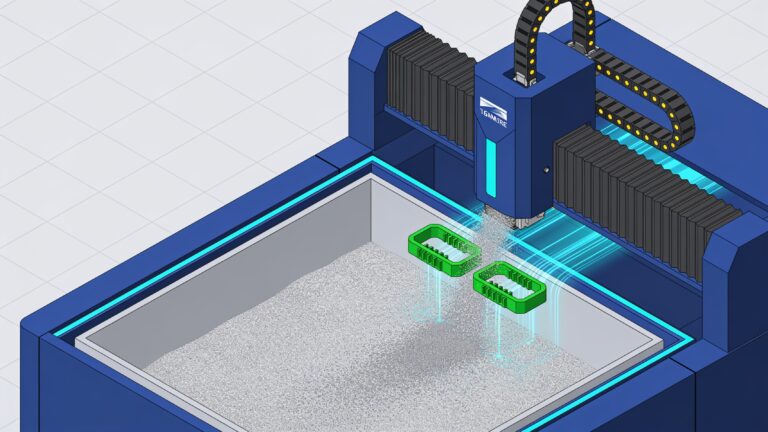
New automated systems like DyeMansion's Powershot and AMT's PostPro solutions make MJF/SLS post-processing accessible to small labs, reducing costs and processing times.

Can you automate the post-processing of the resin?

Can you automate the post-processing of the resin?

Automating the post-processing of resin improves precision and repeatability. A modular workflow adapts each phase to the specific parameters of the material, reducing errors and manual times. The integration between the printer and washing/curing stations enables certified, traceable, and scalable flows, ideal for professional and biocompatible applications.

Who is in charge when costs dictate the law?

Who is in charge when costs dictate the law?

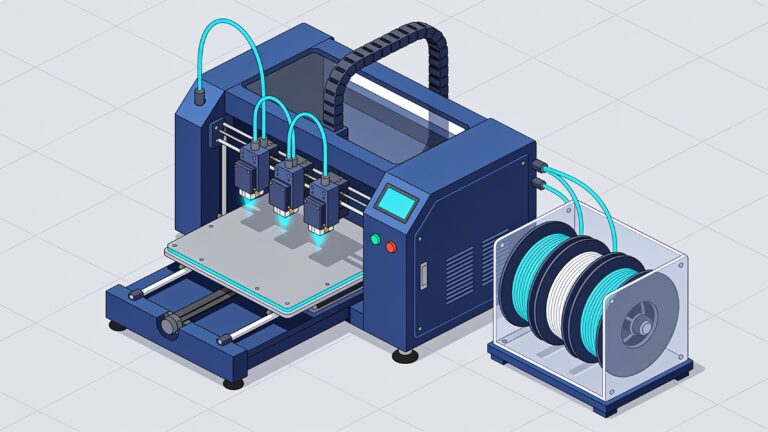
The cost reduction of key components such as lasers and light engines is democratizing additive manufacturing, allowing access to metal 3D printers under $10,000. This change is redefining market dynamics, shifting the focus from hardware to services and adaptability to specific use cases. Modularity and standardization allow new realities to com

Scalable Motion Control for Industrial 3D Printers?

Scalable Motion Control for Industrial 3D Printers?

Scalable Motion Control for Industrial 3D Printers: modular architecture enabling reuse, upgrades, and flexible adaptation to different mechanical configurations. Dyze Design's Aurora system with two-stage feedback for greater precision and responsiveness. Benefits: cost reduction, targeted maintenance, and gradual integration.

Recycle to compete? The hidden advantage of high-performance polymers

Recycle to compete? The hidden advantage of high-performance polymers

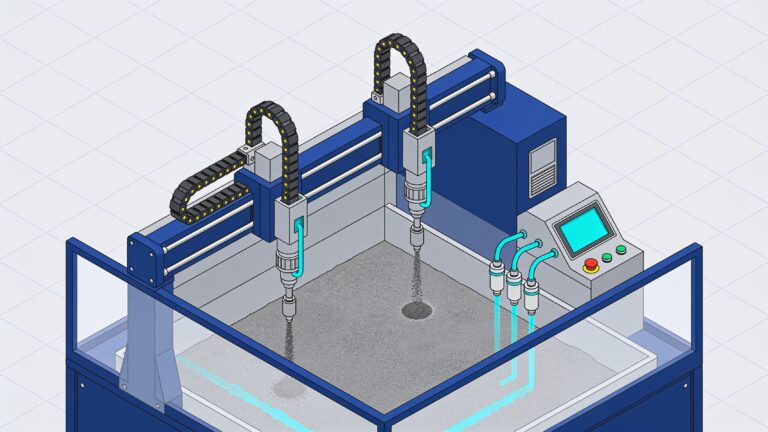
Recycling high-performance polymers, such as PA12, offers significant economic and environmental benefits. Transforming waste powder into recycled filament reduces costs by up to 30% and increases independence from the supply chain. Maintaining high mechanical performance, the recycled material can be used in non-critical structural applications. A controlled process ensures

Why does this resin cost 5x but print twice as much?

Why does this resin cost 5x but print twice as much?

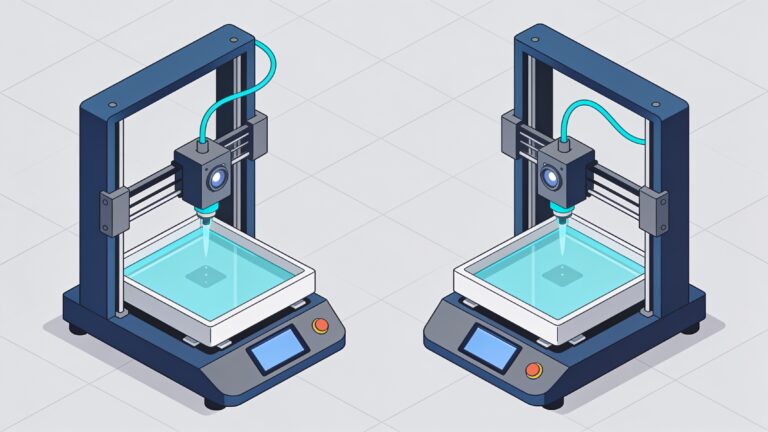
Next-generation photopolymer resins cost more because they are formulated to emulate the properties of engineering plastics like PP or TPU, with chemical precision and control of mechanical characteristics. They are not simple liquids: each resin is designed for specific applications, ensuring quality, durability, and performance similar to injection molding. The difference in pr

Why is your 3D printer making noise?

Why is your 3D printer making noise?

The noise from 3D printers mainly comes from stepper motor vibrations during movement. To reduce it, acoustic insulation is not enough; it is necessary to intervene on motor control, acceleration, and feedback. Techniques like input shaping allow vibrations to be prevented at the source, improving both noise and print quality. Good tuning of the parameters d

/