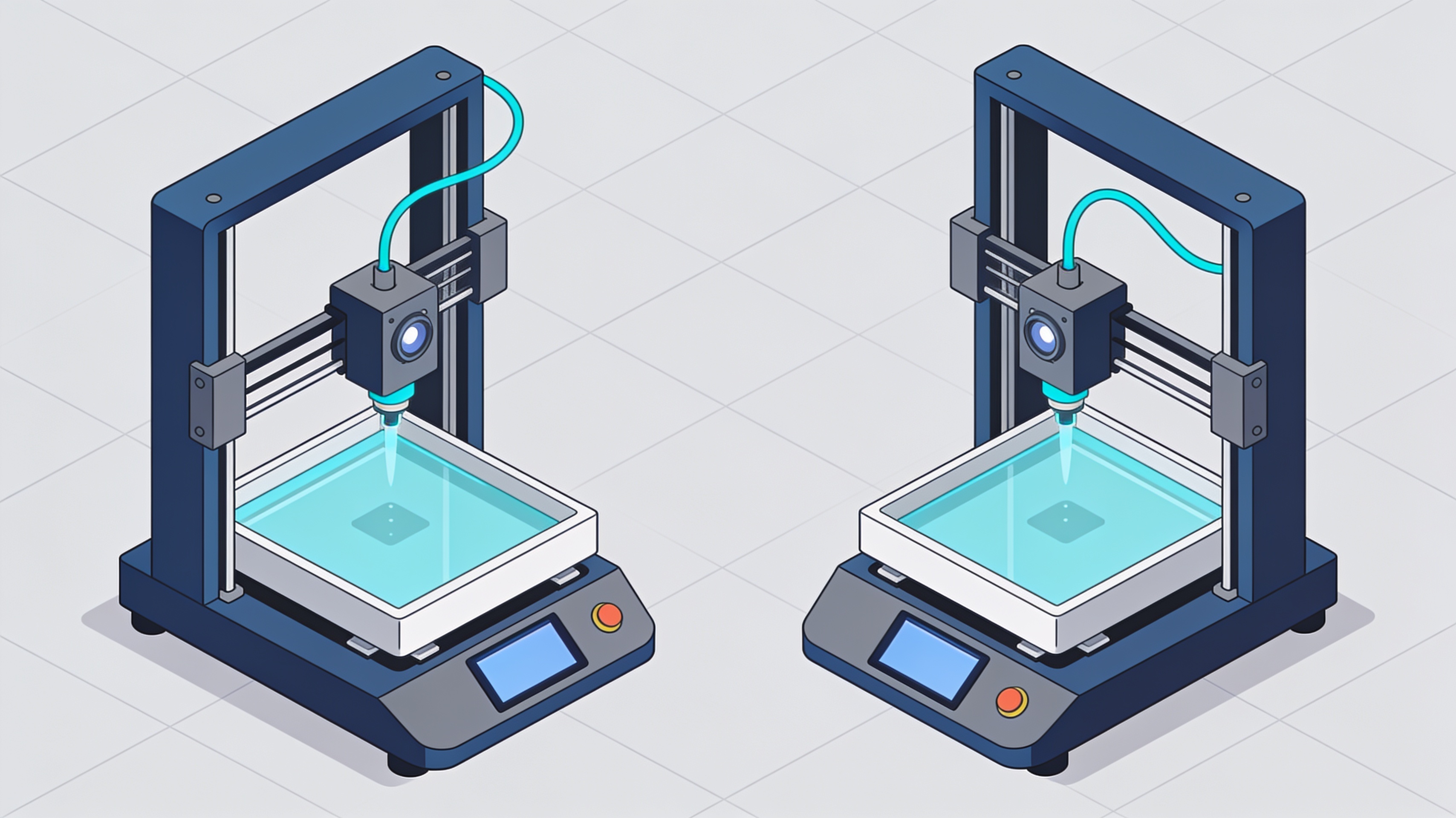
BMF presents the microArch S150 printer in Europe: compact microfabrication for laboratories
Boston Micro Fabrication (BMF) brings the microArch S150 3D printer to Europe for the first time during Formnext, the Frankfurt trade fair scheduled for November. The European debut coincides with the company's tenth anniversary in micrometric precision 3D printing.
The microArch S150 is already available on the market. It is a compact system designed specifically for laboratories and development and production departments.
Technical specifications and technology
The S150 combines micrometric resolution and a compact format, focusing on accessibility and ease of use for research and production environments.
The system offers an optical resolution of 25 μm. Users can set layer thicknesses ranging from 10 to 100 μm.
The printer uses Projection Micro Stereolithography (PμSL) technology developed by BMF. This technology allows working with high-viscosity materials, a relevant feature for specialized applications.
- Optical resolution: 25 μm
- Layer thickness: 10-100 μm (configurable)
- Integrated automatic calibration
- Touch interface with guided procedure
- Compatibility with high-viscosity materials
BMF has equipped the S150 with automatic calibration and a guided operating interface via touchscreen. These functions aim to simplify daily use in laboratories.
Application sectors
The printer targets sectors that require micrometric precision and complex geometries on a small scale.
BMF identifies five main application areas for the S150: microfluidics, optical fibers, biomedical devices, electronics, and advanced materials research.
These sectors share the need for miniaturized components with tight tolerances. Microfluidics, for example, requires channels with dimensions on the order of micrometers. Biomedical devices benefit from the ability to create functional prototypes with complex geometries.
Market strategy
BMF aims to make industrial microfabrication accessible through a compact platform, after ten years of technological development.
Bryan Ferrand, president of BMF, linked the launch of the S150 to the company's journey in its first decade. The new machine represents an attempt to make industrial-level microfabrication capabilities accessible through a more compact platform.
Ferrand reported that in the first months after the presentation, BMF encountered interest especially from laboratories and groups engaged in development and production. This feedback confirms the positioning of the S150 as a tool for research and small-scale production environments.
The microArch S150 will be operational at the BMF booth in Hall 12.1, booth B51. Visitors will be able to observe the printing process in real time during the trade fair.
Market context
BMF's tenth anniversary coincides with growing demand for accessible microfabrication solutions for R&D and low-volume production.
This year BMF celebrates ten years of activity in micrometric-precision 3D printing. The launch of the S150 represents a strategic evolution toward more compact and accessible systems compared with traditional industrial platforms.
The choice to present the machine at Formnext underscores the importance of the European market for microfabrication technologies. The Frankfurt trade fair remains the leading international event for industrial additive manufacturing.
The live demonstration at the booth will allow visitors to directly evaluate the system's capabilities. This approach responds to the need to concretely verify resolution and surface quality, critical parameters for micrometric applications.
article written with the help of artificial intelligence systems
Q&A
Where does the European debut of BMF's microArch S150 take place?
The European debut takes place at Formnext, the Frankfurt trade fair scheduled for November. It coincides with BMF's tenth anniversary in micrometric precision 3D printing.
What are the main technical specifications of the microArch S150?
The printer offers an optical resolution of 25 μm and layer thicknesses configurable from 10 to 100 μm. It uses the Projection Micro Stereolithography (PμSL) technology developed by BMF.
What materials can the microArch S150 process?
Thanks to PμSL technology, the S150 is compatible with high-viscosity materials. This feature is relevant for specialized applications that require particular formulations.
Which application sectors does the microArch S150 target?
BMF identifies five main areas: microfluidics, optical fibers, biomedical devices, electronics, and advanced materials research. All sectors that require miniaturized components with tight tolerances.
Which functions simplify the use of the S150 in laboratories?
The printer integrates automatic calibration and a touch interface with a guided procedure. These functions aim to simplify daily use in laboratories and in development and production departments.