Settore Industriale: Automotive

PreFlight and the Architecture of the Future: A New Approach to Slicing for FFF/FDM

PreFlight and the Architecture of the Future: A New Approach to Slicing for FFF/FDM

PreFlight is a new open-source slicer for FFF/FDM developed by oozeBot, designed to overcome the architectural limitations of traditional software. With a native 64-bit architecture and modern stack (C++20, OpenCASCADE, CGAL), it aims to ensure greater reliability, precision, and scalability in professional slicing. It introduces advanced features such as Athena Perimeter Generator and Interlocking Per

How the PowTReX System Works for Advanced Management of Metal Powders

How the PowTReX System Works for Advanced Management of Metal Powders

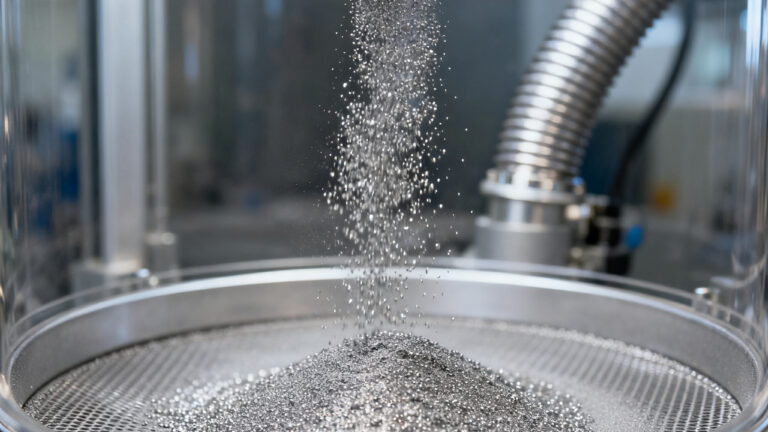
The PowTReX by Volkmann is an advanced system for the automated management of metal powders in additive production. It integrates pneumatic transport, ultrasonic sieving, and automatic recovery in a closed, explosion-proof environment, ensuring safety, material quality, and production continuity. Ideal for scalable industrial contexts and multi-supplier environments, it supports various metal allo

Dust under control: how patents are redefining precision in additive manufacturing

Dust under control: how patents are redefining precision in additive manufacturing

The filed patents improve dust control in metal 3D printing, monitoring its characteristics and flow in real-time to adapt process parameters. This reduces waste, improves layer quality and increases repeatability, with positive impacts on costs and production times.

Press TCT 2026: new frontiers of industrial additive manufacturing

Press TCT 2026: new frontiers of industrial additive manufacturing

The TCT Awards 2026 highlight the growing role of additive manufacturing in strategic sectors such as aerospace, defense, and automotive, with projects that integrate optimized structures, advanced materials, and cross-sector collaborations.

Hybrid Metal-Polymer FDM Extrusion: How It Works and What Are Its Industrial Applications

Hybrid Metal-Polymer FDM Extrusion: How It Works and What Are Its Industrial Applications

Hybrid metal-polymer FDM extrusion allows printing parts with metallic properties using composite filaments, without complex post-processing. It combines ease of use and safety, reducing costs and production times. Ideal for rapid prototyping and production of complex metal components in sectors such as aerospace, automotive, and tooling.

Direct Production of Functional Parts Without Post-Processing: Mechanisms and Advanced Technologies

Direct Production of Functional Parts Without Post-Processing: Mechanisms and Advanced Technologies

The direct production of functional parts without post-processing represents an evolution of additive manufacturing, aimed at eliminating post-printing processing stages. Thanks to advanced technologies and specialized materials, it is possible to obtain immediately usable components, reducing costs, times, and variability. Sectors such as aerospace and automotive are adopting these s

Innovative Materials for Industry 4.0: Advanced Solutions in Technical Ceramics and Reinforced Polymers

Innovative Materials for Industry 4.0: Advanced Solutions in Technical Ceramics and Reinforced Polymers

Innovative materials such as technical ceramics and reinforced polymers are revolutionizing Industry 4.0, offering high-performance solutions for sectors like automotive, aerospace, and additive manufacturing. With advanced sintering and production technologies, these materials enable complex geometries and structural applications, also thanks to specialized centers like AMPP. The implementation

Innovation in Materials and Advanced Recycling: Solutions for a Sustainable Future

Innovation in Materials and Advanced Recycling: Solutions for a Sustainable Future

Innovation in materials and advanced recycling are transforming the manufacturing industry. Arkema, with the Virtucycle® program, promotes the use of recycled polymers without compromising performance. Technologies such as chemical recycling and 3D printing with recovered powders reduce environmental impact and costs. Strategic collaborations and bio-based materials open new paths towards an econ

The 3D Printing Market Enters the Maturity Phase: Real Growth and New Regional Dynamics

The 3D Printing Market Enters the Maturity Phase: Real Growth and New Regional Dynamics

The 3D printing market reaches $24.2 billion in 2025, with a growth of 10.91%. The sector enters a maturity phase, shifting from machinery to production services. The Asia-Pacific region grows at 19.81%, while Europe and EMEA slow down. Services cover 48% of the market, highlighting an industrial conversion based on real usage and economic return.

Distributed e Gigafactory: How Integrated Production Works on an Industrial Scale

Distributed e Gigafactory: How Integrated Production Works on an Industrial Scale

Integrated production on an industrial scale is redefining the manufacturing industry through the physical and digital integration of processes. Advanced automation, data sharing, and artificial intelligence are transforming factories into intelligent, self-optimizing ecosystems, reducing times, costs, and waste.

Ultrafast and High Precision in Industrial Additive Processes: How It Really Works

Ultrafast and High Precision in Industrial Additive Processes: How It Really Works

Industrial additive manufacturing today combines speed and precision thanks to advanced technologies such as multi-laser, AI and automated post-processing. Systems like SSLM and TVAM drastically reduce production times while maintaining high quality. High-performance materials – technical polymers, metal alloys and composites – expand applications. Automation in vapor smoothing and depowdering m

Large-Scale Customization and Retail Integration: How the New Production Model Really Works

Large-Scale Customization and Retail Integration: How the New Production Model Really Works

The convergence between additive manufacturing and retail is redefining custom production, extending it from consumer goods to industrial sectors. Thanks to 3D printing, it is possible to produce multiple variants without additional costs, while artificial intelligence manages design complexity. Retail points are transforming into production and data collection nodes, enabling personalization

/