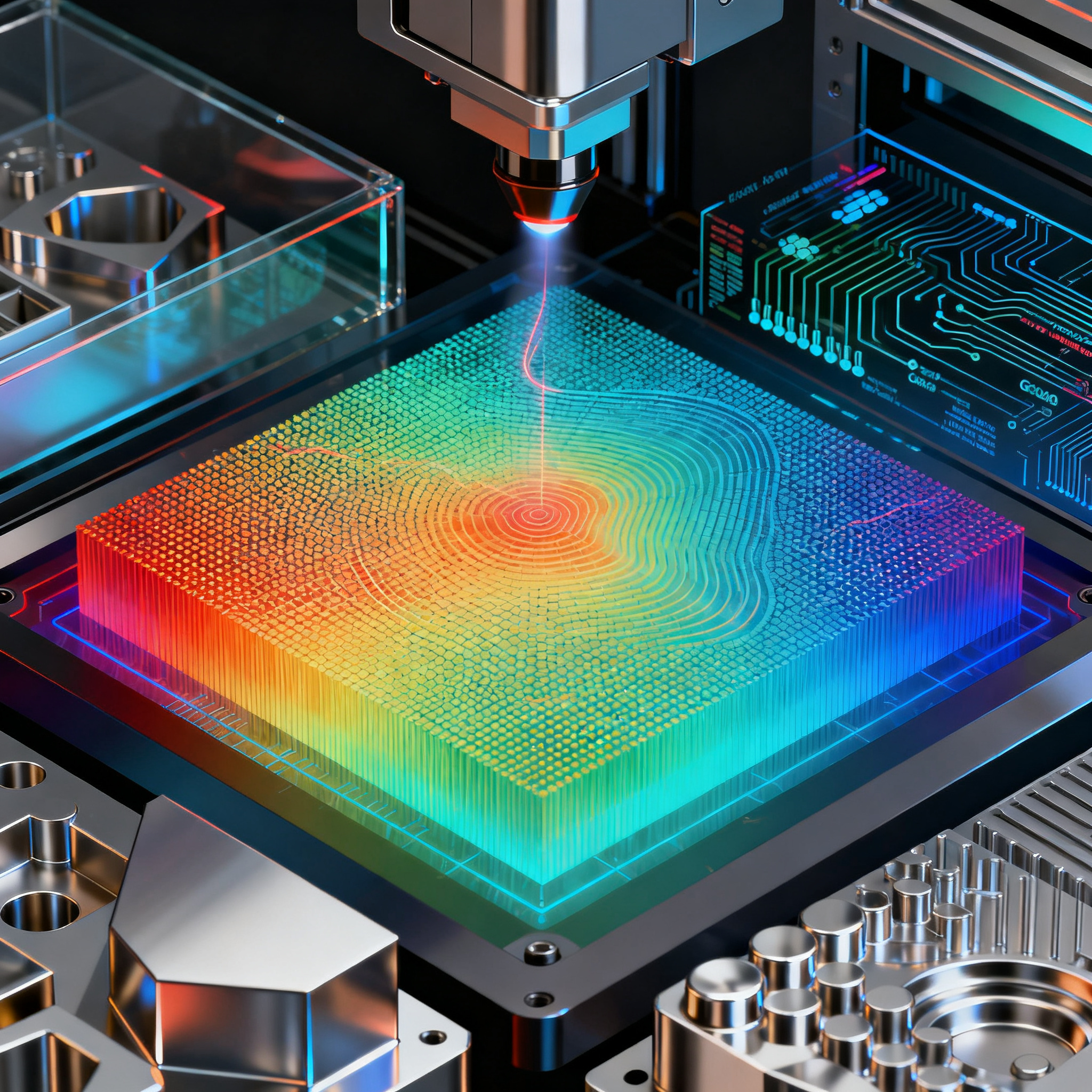
3D metal simulation: prevent defects in 24h?
Simulation is no longer an optional step: it is the dynamic construction plan that determines the success of every complex metal print. Today, the difference between a perfect component and a rejected one is decided before the laser is even turned on.
Why simulation has become indispensable
The complexity of geometries and metallic materials requires an anticipatory view of the production process. Without simulation, every build becomes an expensive gamble.
In additive metal, a failed build costs a lot: material, machine hours, gas, energy, post-processing, and delivery delays. When the part is large, the cost does not grow linearly: pressure on the qualification process also increases.
Metal 3D printing depends on dozens of interdependent variables. Laser power, scan speed, vector sequence, cooling times, support strategy, and thermal conditions change during the build. For this reason, a useful simulation cannot be an approximate snapshot: it must follow the process.
- A failed metal build can cost thousands of euros in material, machine time, and delays
- Simulation reduces blind attempts and makes the transition from prototype to production structured
- Large-format components require models that follow the thermal evolution during the entire build
NASA and the FAA have published a strategy that proposes computational simulations to reduce certification times and costs in aviation. The document, developed over five years with Boeing, Lockheed Martin, GE Aerospace, and others, emphasizes that current certification was created for conventional processes, not for components with variable microstructure layer by layer.
How to integrate PanX into the production workflow
An effective simulation plan requires precise inputs and rapid feedback between the virtual environment and the physical machine. Direct integration with process data is key.
PanOptimization proposes PanX as a simulation and optimization platform for LPBF and DED, with a focus on large-scale components and complex geometries. The software is based on finite element analysis and aims to manage not only prediction but also the concrete optimization of the build strategy.
The most interesting difference is not only the calculation speed but the change in perspective. Simulation serves to modify the production strategy before the machine starts building the part.
Integration procedure
- Process data input: PanX reads machine path information, such as G-code, to account for the direction and sequence of the deposited material.
- Predictive analysis: If a zone risks accumulating too much heat, the simulation introduces targeted waiting times; if a deformation is predictable, the geometry is compensated.
- Parameter optimization: The system suggests modifications to supports, orientation, and timing before committing powder and production hours.
The most concrete direction for the industry is not separate monolithic software, but digital chains where design, preparation, simulation, and production communicate better. When the geometry changes, the entire downstream should update automatically, preserving traceability and reducing manual rework.
Advanced FEA: predictive distortion correction
Well-calibrated finite element models allow for compensating for thermal and mechanical deformations already in the design phase. The key is to simulate not only the final result, but the evolution of the process.
Industrial simulation must help understand where heat accumulates, where residual stresses are generated, which areas are most exposed to cracks, and which support strategies reduce the risk without making removal impossible.
PanOptimization reports examples related to AMCM, an EOS company specializing in large-format LPBF systems. A 765 mm tall aerospike required an FEA mesh with over 26 million nodes and 50 million elements; the thermomechanical model in PanX was completed in about 3.5 hours on an engineering workstation.
A 1,200 mm tall AMCM component used PanX to optimize waiting times between deposition phases, controlling interlayer temperatures to reduce surface oxidation and adherent powder in internal channels.
Simulation is not just about deformation. It must predict where geometric compensation can improve tolerances and how to reduce physical trials and rework cycles. In metal, a single software is not enough to certify a critical component, but a well-integrated model reduces the number of blind attempts.
Case studies: large components made right on the first attempt
Two concrete examples show how simulation avoided costly repetitions and improved production efficiency. The scale of the components makes the value of prediction even more evident.
MacLean Additive collaborated with Fraunhofer ILT to produce a mold insert for a Toyota Europe hybrid transmission weighing 156 kg. The traditional combination of mechanical machining, welding, and drilling did not guarantee adequate performance despite long lead times.
The additive solution, supported by advanced simulation, matched the cost of the conventional method while eliminating its defects. This could be the largest near-solid die-cast insert ever produced additively.
| Parameter | Traditional approach | AM simulation approach |
|---|---|---|
| Lead time | Long | Reduced |
| Performance | Unsatisfactory | Compliant |
| Cost | Reference | Equivalent |
| Component weight | N/A | 156 kg |
The case of AMCM components demonstrates that simulation has become an economic tool, not just a technical one. If it allows for reducing trials, rework, and interruptions, it affects the part cost. If it helps explore variants without occupying the machine, it affects throughput.
Advanced simulation does not slow down the process: it accelerates it, eliminating known errors a priori. Those who evaluated simulation years ago should avoid a convenient conclusion: “we have already tried it.” The correct question is: “have we tried it on the parts, machines, and requirements we have today?”.
Start today to integrate predictive models into your metal printing workflow. The first perfect part is closer than you think.
article written with the help of artificial intelligence systems
Q&A
Why has 3D simulation become indispensable in metal 3D printing?
Simulation allows predicting and preventing defects before starting the print, reducing costs and errors. It anticipates issues related to complex geometries, heat distribution, and residual stresses, thus avoiding blind trials and optimizing the production process.
What are the main costs associated with a failed metal build?
A failed build results in wasted material, machine hours, gas, energy, and post-processing time. Moreover, it can cause delivery delays and increase pressure on qualification processes, especially for large components.
How does PanX by PanOptimization contribute to simulation in metal additive manufacturing?
PanX is a simulation and optimization platform based on FEA analysis to predict and correct deformations and stresses. It integrates G-code data to optimize supports, deposition sequences, and cooling times, improving the efficiency and quality of the final component.
What advantages does integrating simulation into the production workflow bring according to the article?
Integration enables rapid feedback between simulation and real production, reducing the number of trials and rework. Additionally, it allows automating downstream updates when geometry changes, maintaining traceability and increasing operational efficiency.
What is the role of simulation in the certification of advanced metallic components?
Simulation supports certification through computational models that reduce time and costs. According to NASA and FAA strategies, it is essential for components with variable microstructure layer by layer, overcoming the limitations of traditional qualification methods.