Metal 3D Printing in Space: How Close Are We to Real Production?
Despite progress in metal 3D printing in space, differences between suborbital experiments and stationary operations in orbit still reveal wide margins for development. The gap between tests lasting a few minutes and continuous industrial production remains significant.
Suborbital Experiments: Feasibility Short but Limited
Suborbital experiments show potential, but they last too short for complex processes like continuous metal printing.
The Chinese experiment aboard the Lihong-1 Y1 vehicle demonstrated that a metal printing system can operate autonomously in microgravity. The payload crossed the Kármán line reaching an altitude of 120 km, printed metal components, and collected data before re-entering with a parachute.
The test validated crucial aspects: survival during launch and re-entry, automatic operation, data transmission. But the mission provided only a few minutes of effective microgravity. It did not test integration with permanent orbital platforms, where continuous power supply, thermal control, and prolonged operational cycles impose completely different constraints.
- Microgravity duration: a few minutes versus months required in orbit
- No integration with permanent space platforms
- Unable to test repeated and continuous operating cycles
- Vincoli energetici e termici non rappresentativi dell'ambiente orbitale
3D Metal Printing on Board ISS: First Concrete Results
On the ISS, the first testable metal objects have been produced, confirming the possibility of operating in microgravity for extended periods.
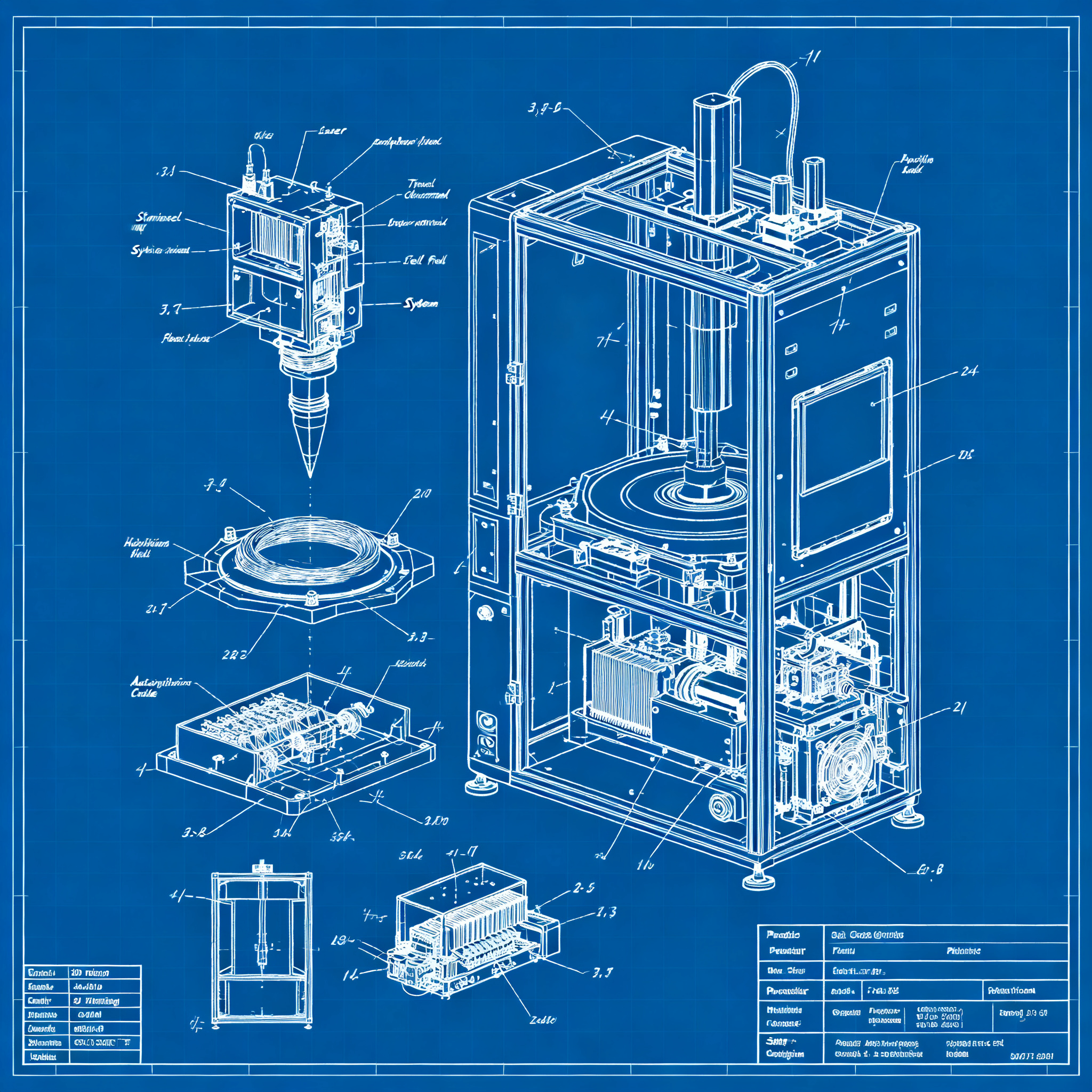
The ESA metal printer, developed by a consortium led by Airbus Defence and Space with AddUp, Cranfield University and Highftech Engineering, produced the first metal samples on the International Space Station in 2024. The system uses stainless steel wire melted by a high-power laser in a sealed chamber.
These components were returned to Earth for mechanical and microstructural testing, comparing them with equivalent ground-produced parts. The Additive Manufacturing Facility managed by Redwire Space has already produced over 200 parts in space, mainly in ABS, demonstrating long-term operational reliability.
The difference compared to suborbital tests is substantial. On the ISS, systems must integrate with safety constraints, limited energy, complex thermal management, and daily crew operations. Each print cycle is monitored, data is transmitted, and parts are inspected according to rigorous protocols.
Technical Comparison: Ephemeral Microgravity vs Orbital Stability
The comparison between suborbital and stationary environments reveals different criticalities in terms of operational continuity and final product quality.
| Parameter | Suborbital Experiment | ISS Operations |
|---|---|---|
| Microgravity Duration | Few minutes | Continuous months/years |
| Power Supply | Payload Batteries | Station Electrical Grid |
| Thermal Control | Temporary Passive | Integrated Active System |
| Operational cycles | Single test | Repeated production |
| Quality inspection | Post-return only | In-situ and post-return |
The wire process chosen by CAS has a precise logic. Metal powders, standard in terrestrial applications, become unmanageable in microgravity: they disperse, contaminate environments, and create risks for safety and equipment. The wire is containable and dosable, even though it limits resolution and geometric complexity.
The behavior of molten metal changes radically without gravity. Metal droplet transfer, liquid bridge stability, and molten pool evolution follow dynamics dominated by surface tension and thermal convection, not by weight and orientation. These phenomena require real-time control and completely redefined process parameters.
Open Challenges: Thermal, Feed, and Structural Integration
Without reliable solutions for thermal control and continuous supply, metal production in space remains irregular.
Thermal control represents a critical obstacle. A metal printer generates concentrated heat, produces vapors and potential contaminants. On Earth, the environment is ventilated and heat is dissipated. In orbit, every watt must be managed by limited active systems, and every emission must be contained to avoid compromising sensitive instrumentation.
Continuous power supply is equally problematic. ISS systems have restricted energy budgets, shared between experiments, life support, and operations. A metal printer requires high power for prolonged periods, competing with other station priorities.
Printing a metal deposit does not guarantee a usable component. Controls are needed on porosity, interlayer adhesion, microstructure, residual stresses, and geometric precision. In critical space applications, the part must be qualified, not “almost good enough”.
Structural integration with permanent orbital platforms imposes constraints on mass, volume, vibrations, and electromagnetic compatibility. A manufacturing system must coexist with scientific experiments, crew, and daily operations without interference.
Telemetry becomes essential for autonomous operations. Without crew in immediate proximity, the system must transmit images, thermal data, process parameters, and diagnostics in real time. This requires communication bandwidth, onboard computing capacity, and reliable remote control protocols.
Conclusion
Metal 3D printing in space is still in its infancy: promising in limited results, but far from real industrial application. Suborbital experiments validate basic concepts in very short time windows. ISS operations demonstrate prolonged feasibility but with limited throughput and severe operational constraints.
The gap between technological testing and operational production remains wide. More data is needed on reliability, repeatability, structural quality, and integration with orbital logistics. Space manufacturing is not only about future lunar or Martian missions, but the concrete capability to build, repair, and maintain infrastructure directly in orbit.
Follow updates on upcoming orbital experiments to understand when this technology will become truly operational. Competition among NASA, ESA, China, and commercial players will accelerate evolution, but the path to reliable industrial production will still require years of development and validation.
article written with the help of artificial intelligence systems
Q&A
What are the main limitations of suborbital experiments for space-based metal 3D printing?
Suborbital experiments offer only a few minutes of microgravity, which is insufficient for complex processes such as continuous metal printing. Moreover, they do not allow integration with permanent orbital platforms and do not enable testing of repeated and continuous operational cycles.
What did the Chinese experiment aboard the Lihong-1 Y1 vehicle demonstrate?
The experiment demonstrated that a metal printing system can operate autonomously in microgravity, surviving launch and re-entry while successfully transmitting data. However, the short duration of microgravity does not allow assessment of applicability to prolonged industrial processes.
What results were achieved with ESA's metal 3D printer on the ISS?
In 2024, the first metallic samples were produced on the International Space Station using a system based on laser-melted stainless steel wire. These components were then analyzed on Earth to verify their mechanical and microstructural properties.
Why is metal wire preferred over powder for 3D printing in space?
Metal powders are difficult to handle in microgravity because they easily disperse, contaminating the environment and creating hazards. Wire, on the other hand, is more controllable and dosable, although it slightly limits the resolution and geometric complexity of the components.
What are the main challenges for 3D metal production in a permanent orbital environment?
Challenges include thermal control in the absence of natural ventilation, managing limited energy supply, integrating with daily station operations, and the need for rigorous quality controls on the structural properties of produced components.