Settore Industriale: Aerospace

Can you really print on Mars?

Can you really print on Mars?

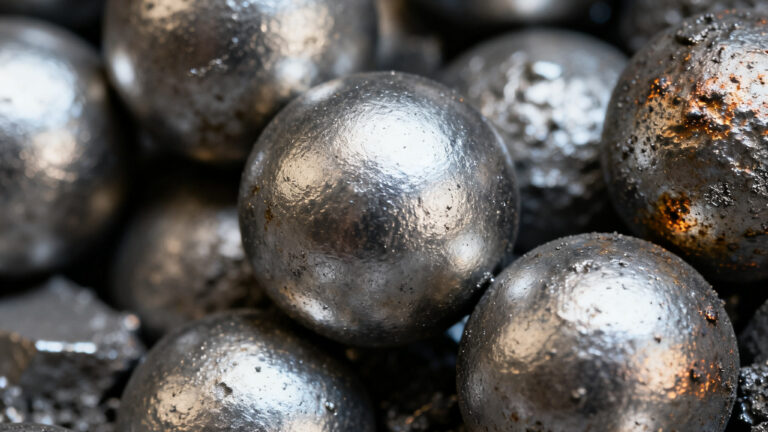
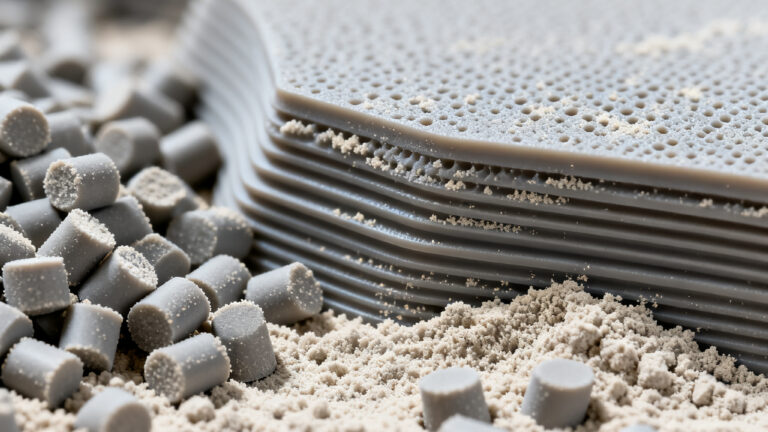
3D printing is the key to sustainability on Mars: regolith and titanium create resistant materials, atmospheric CO2 replaces argon, and in-situ production eliminates dependence on Earth. Earth-based tests are already validating the technology for future human missions.

3 patents, 1 thermal revolution

3 patents, 1 thermal revolution

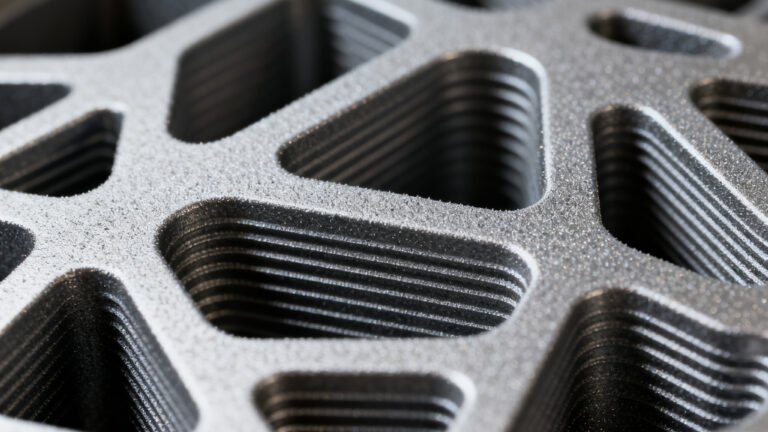
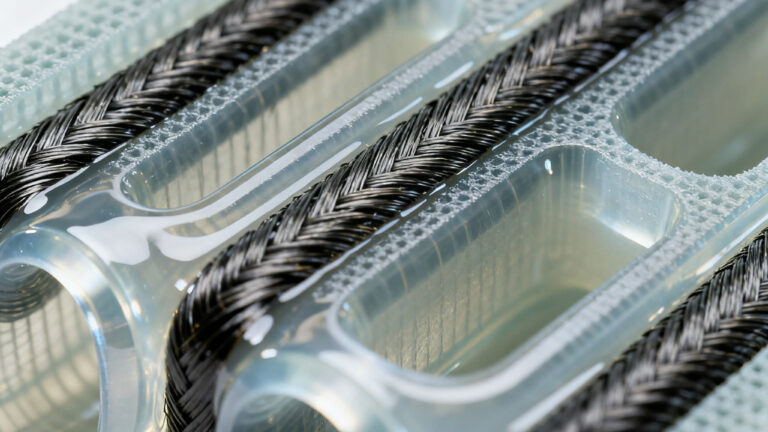
3D printing is revolutionizing heat exchangers with previously impossible geometries. Two patents show removable intelligent supports and interwoven 3D structures to manage more fluids. Benefits: greater efficiency, reduced costs, smaller footprints. Expected adoption in 2-5 years in aerospace and automotive.

Ti-6Al-4V in the field: here's how to cut costs by 30%

Ti-6Al-4V in the field: here's how to cut costs by 30%

Additive manufacturing of Ti-6Al-4V reduces costs by up to 30% by optimizing design and minimizing supports and waste. It requires proven parameters and atmospheric control, but offers superior performance to steel for critical applications with high strength-to-weight ratio.

Customized Defense: How Additive Manufacturing is Reinventing the Production Chain

Customized Defense: How Additive Manufacturing is Reinventing the Production Chain

Additive manufacturing becomes strategic for defense: having surpassed the experimental phase, 3D printing produces critical components reducing times by 80%. Million-dollar programs, new tungsten alloys, and growth beyond 20% in 2026.

Cold Spray: metals without fusion?

Cold Spray: metals without fusion?

Cold Spray deposits metals at supersonic speeds without melting, preserving the material's properties. Ideal for repairs and complex components in aerospace, energy, and industry.

3 phases, 1 result: qualified machine

3 phases, 1 result: qualified machine

AM qualification in three phases: FAT, IQ, and OQ. The choice between pre-qualified or validated in-process feedstock determines robustness. Only in-process monitoring with calibrated and traceable data transforms visibility into control, making Additive Manufacturing scalable and truly industrial.

30% less risk with strategic reserves?

30% less risk with strategic reserves?

Logistical resilience is more critical than the availability of raw materials for supply chain security. The distance between production and consumption is the greatest risk. Strategic reserves of materials such as tungsten and production localization reduce the risk of downtime and ensure continuity for supply chains.

30% less for de-powdering? The secret is in the frequency

30% less for de-powdering? The secret is in the frequency

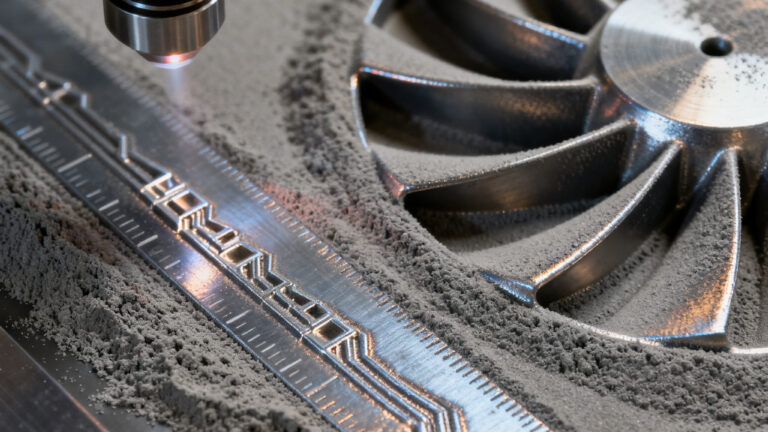
A new patent uses frequency control to optimize de-powdering in 3D printing: 30% reduced times, greater repeatability and transferability between machines. It requires sensors, but the ROI is 2-5 years for complex components.

Large-scale AI: the automation that doesn't fail?

Large-scale AI: the automation that doesn't fail?

AI in industrial automation requires rethinking the entire production flow. Real value emerges when artificial intelligence operates along the entire chain, overcoming the limited approach to single machines and local optimizations in additive manufacturing.

Aerospike vs classic Nozzle: who wins at 3000°C?

Aerospike vs classic Nozzle: who wins at 3000°C?

LEAP 71 compares a classic nozzle and an aerospike of 20 kN in CuCrZr: the first is stable and efficient beyond 93%, the second at 50 bar but with startup criticalities. Mature nozzle for immediate missions, promising aerospike for multi-regime efficiency and reusable launches.

3 G-Code moves that double strength without extra weight?

3 G-Code moves that double strength without extra weight?

Double the strength of 3D prints without extra weight: use gyroid infill, optimized pathing with Arachne, and localized reinforcements in the G-Code. Advanced slicing techniques for stronger and lighter parts, without complex CAD modifications.

The smart skin that protects robots in space?

The smart skin that protects robots in space?

ESA is developing Smart Skin, an intelligent 3D-printed skin for space robotic arms. The flexible coating integrates thermal protection, sensors, and wiring for lunar and Martian missions, overcoming the limits of traditional insulation.

/