3D printing on the front: does it really work?
3D printing is redefining the logistical and operational capabilities of the armed forces, bringing precise and timely production directly to the field. It is no longer about isolated experiments, but about concrete operational systems that solve real critical issues in extreme environments.
Operational logistics: from warehouse to field
*Distributed production reduces dependence on fragile supply chains and enables rapid interventions in remote contexts.*
Armed forces can print critical components where they are needed, when they are needed. This eliminates months of waiting for spare parts from distant suppliers. 3D printing allows the production of spare parts, tools, and equipment directly in the operational theater.
The main advantage is speed. When a component breaks, there is no need to order an entire assembly: just print the specific part. This reduces costs, complexity, and downtime.
- Direct production of parts in remote operational environments
- Reduction of dependence on long supply chains
- Ability to print tools and equipment needed for the installation
- Elimination of waiting for individual components by replacing entire assemblies
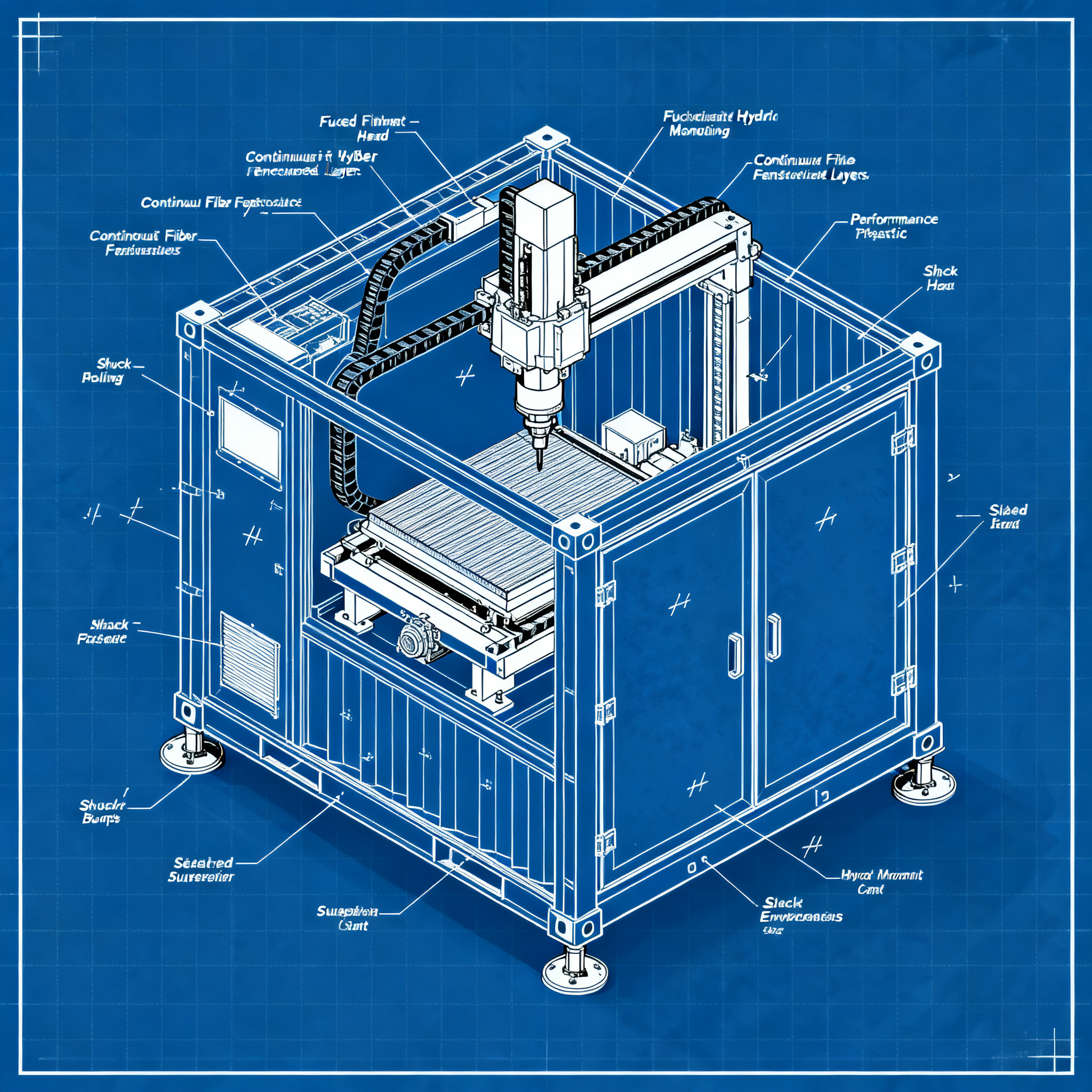
Containerized systems bring complete production capabilities to unstructured areas. Snowbird Technologies has developed SAMM Tech, a hybrid system that combines additive manufacturing and subtractive machining inside ruggedized containers. This approach transforms military logistics from reactive to proactive.
Certified materials for extreme environments
*L’uso di polimeri avanzati e compositi rinforzati permette di ottenere componenti resistenti a temperature, urti e agenti chimici.*
Materials make the difference between a prototype and an operational component. ULTEM™ is certified to produce flight-ready parts in aerospace applications. Continuous fibers reinforce printed components, ensuring mechanical strength comparable to that of traditional parts.
These materials pass rigorous tests for temperature, impact, and chemical resistance. They are not experimental solutions: they are certified for critical applications where failure is not an option.
| Material | Application | Main feature |
|---|---|---|
| ULTEM™ | Aerospace parts | Certified for flight |
| Continuous fibers | Structural reinforcement | High mechanical strength |
| Advanced composites | Extreme environments | Thermal and chemical resistance |
Material qualification follows standardized procedures. The “first article testing” verifies that each component meets mechanical, dimensional, and durability requirements. Only materials that pass these checks enter the military production chain.
Ruggedized hardware: designed for combat
*Printers like the Markforged X7 Field Edition are built to operate in uncontrolled environments and withstand vibrations, humidity, and dust.*
The Markforged X7 Field Edition goes from packaging to production in less than 3 minutes. It includes materials, spare parts, and tools for months of operation in extreme conditions. This system is specifically designed for tactical deployment.
Ruggedization is not a detail: it is essential. Transport vibrations, temperature excursions, dust, and humidity would destroy commercial printers. Military systems withstand these conditions while maintaining precision and reliability.
The Markforged FX20 prints with ULTEM™ and continuous fibers, combining industrial speed and aerospace certifications. It is designed for large-scale production in advanced operational bases.
Containerized systems integrate additive and subtractive capabilities. This allows printing a component and finishing it with CNC machining in the same environment. Hybrid production eliminates transfers between different machines, reducing time and risks.
Operational cases: from spare parts to tactical tools
*Concrete examples show how military units have used 3D printing to solve logistical criticalities in real time.*
The U.S. armed forces have installed 3D printing systems on ships, in advanced bases, and in operational areas of the Pacific. These deployments are not demonstrations: they are operational capabilities integrated into the logistics chain.
The U.S. Navy has invested in Lincoln Electric SculptPrint systems for components up to 9,000 kg. When the alternative is to wait over a year for a traditional casting, 3D printing completely changes operational timelines.
Typical operational process
- Identification: Critical component damaged or not available in stock.
- Validation: Verification of availability of the certified technical file and process parameters.
- Production: On-site printing with certified materials and integrated quality control.
- Installation: Immediate assembly with tools possibly printed in parallel.
The Department of Defense is building digital repositories of qualified components. These secure archives contain geometries, process parameters, and technical specifications. Authorized units access the files and produce validated parts wherever they are.
The Defense Logistics Agency uses competitive bidding for 3D printed parts, creating an ecosystem of certified suppliers. This approach distributes production capacity across the territory, reducing dependencies on single sites.
Conclusion
3D printing is no longer an experiment, but an essential operational tool for modern defense. Ruggedized systems, certified materials, and standardized processes have transformed a promising technology into a concrete capability.
The real value emerges in distributed scenarios where traditional logistics struggles. Remote bases, prolonged naval operations, and rapid deployments directly benefit from local production.
**Explore certified materials and ruggedized systems suitable for your field logistics needs.** The technology is mature, the processes are validated, and the industrial ecosystem is rapidly expanding.
article written with the help of artificial intelligence systems
Q&A
What is the main operational advantage of 3D printing directly in the military field?
Distributed production reduces dependence on long supply chains and enables printing critical components, tools, and equipment directly in the operational theater. This eliminates waiting months for distant spare parts and allows replacing individual pieces rather than entire assemblies, drastically reducing downtime, costs, and logistical complexity.
What makes 3D printing materials suitable for military and extreme applications?
Advanced polymers such as ULTEM™, continuous fibers, and reinforced composites offer resistance to extreme temperatures, impacts, and chemical agents. These materials pass rigorous qualification tests, including "first article testing" that verifies mechanical, dimensional, and durability requirements, ensuring performance comparable to traditional parts in scenarios where failure is not an option.
What does the SAMM Tech system consist of, and why is it relevant for military logistics?
SAMM Tech, developed by Snowbird Technologies, is a hybrid containerized and ruggedized system that combines additive printing and subtractive machining (CNC) in the same environment. This allows producing and finishing components without transfers between different machines, transforming logistics from reactive to proactive and bringing complete production capabilities even to unstructured or remote areas.
What distinctive features must 3D printing hardware possess to withstand military operational environments?
Printers must be ruggedized to withstand transport vibrations, thermal excursions, dust, and humidity—conditions that would destroy commercial equipment. Models like the Markforged X7 Field Edition are designed for tactical deployment, going from packaging to production in under 3 minutes, maintaining precision and reliability in uncontrolled contexts.
How is the quality and traceability of 3D printed components guaranteed within the armed forces?
The Department of Defense is developing secure digital repositories containing geometries, process parameters, and technical specifications of qualified components, accessible to authorized units for production anywhere. Additionally, the Defense Logistics Agency promotes competitive bids to build an ecosystem of certified suppliers, distributing production capacity and reducing dependence on single industrial sites.