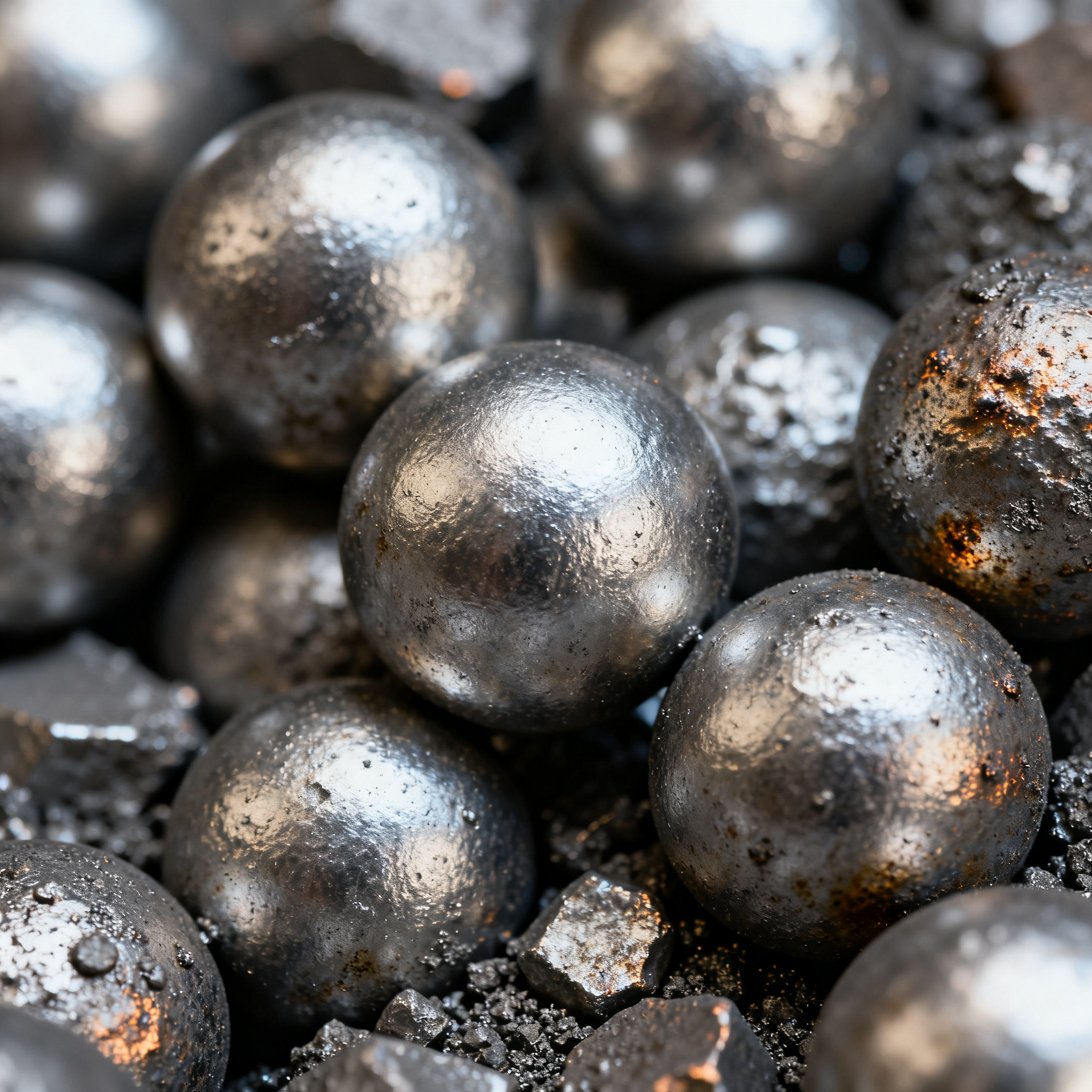
Recycling metal powder costs less than you think?
Sustainability in powder production for Metal AM is not only measured in emissions, but in the real value of materials that return to the supply chain. Recycling metal powders can reduce costs by up to 30%, but shifts the impact to often overlooked variables such as electricity and inert gases.
The hidden cost of virgin aluminum and nickel
The extraction and refining of base metals for powders entail increasing environmental and logistical costs, which suppliers are trying to circumvent.
Virgin nickel represents the heaviest cost item in traditional superalloy powder production. Supply depends on complex global chains, with volatile prices and significant environmental impacts.
In recycling-based routes, the “virgin nickel” component is drastically reduced. However, other contributors emerge: electricity and inert gases such as argon and helium become the variables that determine the “incompressible” residual impact without procurement and efficiency interventions.
- Virgin nickel reduction: up to –58,8% in standard scenarios
- Electricity and inert gases become the new cost drivers
- L’impatto residuo richiede efficientamento energetico mirato
How recycling is redesigning the supply chain
L’uso di polveri riciclate non è solo una scelta ecologica: può ridurre fino al 30% i costi di materiale, a patto di controllare la tracciabilità e la metallurgia.
The availability of metal printers under $50,000 is democratizing access to Metal AM. This creates an exponential demand for powders, but the traditional supply chain based on atomization struggles to keep pace.
Continuum Powders' Melt-to-Powder (M2P) technology converts metal scrap directly into powder, skipping the ingot conversion phase. This reduces time, energy costs, and dependence on virgin metal suppliers.
The new Custom Foundry Runtime service allows customized batches from 100 to 500 kg per day. Ideal for R&D and high-value materials like gold and platinum, it eliminates the need to commit to large-scale production.
The economic advantage of recycling is real only if the material maintains complete traceability and chemical consistency. Without these requirements, the initial savings turn into qualification costs and scrap.
Metallurgical quality vs. sustainability: the real trade-off
Recycled powders must pass rigorous tests to be reintegrated; the economic advantage is not automatic.
Nel Metal AM industriale, la sostenibilità del materiale è utile solo se la polvere rimane “process-ready”. Sfericità, scorrevolezza, contenuto di ossigeno e umidità, contaminazioni e coerenza granulometrica influenzano densità, difettologia e ripetibilità del pezzo.
Recovery strategies must include quality controls and replacement criteria to prevent the environmental goal from compromising the process window. The literature on metal powder reuse underscores this point clearly.
| Parameter | Virgin powder | Recycled powder |
|---|---|---|
| Material cost | High | –30% typical |
| Traceability | Standard | Requires additional checks |
| Qualification | Consolidated | To be validated case by case |
| CO₂ impact | High | Reduced (–58.8% cradle-to-gate) |
The concept “cradle-to-gate” è useful for benchmarking between suppliers when the company needs to document decarbonization targets. It does not replace metallurgical qualification or process validation activities, but adds a measurable quantitative level in specifications.
Siemens Energy case: from scrap to finished product
A concrete example of how controlled recycling can generate measurable savings without sacrificing quality.
Siemens Energy has sent tens of thousands of kilograms of nickel-based scrap to Continuum Powders for conversion into feedstock using Greyhound M2P technology. The goal: reintegrate material into the supply chain instead of pushing it toward lower-value disposal routes.
This type of circuit transforms LCA analysis from a theoretical exercise into a replicable sourcing model. The essential condition is the existence of a qualifiable “revert stream”: scrap flows with traceability and quality consistent with superalloy requirements.
Siemens Energy recovery circuit
- Collection of qualified scrap: nickel-based material with documented traceability from internal processing.
- M2P conversion: direct transformation into powder without ingot stage, reducing energy and time.
- Production reintegration: the powder re-enters the AM supply chain with full certification.
The availability of scrap flows with these characteristics is the often overlooked element in the sustainability discussion. Without this foundation, even the most advanced technology remains inapplicable on an industrial scale.
Conclusion
The sustainability of Metal AM powders is not just a matter of process, but of value strategy along the entire chain. Recycled pathways reduce dependence on virgin nickel, but require strict control over electricity, inert gases, and metallurgical qualification.
Real savings emerge when traceability, quality, and recovery circuits are integrated from the supply chain design. Cases like Siemens Energy show that the model is replicable, but requires investment in control systems and structured partnerships.
Evaluate the complete life cycle of your powders: real savings are where you least expect them. Future competitiveness in Metal AM will increasingly depend on control of materials, not just machines.
article written with the help of artificial intelligence systems
Q&A
What are the main economic and environmental benefits of recycling metal powders in Metal AM production?
Recycling metal powders can reduce material costs by up to 30% and cut virgin nickel use by up to 58.8% in standard scenarios, decreasing cradle-to-gate environmental impact. However, these benefits are concrete only if the material maintains complete traceability and chemical consistency throughout the entire supply chain.
Why do electricity and inert gases become crucial variables in metal powder recycling pathways?
In recycling pathways, the cost and impact component related to virgin nickel is drastically reduced, shifting attention to other production factors. Electricity and inert gases such as argon and helium then become the main drivers of residual cost and environmental impact, requiring targeted interventions in energy efficiency and procurement.
What does the Melt-to-Powder (M2P) technology consist of and what advantage does it offer compared to traditional methods?
The Melt-to-Powder (M2P) technology, developed by Continuum Powders, directly converts metal scrap into powder by skipping the ingot conversion phase. This significantly reduces production times, energy costs, and dependence on virgin metal suppliers, also enabling custom batches from 100 to 500 kg per day.
What is the fundamental trade-off between sustainability and metallurgical quality in the use of recycled powders for Metal AM?
Although recycled powders have a lower environmental impact, they must pass rigorous tests to be reintegrated into the supply chain. Parameters such as sphericity, flowability, oxygen content, humidity, and particle size consistency must ensure that the powder remains process-ready, preventing the initial savings from turning into qualification costs and scrap.
How did Siemens Energy apply the metal powder recycling model and what was the result?
Siemens Energy sent tens of thousands of kilograms of nickel-based scrap to Continuum Powders for conversion into powder using Greyhound M2P technology. This allowed the material to be reintegrated into the production supply chain instead of being disposed of, demonstrating that a qualified recovery circuit with documented traceability is replicable on an industrial scale.