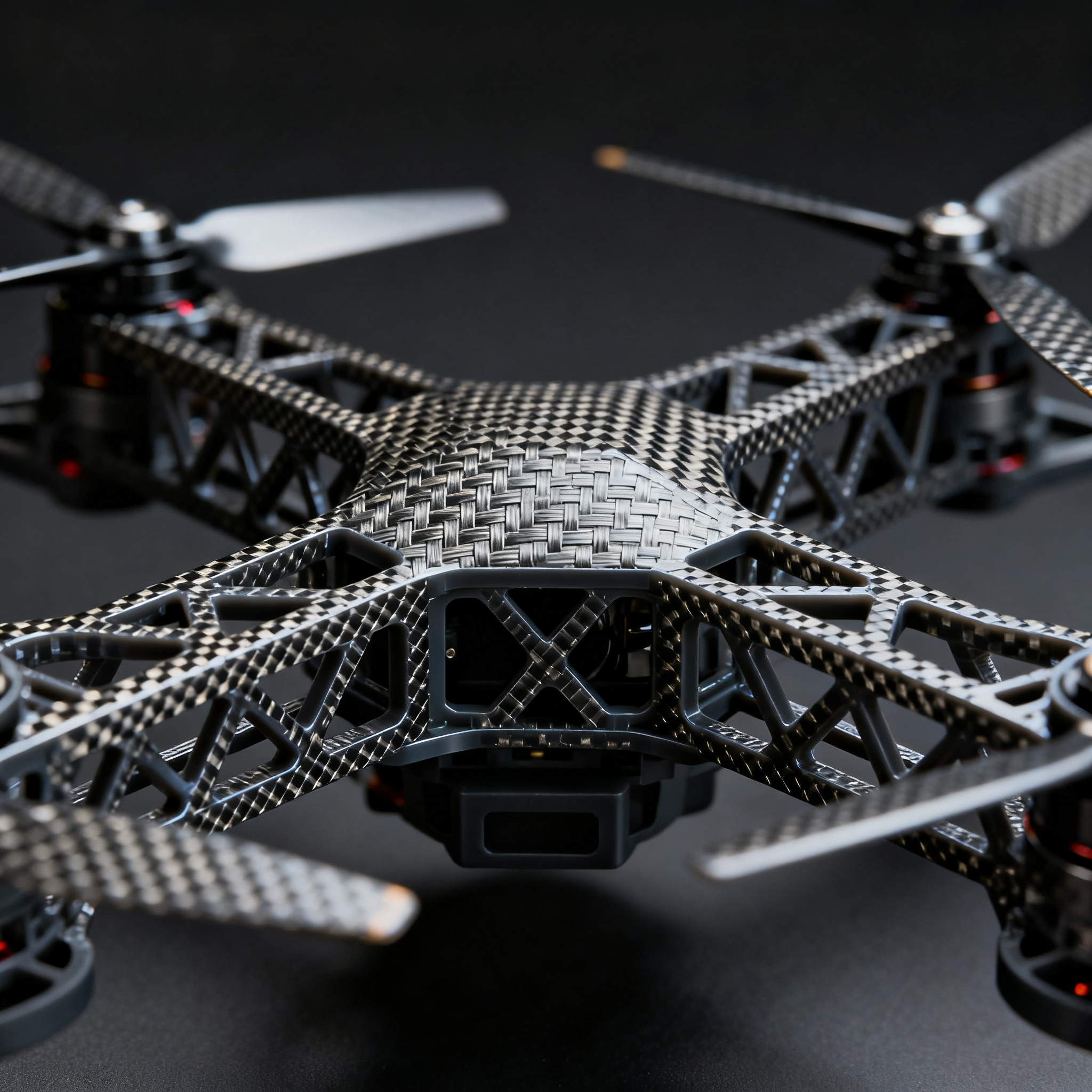
Drones in production? Here's how 3D printing changes the rules
Drone production is undergoing a revolution thanks to 3D printing, which is no longer limited to prototyping but becomes the heart of manufacturing. The additive manufacturing market for drones reached about $140 million in 2025 and could grow to nearly $900 million by 2034.
Drones are no longer just a prototyping market for 3D printing: they have become the largest production application for low-cost 3D printers worldwide. More and more companies are using additive technology not only for development but for actual production.
From prototyping to production: the leap in quality
3D printing has gone from a laboratory tool to a protagonist in the direct production of operational drones, with volumes reaching millions of units.
The US Department of Defense's Drone Dominance program has already produced 30,000 units after the first phase. Additive manufacturing enables both rapid prototyping and scale production, supporting a resilient and localized industrial base.
The leap is evident in the numbers: Ukraine produced 4 million combat drones in 2025, an increase of over a thousand times compared to the first year of the conflict. This capacity exceeds that of all NATO countries combined.
- AM market for drones: from $140 million (2025) to about $900 million (2034)
- Drones = largest production application for low-cost 3D printers
- Military production: 30,000 units USA, 4 million Ukraine (2025)
Materials in command: polymers, composites and metals
The choice of material determines performance, weight and cost: polymers dominate the economic segment, while metals grow for advanced applications.
Polymer 3D printing represents the natural choice for drones that must be produced quickly and economically. Materials like PETG reinforced with carbon fiber offer stiffness and resistance to torsional deformations, ideal for structural frames.
Metal additive manufacturing is gaining traction for larger aircraft. It is used particularly for propulsion systems and structural components with higher payload requirements.
| Category | Materials | Applications | Segment |
|---|---|---|---|
| Base polymers | PLA, PETG | Frame, cover, supports | Economic drones, FPV |
| Composites | PETG + carbon fiber, Fiberon | Load-bearing structures, arms | Research, tactical |
| Metals | Aluminum alloys, titanium | Propulsion, heavy loads | Military, industrial |
Industrial cases: who produces drones with 3D printing today
From defense to logistics, companies and institutions are already integrating additive solutions into complex production chains.
Firestorm Labs produces the Squall drone through “xCell” platforms, containerized mobile factories that allow the production of aircraft and components directly where needed. The drone reaches 130 km/h, has a range of 42 minutes and carries 2.5 kg of payload.
The German startup TYTAN Technologies has developed METIS, an interceptor drone with a fully 3D-printed body. It weighs 6 kg, reaches 350 km/h and operates up to 25 km away. It already has contracts for thousands of units with Ukraine and the German Bundeswehr.
The US Marine Corps has created HANX, the first fully 3D-printed drone compliant with NDAA requirements. Developed in just 90 days through multiple iterations, it can be printed, modified, and repaired directly by Marines in the field.
The US Army's 173rd Airborne Brigade produces FPV drones with basic 3D printers and commercial electronics. Cost: $400-500 per unit, a few hours of production. Soldiers with no prior experience learn to build and pilot them.
Mobile production platforms represent a paradigm shift: instead of shipping spare parts from central depots, parts are produced near the point of use, reducing times and logistical vulnerabilities.
How to integrate 3D printing into your production process
A step-by-step operational plan to introduce additive manufacturing without disrupting the existing chain.
Categorizing drones by mission helps identify the most suitable additive technologies. Group 1 (under 9 kg, hand launch) requires high-volume, low-cost production. Group 2 (under 25 kg) requires greater strength. Group 3 (over 25 kg) requires high-performance load-bearing structures and advanced composites.
Integration procedure
- Component mapping: identifies which parts of the drone benefit from complex geometries, assembly consolidation, or on-demand production.
- Technology selection: matches materials and processes to the group: FDM with composites for Groups 1-2, powder bed technologies for Group 3.
- Iterative validation: produce prototypes, test under operating conditions, qualify critical components before series production.
- Scalability: evaluate distributed or centralized production based on volumes, logistics, and supply chain requirements.
Companies operating in the sector range from drone manufacturers like DJI, Skydio, General Atomics, and Quantum Systems to additive technology suppliers like EOS, Stratasys, HP, Markforged, and Nikon SLM Solutions. The market now includes established aerospace companies, manufacturing suppliers, and startups.
Additive manufacturing can also become useful in logistics. Instead of shipping every spare part from a central warehouse, some non-critical or already qualified parts can be produced closer to the point of use. In programs based on swarms and distributed platforms, maintenance can weigh as much as initial production.
Conclusion
3D printing is no longer an alternative choice, but a competitive necessity for those who want to produce drones in an agile and scalable way. The convergence of new operational requirements and advances in additive manufacturing is creating a new industrial logic based on speed, availability, and performance.
The numbers speak clearly: from 140 million to 900 million dollars in less than ten years, with applications ranging from defense to scientific research. The technology enables optimized topologies, fiber-reinforced composites, and geometries that consolidate entire assemblies.
Evaluate today the critical points of your production process where 3D printing can make a difference. Identify components that require rapid iterations, customization, or distributed production. The competitive window is closing: those who integrate additive manufacturing now build strategic advantage for the next decade.
article written with the help of artificial intelligence systems
Q&A
What is the value of the additive manufacturing market for drones and what are the growth projections?
The additive manufacturing market for drones reached approximately $140 million in 2025 and could grow to nearly $900 million by 2034. Drones currently represent the largest production application for low-cost 3D printers worldwide.
Which materials are used in 3D printing drones and for what applications?
Polymers such as PLA and PETG dominate the economical segment, while carbon fiber-reinforced composites are ideal for load-bearing structures and tactical applications. Metals, such as aluminum and titanium alloys, are used for propulsion systems and structural components with high payload requirements.
What are some concrete examples of 3D-printed drones mentioned in the article?
The article mentions the Squall drone by Firestorm Labs, produced in containerized mobile factories, and the METIS interceptor by TYTAN Technologies, with a fully 3D-printed body. Additionally, the U.S. Marine Corps has developed HANX, the first fully additive drone compliant with NDAA requirements.
How is 3D printing affecting military production and drone logistics?
The technology enables a resilient and localized industrial base, allowing parts to be produced near the point of use rather than shipped from central warehouses. In the military field, the U.S. Drone Dominance program has already produced 30,000 units, while Ukraine manufactured 4 million combat drones in 2025.
What are the fundamental steps to integrate 3D printing into the drone production process?
The procedure involves mapping components that benefit from complex geometries or on-demand production, followed by the selection of materials and processes based on the aircraft weight category. Subsequently, iterative validation with prototypes and operational testing is required, and finally an evaluation of scalability between distributed or centralized production.
Why does the article argue that 3D printing has become a competitive necessity in the drone sector?
3D printing enables agile and scalable drone production, creating optimized topologies and geometries that consolidate entire assemblies. Those who integrate additive manufacturing now are building a strategic advantage for the next decade, while the competitive window is closing.