3 systems that eliminate dust in 5 minutes?
Discover how the automation of depowdering and surface finishing is redefining the potential of industrial additive manufacturing.
Automated post-processing systems today represent the turning point to bring additive manufacturing from prototyping technology to a scalable industrial solution. Depowdering and surface finishing can account for up to 60% of the total cost of a 3D printed component. Advanced solutions drastically reduce these times and costs, while ensuring repeatability and consistent quality.
Three technologies stand out for effectiveness: 2-in-1 depowdering and blasting systems like the AMT PostPro DP Max, chemical vapor smoothing units from the PostPro SF series, and intelligent software like Solukon's SPR-Pathfinder PRO. These tools not only speed up the process but also improve the mechanical and aesthetic properties of the final components.
Depowdering automation: how it works
Modern automated systems remove residual dust with millimeter precision, reducing the risk of contamination and mechanical damage to printed components.
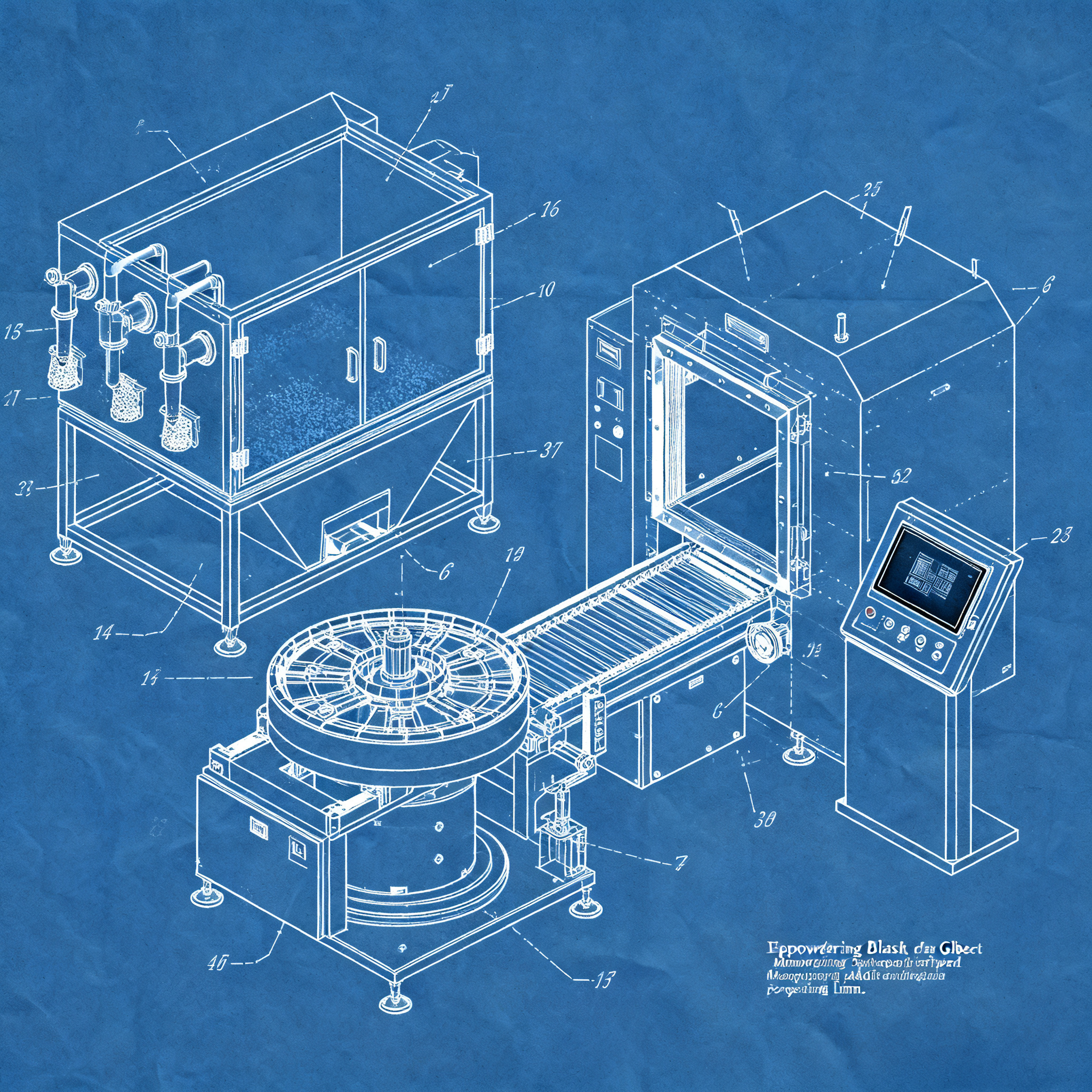
The AMT PostPro DP Max combines depowdering and blasting in a single fully automated system. The machine uses compressed air and abrasive media such as glass microspheres to remove residual dust without damaging the fine details of the component. It can handle loads up to 30 kg and includes three blasting guns to maximize throughput.
- Load capacity: 30 kg per cycle
- 2-in-1 system: automated depowdering + blasting
- Compatibility: SLS, MJF, FFF/FDM, HSE, HSS
- Usable media: glass microspheres, corundum, ceramics, plastics
The system includes an’ HMI touchscreen interface to adjust process parameters and save custom recipes. This allows optimizing settings for specific materials and geometries, then replicating them accurately in subsequent cycles. Automation reduces dependence on operator’s experience and standardizes the result.
Formlabs Fuse Blast represents the dedicated alternative specifically for SLS components. The system is designed to integrate perfectly with the Fuse ecosystem, ensuring a continuous workflow from printing to finishing.
Control software for repeatable finishes
Dedicated software manages critical parameters such as temperature, exposure time, and vapor flow, ensuring consistent finishes even on complex geometries.
Solukon’s SPR-Pathfinder PRO represents the evolution of control software for automated depowdering. The new version removes the previous limit of 2.4 million voxels, now supporting up to one million virtual particles without predefined limits on the number of voxels. This computational capability allows precise simulation of powder behavior in sub-millimeter channels and densely packed internal surfaces.
The software uses the component’s CAD file to calculate the optimal sequence of movements needed to remove powder from complex internal structures. The simulation exactly replicates the movement that the part will perform in the Solukon machine during the actual cleaning cycle.
SPR-Pathfinder PRO workflow
- CAD import: the software analyzes the complete geometry of the print job.
- Simulation: calculates the optimal path considering up to one million virtual particles.
- Visualization: shows cross-sections on X, Y, Z planes with adjustable transparency to identify powder traps.
- Time prediction: provides accurate estimates for both the calculation and the physical depowdering cycle.
- Execution: transfers the optimized program to the machine for automated execution.
The Digital-Factory-Tool function records all relevant data of the depowdering process, with the possibility of integration into higher-level dashboards via OPC UA protocol. This complete traceability meets the certification and quality requirements demanded in sectors such as aerospace and medical.
The concept of “Design for Depowdering” emerges as a natural evolution of Design for Additive Manufacturing. Simulating powder removal already in the design phase allows modifying outlets, inclinations, and minimum diameters before printing, avoiding geometries that are printable but impossible to clean effectively.
Materials and compatibility: where they apply
Advanced solutions support a wide range of engineering polymers and metals, integrating easily into existing production lines without requiring substantial modifications.
AMT PostPro systems are compatible with SLS, MJF, CFR, FFF/FDM, FGF, HSE, and HSS technologies. The range of processable materials includes PA6, PA11, PA12, ABS, PC, PP, TPU, TPE, SBC, PEBA, and composites filled with glass fiber, carbon, or minerals.
| System | Process chamber | Compatible technologies | Footprint |
|---|---|---|---|
| PostPro SF50 | 400×300×400 mm (48L) | SLS, MJF, FFF/FDM | 830×1400×1830 mm |
| PostPro SF100 | 400×600×400 mm (96L) | SLS, MJF, FFF/FDM | 830×1400×1830 mm |
| PostPro SFX | 11.5 liters | SLS, MJF, FFF/FDM | 450×500×845 mm |
The PostPro SF series vapor chemical smoothing improves both aesthetics and mechanical performance. Treated components show less than 0.4% dimensional change and increased elongation at break, without loss of tensile strength. The external surface is sealed, making the components impermeable to air and water.
For LPBF metal applications, Solukon systems (SFM-AT350, SFM-AT800-S, SFM-AT1000-S, SFM-AT1500-S) handle components of different sizes and weights. In the presence of reactive materials such as titanium, the chamber can operate in a protective atmosphere with inert gas, reducing risks related to powder handling.
AMT PostPro systems are agnostic regarding the printer manufacturer, allowing integration into existing production flows without closed ecosystem constraints.
Industrial advantages: scale and quality
L’adozione di sistemi automatizzati permette di aumentare la produttività del 40-60% mantenendo standard qualitativi elevati e riducendo la variabilità operatore-dipendente.
The standardization of post-processing eliminates the main barrier to scalability of additive manufacturing. A programmable and closed system allows for safer work, standardizes operational sequences, and reduces dependence on the experience of the individual operator.
Accurate prediction of process times represents a significant competitive advantage. SPR-Pathfinder PRO allows you to specify exactly how long the depowdering cycle will last, eliminating an unknown variable in production planning. This becomes increasingly critical as production volumes increase.
Frequency control methods for depowdering use the Fast Fourier Transform (FFT) to convert time signals into frequency spectra. This allows determining the optimal operating frequency to remove powder from specific cavities, further improving the effectiveness of the process.
Le parti sottoposte a levigatura chimica a vapore mostrano miglioramenti significativi: consistenza e vivacità del colore aumentano, la superficie sigillata facilita pulizia, tintura e rivestimento. Questi benefici estetici si accompagnano a miglioramenti funzionali come impermeabilità e maggiore resistenza all’usura.
The automation of post-processing represents a breakthrough for the additive manufacturing industry, with direct impacts on operational efficiency, finished product quality, and the ability to scale production. The combination of advanced hardware and intelligent software eliminates the bottlenecks that have historically limited the industrial adoption of 3D printing.
Evaluate the integration of advanced depowdering solutions to take your additive manufacturing to the next level. The difference between prototyping and serial production is precisely measured by the ability to manage post-processing in a repeatable and predictable manner.
article written with the help of artificial intelligence systems
Q&A
How much can post-processing affect the total costs of a 3D printed component and why is automation considered a turning point?
Depowdering and surface finishing can account for up to 60% of the total cost of a 3D printed component. Automation is considered a turning point because it drastically reduces processing times and costs, ensuring repeatability and consistent quality, and eliminates operator-dependent variability to move from prototyping to scalable industrial production.
What are the main features of the AMT PostPro DP Max system and which printing technologies does it support?
The AMT PostPro DP Max is a 2-in-1 system that combines automated depowdering and blasting, with a loading capacity of up to 30 kg per cycle and three blasting guns. It uses compressed air and abrasive media such as glass microspheres to remove powder without damaging fine details and is compatible with SLS, MJF, FFF/FDM, HSE, and HSS technologies.
How does Solukon's SPR-Pathfinder PRO software improve the depowdering process?
SPR-Pathfinder PRO analyzes the CAD file to calculate the optimal sequence of movements required to remove powder from complex internal structures, simulating up to one million virtual particles without voxel limits. It allows visualization of powder traps on cross-sections, provides accurate cycle time estimates, and transfers the optimized program to the machine for automated and repeatable execution.
What is meant by "Design for Depowdering" and what is its advantage?
"Design for Depowdering" represents the evolution of Design for Additive Manufacturing and consists of simulating powder removal already in the design phase. Its main advantage is allowing outlets, inclinations, and minimum diameters to be modified before printing, avoiding the creation of geometries that are printable but impossible to clean effectively in an automated manner.
What improvements does the PostPro SF series chemical vapor smoothing bring and on which materials is it applicable?
The PostPro SF series chemical vapor smoothing improves the aesthetics and mechanical performance of components, with less than 0.4% dimensional variation and an increase in elongation at break without loss of tensile strength. The surface is sealed, making components impermeable to air and water, and the treatment is applicable to polymers such as PA6, PA11, PA12, ABS, PC, PP, TPU, TPE, and filled composites.