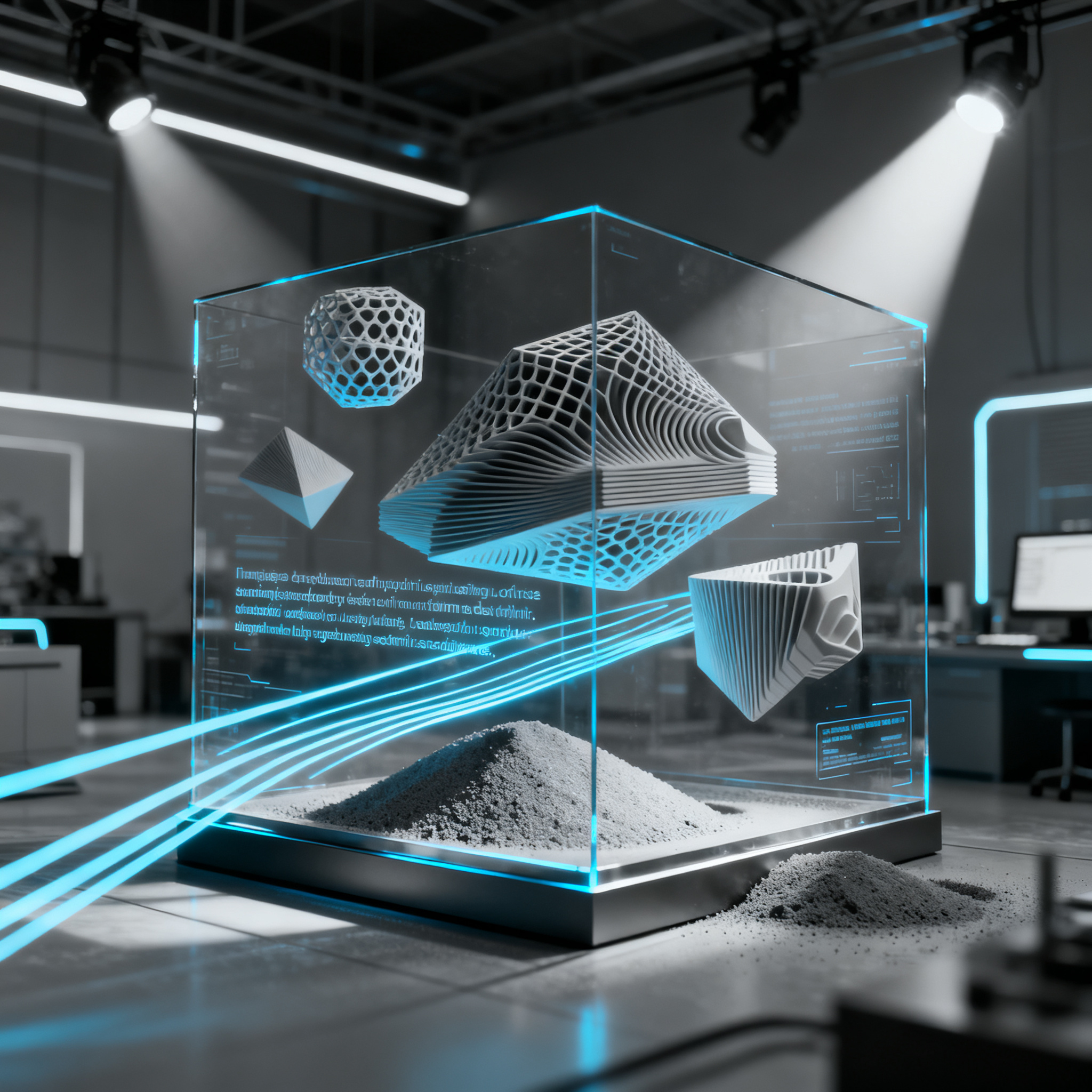
Chi può creare oggi? L’AI ha cambiato tutto
Artificial intelligence is not just automating processes: it is redesigning who can create and how. Consumer AI tools are breaking down the technical barriers that for decades separated professionals and ordinary users, radically transforming access to digital and physical creation.
The end of the technical barrier
AI is making tools accessible that previously required advanced skills, democratizing digital and physical production.
Professional photography has not disappeared, but today billions of people take photos daily with devices always at hand. The same phenomenon is affecting the creation of complex 3D and digital content.
Text-to-STL tools represent the most obvious case. Even without significant future improvements, they will allow millions of people to customize objects, create labels, make signage, and produce custom items. They will not be used to design aerospace components, but they will make 3D printing accessible to a vastly wider audience.
- AI tools drastically lower the entry threshold to digital creation
- Millions of users can now customize and produce objects without technical skills
- The 3D printing market will grow thanks to accessibility, not technical complexity
The value does not lie in technical perfection. Even the ability to apply a photographic relief on a cube or combine images on different objects opens up significant production scenarios. The impact on the spread of 3D printing will be among the most relevant in recent years.
Code-free creativity: the new workflow
Common users can now generate 3D models, texts and complex graphics without writing a line of code, shifting the focus from technical skill to creativity.
AI co-pilots are rapidly spreading in major CAD software. Siemens, Solidworks, Autodesk and PTC are integrating AI assistants into their ecosystems, driven by the need to protect existing subscription models.
In Autodesk Fusion, an AI assistant can transform a textual description into an initial CAD structure, generate variants, automate parametric changes or prepare shapes for production. In Blender, it can organize scenes, create scripts for mass modifications, identify problems in meshes or build tools for operations that normally require knowledge of the Python API.
The designer maintains control over technical choices. The AI performs mechanical operations, proposes alternatives, writes support code and helps navigate complex software. A designer can ask to create a bracket with specific center distances, fixing holes and thicknesses compatible with FDM or SPL printing. The result accelerates the creation of the first geometry and the modification of variants.
The new assisted workflow
- Description: l’utente formula l’obiettivo in linguaggio naturale o definisce parametri base.
- Generation: l’AI produce la prima geometria o automatizza operazioni ripetitive.
- Control: the designer verifies, corrects and refines the result according to technical criteria.
Repetitive operations consume precious time: changing diameters, duplicating features, renaming bodies, creating versions with different dimensions. AI should not invent, but execute in an orderly manner instructions that the user already knows how to formulate.
Dall’oggetto alla personalizzazione
The value is no longer in the object, but in its adaptability and control of the creative process, even at an amateur level.
The democratization of creation is redefining what has value. It is not the absolute quality of the object, but the ability to produce it autonomously and customize it according to specific needs.
This change recalls the evolution of digital photography. The average quality of photos has decreased, but the total number has exploded. Instagram, citizen journalism, and unforeseen cultural phenomena were born. With AI-assisted 3D printing, the pattern is similar: more creations, more people involved, more printers and filament sold.
The cultural impact of democratization often exceeds the technical one. Mobile photography did not replace professionals, but created new ecosystems of content sharing and production.
The concrete consequences are difficult to predict. We do not know if everyone will produce their own toys or if tens of thousands of specialized micro-entrepreneurs will emerge. It depends on the specific details of how these tools will evolve.
What we can say is that, even without further technical progress, text-to-STL tools will make 3D printing significantly more widespread. The focus shifts from technical skill to creativity and the ability to imagine customized applications.
Conclusion
Consumer AI is redefining who can create and how, opening up new productive and cultural scenarios. The technical barrier lowers, the workflow simplifies, value shifts toward personalization and autonomy.
We are not witnessing the disappearance of professional skills, but their integration into a broader ecosystem where millions of people can participate in creation. Try an AI tool for digital or physical creation and discover how it can transform your workflow.
article written with the help of artificial intelligence systems
Q&A
How is AI changing the ability to create digital and physical content?
Artificial intelligence is breaking down the technical barriers that for decades separated professionals from ordinary users, democratizing access to creation. Consumer tools allow generating 3D models, texts, and complex graphics without requiring advanced skills or code writing. Consequently, the focus shifts from pure technical ability to creativity and the capacity to imagine customized applications.
What are text-to-STL tools and what is their impact on 3D printing?
They are tools that allow generating files for 3D printing from simple text descriptions, eliminating the need for advanced modeling skills. Even without future improvements, they will enable millions of people to customize objects, create labels, and make tailor-made items. This drastically lowers the barrier to entry and will make 3D printing accessible to a vastly larger audience.
What is the new AI-assisted workflow in design software?
The workflow consists of three main phases: the user describes the objective in natural language, the AI generates the initial geometry or automates repetitive operations, and the designer verifies, corrects, and refines the result. This approach accelerates the creation of initial geometries and the management of variants, freeing up valuable time. The designer maintains control over technical choices while the artificial intelligence executes instructions and proposes alternatives.
How is the integration of AI in CAD software changing the designer's role?
Software such as Autodesk Fusion, Solidworks, and Blender are integrating AI co-pilots that transform text descriptions into CAD structures, generate variants, and write support scripts. The designer is not replaced, but maintains decision-making and technical control, delegating mechanical and repetitive operations to the AI. The role therefore evolves toward creative supervision and technical refinement rather than the manual execution of every detail.
Why is the value of creation shifting from technical quality to customization?
The democratization of creation is making the ability to produce independently and adapt objects to one's specific needs more valuable than absolute perfection. Even simple operations, such as applying a photographic relief on a cube or combining images on different objects, open significant production scenarios. Value therefore lies in production autonomy and control over the creative process, even at an amateur level.
Will AI replace design and 3D printing professionals?
No, AI is not eliminating professional skills, but integrating them into a broader ecosystem in which even non-expert users can participate in creation. As happened with mobile photography, which did not replace professionals but generated new ecosystems, assisted 3D printing expands access without making advanced technical skills obsolete. Professionals will continue to manage complex projects, while millions of new users will be able to realize simpler customizations.