Applicazione: Production

Metrology without technological boundaries?

Metrology without technological boundaries?

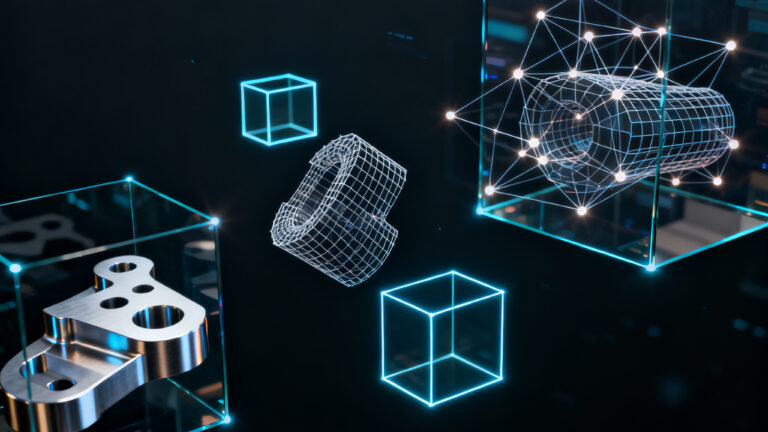
Industrial metrology requires flexibility. Discover how universal software platforms overcome rigidity and inefficiencies, integrating every measuring device to maximize precision and productivity. A practical guide to choosing the ideal solution.

3 moves that are revolutionizing industrial AM

3 moves that are revolutionizing industrial AM

Metals and ceramics in industrial 3D printing are complementary, not alternative. The competitive advantage comes from structured workflows, replicable case studies, and targeted training. To scale, standardized processes and a clear integration plan are needed.

Mobile production in containers? Here's how to scale it

Mobile production in containers? Here's how to scale it

Containerized production combines additive and subtractive technologies in ruggedized containers for remote and defensive contexts. Cases like Farsoon-Addimax and Snowbird-Meltio demonstrate flexibility, autonomy, and reduced dependence on the supply chain, with local support and standard materials.

3D printed shoes? Here's who's already making money from them

3D printed shoes? Here's who's already making money from them

In 2026, 3D shoes become industrial reality: Zellerfeld, PollyFab and others offer production platforms, AI design and dedicated materials. From custom footwear to orthopedic soles, the industry abandons experimentation for scalable models and digital customization.

30 printers, 1 historic environment: how they did it

30 printers, 1 historic environment: how they did it

The Saint Louis Art Museum replicated a section of the Trajan's Column with 30 desktop 3D printers. A modular workflow of modeling, printing, and assembly created a full-scale tactile replica, demonstrating that distributed desktop production is scalable for cultural heritage.

Binder jetting in production? Here's how to scale it

Binder jetting in production? Here's how to scale it

Binder jetting is entering industrial production, but scalability depends on nozzle control, material management (including ceramic slurries) and integration into workflows. To be a solid production asset, a rigorous roadmap is needed that includes electronics, software and maintenance.

Thus I digitized an industrial piece

Thus I digitized an industrial piece

Digitizing industrial components for 3D printing in a few hours is possible with real-time visual feedback scanners, automatic mesh cleaning, and parameters aligned with the printer. A method that reduces errors, iterations, and the learning curve.

3 tools that cut setup times by up to 70%

3 tools that cut setup times by up to 70%

Three solutions to optimize print farms: SimplyPrint, AutoFarm3D, and 3D Print Manager. Reduce setup times by up to 70% with centralized queues, multi-start, automatic monitoring, and integrated material and cost management.

Additive manufacturing in APAC: from laboratory to production line?

Additive manufacturing in APAC: from laboratory to production line?

Additive manufacturing in the APAC region is now a production infrastructure. TCT Asia 2026 confirms the overcoming of the experimental phase: the market competes on reliable workflows, industrial integration, and operational costs, shifting the focus from prototyping to mass production.

80 hours of therapy in 10 hours of production?

80 hours of therapy in 10 hours of production?

SLS 3D printing in Nylon 12 produces custom pediatric prostheses in 8-10 hours. The Pedi-Knee prototype weighs 240g with 0-120° flexion. Rapid workflow and clinical-industrial partnerships allow devices to be adapted to a child's growth with frequent iterations and sustainable costs.

Custom 3D in series: how to do it without failing?

Custom 3D in series: how to do it without failing?

To customize wearable devices in series, four pillars are needed: modular architecture, AI and biometric scans for ergonomic variants, hybrid production processes, and end-to-end digital integration. Missing one and the system collapses.

How does stiffness arise in flexible 3D structures?

How does stiffness arise in flexible 3D structures?

Flexible 3D structures that become rigid: variable geometries, asymmetric struts, and central limiting structures allow for the controlled transition from flexibility to rigidity, optimizable with 3D printing and composite materials.

/