Why did Amnovis bring its 3D printing to Indiana?
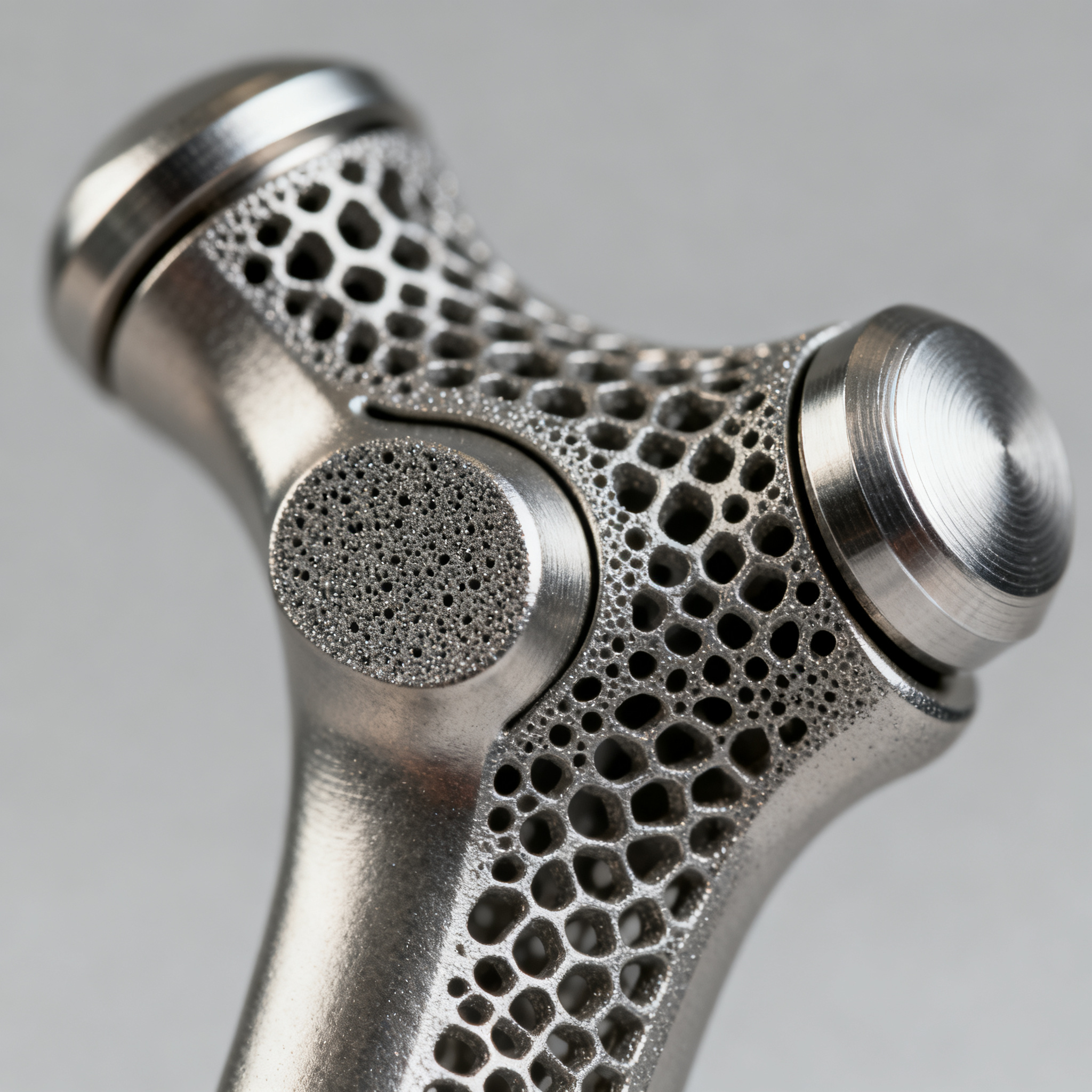
A Belgian leader in 3D printing of orthopedic devices has crossed the Atlantic to replicate its successful model in the United States. Amnovis has acquired the additive manufacturing activities of Westconn Precision Technologies and has created a new production unit in North Webster, Indiana, a few kilometers from Warsaw, considered the “Silicon Valley of orthopedics”.
The operation is not a simple commercial opening. The goal is to build two production sites capable of working with the same method: one in Europe and one in the United States, with identical procedures, digital workflows, and quality systems.
In summary
- Amnovis has acquired a production unit in Indiana, the industrial heart of US orthopedics, to get closer to the largest global market.
- The company integrates design, additive manufacturing (LPBF), and regulatory compliance expertise into a single end-to-end process.
- The choice to duplicate the entire production chain ensures homogeneous quality and operational continuity between the two sites.
A custom model across the Atlantic.
Amnovis has replicated its integrated production process in Indiana, demonstrating how strategic location supports operational efficiency.
The choice of Indiana is not random. Warsaw hosts the headquarters of Zimmer Biomet and DePuy Synthes, global leaders in the orthopedic sector. The local cluster represents a significant share of the global market for joint prostheses.
For a contract manufacturer working with orthopedic implants, spine devices, and CMF devices, geographic distance can become a critical factor. Shipments, validations, and emergency management impact the relationship with OEMs.
Ruben Wauthle, CEO of Amnovis, stated: “Being close to the world's largest medical device market, and specifically within the Warsaw ecosystem, allows us to better support customers who require reliable, high-quality additive manufacturing capabilities with minimal logistical complexity”.
End-to-end production chain
From design to certification, every phase takes place internally, reducing lead times and increasing quality control.
Amnovis built its reputation on an integrated model. The company manages design, LPBF (Laser Powder Bed Fusion) production, and regulatory compliance without outsourcing. This approach reduces steps between suppliers and accelerates time-to-market.
The new American site will replicate the Belgian structure exactly. Customers will be able to split production between the two facilities, gaining greater flexibility and manufacturing redundancy under the same quality systems.
Integrated production process
- Design: device development with internal expertise in lattice and LPBF methodologies.
- Production: metal 3D printing, CNC and EDM machining on the same site.
- Certification: Direct management of regulatory approvals without intermediaries.
Westconn brings expertise in complex components and precision assemblies, with a focus on healthcare and biosciences. The merger of the two realities creates a transatlantic production platform.
Uncompromising regulatory compliance
Local production allows Amnovis to meet FDA and ISO requirements without logistical interruptions or risky outsourcing.
The US medical device market requires rapid response times and rigorous document control. Having certified production capacity in the USA simplifies approvals and reduces risks associated with international supply chains.
The duplication of the quality system between Belgium and Indiana allows customers to scale globally in both the European and American markets. Approvals are simplified thanks to process consistency.
Chris Cook has been appointed General Manager of US operations, supported by Jake Marasco for customer management. The local management structure ensures direct oversight of the North American market.
Conclusion
Amnovis's expansion into the United States shows how controlled duplication of a production model can scale effectively in the orthopedic medical sector. The choice to replicate the entire end-to-end chain, rather than opening a simple commercial office, demonstrates a mature industrial approach.
Want to understand how to take your additive production beyond borders? Start with a real case: see how Amnovis did it.
article written with the help of artificial intelligence systems
Q&A
Why did Amnovis choose to establish itself in Indiana, near Warsaw?
Amnovis chose Indiana because Warsaw is considered the "Silicon Valley of orthopedics", hosting the headquarters of giants such as Zimmer Biomet and DePuy Synthes. Proximity to this cluster allows the company to be close to the world's largest medical device market, reducing logistical complexity and improving support for OEM customers.
What does Amnovis's "end-to-end" manufacturing model mean?
Amnovis's end-to-end model internally integrates all critical phases: device design, LPBF additive manufacturing, CNC and EDM machining, and direct management of regulatory compliance. This approach avoids outsourcing, reduces lead times and accelerates time-to-market while maintaining rigorous quality control.
What advantages does the duplication of the production site between Belgium and Indiana offer to customers?
Duplication ensures homogeneous quality and identical quality systems at both sites, allowing customers to split production between Europe and the United States. This offers greater flexibility, manufacturing redundancy and operational continuity, facilitating global scalability in the European and American markets.
How does the expansion in Indiana help Amnovis manage regulatory compliance in the U.S. market?
Having certified production capacity in the United States allows Amnovis to directly meet FDA and ISO requirements without depending on complex international supply chains. Local production simplifies approvals, reduces logistical risks and ensures faster response times for OEM customer urgencies.
Who are the managers appointed to lead the American operations and what is Westconn's role in the operation?
Chris Cook was appointed General Manager of U.S. operations, supported by Jake Marasco for customer management. Westconn Precision Technologies brought expertise in complex components and precision assemblies in the healthcare sector, fundamental to building the new transatlantic manufacturing platform.