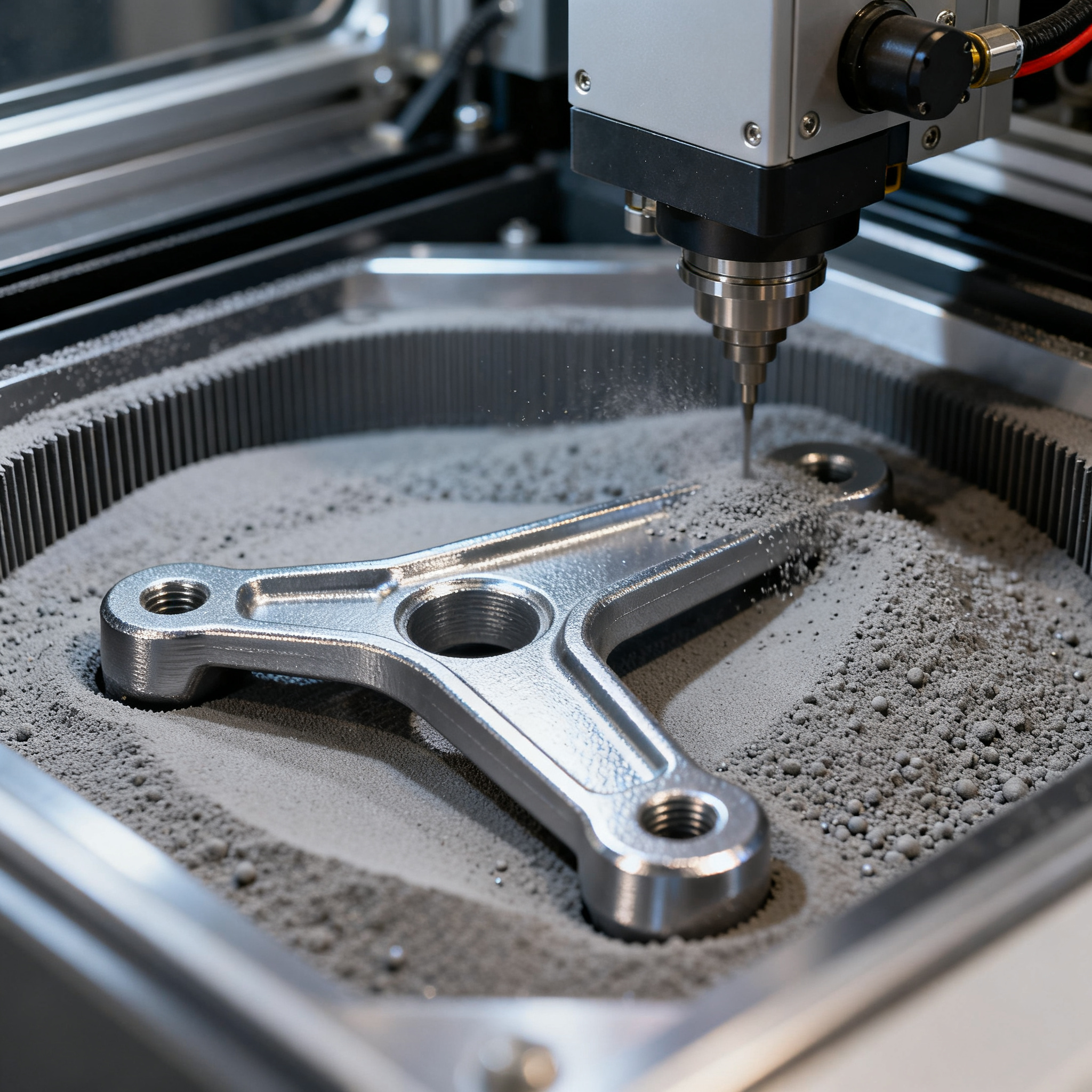
3 suppliers, 1 benchmark: who wins?
On-demand production services are redefining the boundaries of additive manufacturing: here is how they compare in terms of precision, speed and economic sustainability.
Quality and precision: where the difference is seen
A comparative analysis of surface quality and dimensional precision between the tested services, with a focus on critical industrial applications.
The choice of material determines the final quality of the component. Craftcloud offers over 250 different materials, covering applications ranging from tooling to end-use functional parts. The platform calculates real-time quotes from global manufacturing partners, showing the best available price for each technical specification.
Xometry extended its partnership with Protolabs in 2026, expanding access to specialized technologies. This collaboration allows for the management of certifications and advanced post-processing that many traditional service bureaus struggle to guarantee internally.
- Craftcloud: over 250 materials available, instant quotes from a global network of partners
- Xometry: access to specialized technologies through partnership with Protolabs
- HP MJF Service (via Craftcloud): unified interface for orders from certified HP manufacturing partners
Surface quality depends on the technology. HP Multi Jet Fusion systems guarantee uniform finish on volumes of 12 liters, with complete cycles of 22 hours including natural cooling. Dimensional precision remains critical for aerospace and medical applications, where tolerances do not allow compromises.
Times and volumes: who delivers first?
Benchmark of declared and verified lead times, with particular attention to performance on small batches and urgent requests.
Craftcloud shows three offering options: best absolute price, best local price, and a balanced recommendation between cost and delivery time. Local production reduces shipping times, a determining factor for urgent requests.
HP Multi Jet 1200 completes a full build box in 12 hours of printing plus 10 hours of cooling. The build box exchange system allows continuous production while one box cools, eliminating downtime between successive cycles.
| Service | Typical lead time | Production capacity |
|---|---|---|
| Craftcloud (partner network) | Variable, optimized for location | Scalable on global network |
| HP MJF Service | 22 hours for full cycle | 12 liters per build box |
| Traditional service bureaus | Up to 30 days for metals | Limited by internal capacity |
Unionfab has reduced metal lead times from 30 to 5 days in the USA, Canada, and Germany, using multi-laser SLM systems and an AI platform. This represents a radical change for low-volume productions requiring certified metal components.
Specialized service bureaus maintain the advantage in aerospace and medical certifications. Pure speed is not enough when full traceability and regulatory compliance are required.
Hidden costs and break-even points
Mapping real costs, from minimum fees to shipping costs, to identify economic break-even points for the industry.
The list price doesn't tell the whole story. Craftcloud eliminates hidden costs by showing final quotes that include material, finishing, and shipping. Choosing a local partner reduces logistics costs but may increase the unit cost.
HP Multi Jet 1200 will be available in 2027 for under $60,000, drastically lowering the entry barrier for companies that want to internalize MJF without outsourcing. The automatic powder management station recovers up to 90% of unsinterized material, reducing waste.
The cost per part includes material, energy, machine depreciation, post-processing, and logistics. Marketplaces like Craftcloud transfer part of the risk of unused capacity to partners, but add platform commissions.
Traditional service bureaus compete on specialization, not price. Certifications, exotic materials, and advanced post-processing justify higher margins. Economic convenience depends on volume: for under 100 parts, on-demand almost always wins.
Internal production becomes advantageous above specific critical volumes per technology. For HP MJF, the threshold lies between 500 and 1000 parts per year, considering machine depreciation and operating costs. Below this threshold, outsourcing remains cheaper.
Conclusion
There is no absolute winner: the best choice depends on specific project priorities and production volumes. Craftcloud excels in accessibility and cost transparency for low and medium volumes. Xometry offers access to specialized capacities through strategic partnerships. HP MJF Service guarantees uniform quality on a certified network of production partners.
Traditional service bureaus maintain value on critical certifications and specialist materials. In-house production becomes convenient only above well-defined volume thresholds, which vary by technology.
Evaluate your projects at scale with the data from this analysis to choose the most suitable supplier. Consider actual lead times, not just declared ones. Verify total costs including shipping and post-processing. Prioritize certifications when the industry requires them.
article written with the help of artificial intelligence systems
Q&A
Who are the main players compared in the article and what are their main strengths?
The article compares Craftcloud, Xometry, and HP MJF Service. Craftcloud excels due to its wide selection of over 250 materials and transparent instant quotes. Xometry stands out for access to specialized technologies and advanced post-processing thanks to its partnership with Protolabs. HP MJF Service ensures uniform surface quality and a certified network of manufacturing partners.
How do the different services perform in terms of lead time and delivery speed?
Lead times vary significantly between services. Craftcloud optimizes timing through local production and offers three quote options balanced between cost and time. HP MJF Service completes a cycle in 22 hours thanks to Multi Jet Fusion technology and the build box exchange system that enables continuous production. Traditional service bureaus may require up to 30 days for metals, although some operators like Unionfab have drastically reduced these times.
What is the economic convenience threshold between on-demand outsourcing and in-house production?
For volumes below 100 parts, on-demand is generally more convenient. For Multi Jet Fusion technology, in-house production only becomes economically advantageous between 500 and 1000 annual parts, considering machine depreciation and operating costs. Below this threshold, outsourcing remains the most economical choice.
For which applications do traditional service bureaus maintain a competitive advantage over digital marketplaces?
Traditional service bureaus maintain the advantage for applications requiring critical certifications, such as the aerospace and medical sectors, where full traceability and regulatory compliance are necessary. Furthermore, they compete on exotic materials and advanced post-processing that justify higher margins compared to marketplaces.
How does Craftcloud manage cost transparency compared to the hidden costs typical of the industry?
Craftcloud eliminates hidden costs by showing final quotes that already include material, finishing, and shipping. The platform calculates offers in real time from a global network of partners, allowing users to compare the best absolute price, the local one, or a balanced recommendation. However, choosing the local partner can reduce logistics costs but slightly increase the unit cost.
Which HP MJF technological innovations contribute to economic and environmental sustainability?
HP Multi Jet Fusion technology ensures uniform finishes on 12-liter volumes with complete cycles of 22 hours, including natural cooling. The automatic powder management station recovers up to 90% of unsintered material, reducing waste. Furthermore, the build box exchange system enables continuous production, eliminating downtime between successive cycles.